Among the twelve sacred Jyotirlingas of Lord Shiva, Trimbakeshwar Temple holds a uniquely powerful spiritual position. Located near Nashik, at the foothills of the Brahmagiri mountain range, this temple is not only a center of devotion but also a sacred space for karmic purification, ancestral liberation, and cosmic balance.
What makes Trimbakeshwar truly extraordinary is its rare three-faced Jyotirlinga and its association with the origin of the sacred Godavari River — often called the “Ganga of the South.”
The Meaning of “Trimbakeshwar” – Symbolism of the Trinity
The word Trimbak is derived from “Tri” (three) and “Ambaka” (eyes), meaning the Three-Eyed Lord. Spiritually, it represents:
- Brahma – Creator
- Vishnu – Preserver
- Shiva – Destroyer
Unlike other Jyotirlingas, the sanctum here contains three small lingas inside a hollow depression, symbolizing the divine trinity. Over time, due to continuous abhishekam (ritual bathing), the lingas have naturally eroded, symbolizing the impermanence of physical form and the eternity of divine energy.
This philosophical depth makes Trimbakeshwar a powerful representation of cosmic cycles — creation, preservation, and dissolution.
Mythological Story – Sage Gautama and the Origin of Godavari
According to the Shiva Purana:
Sage Gautama performed intense penance at Brahmagiri Hill.
Due to a divine test and misunderstanding, he was burdened with the sin of cow slaughter (Gau Hatya).
To purify himself, he prayed to Shiva and requested Ganga to descend to earth.
Moved by his devotion, Shiva manifested here as a Jyotirlinga and brought the sacred river in the form of Godavari.
The river emerges from Brahmagiri Hill and later flows across Maharashtra, Telangana, and Andhra Pradesh.
Because of this legend, Trimbakeshwar is considered a powerful place for sin cleansing and karmic purification.
Historical Evolution of the Temple
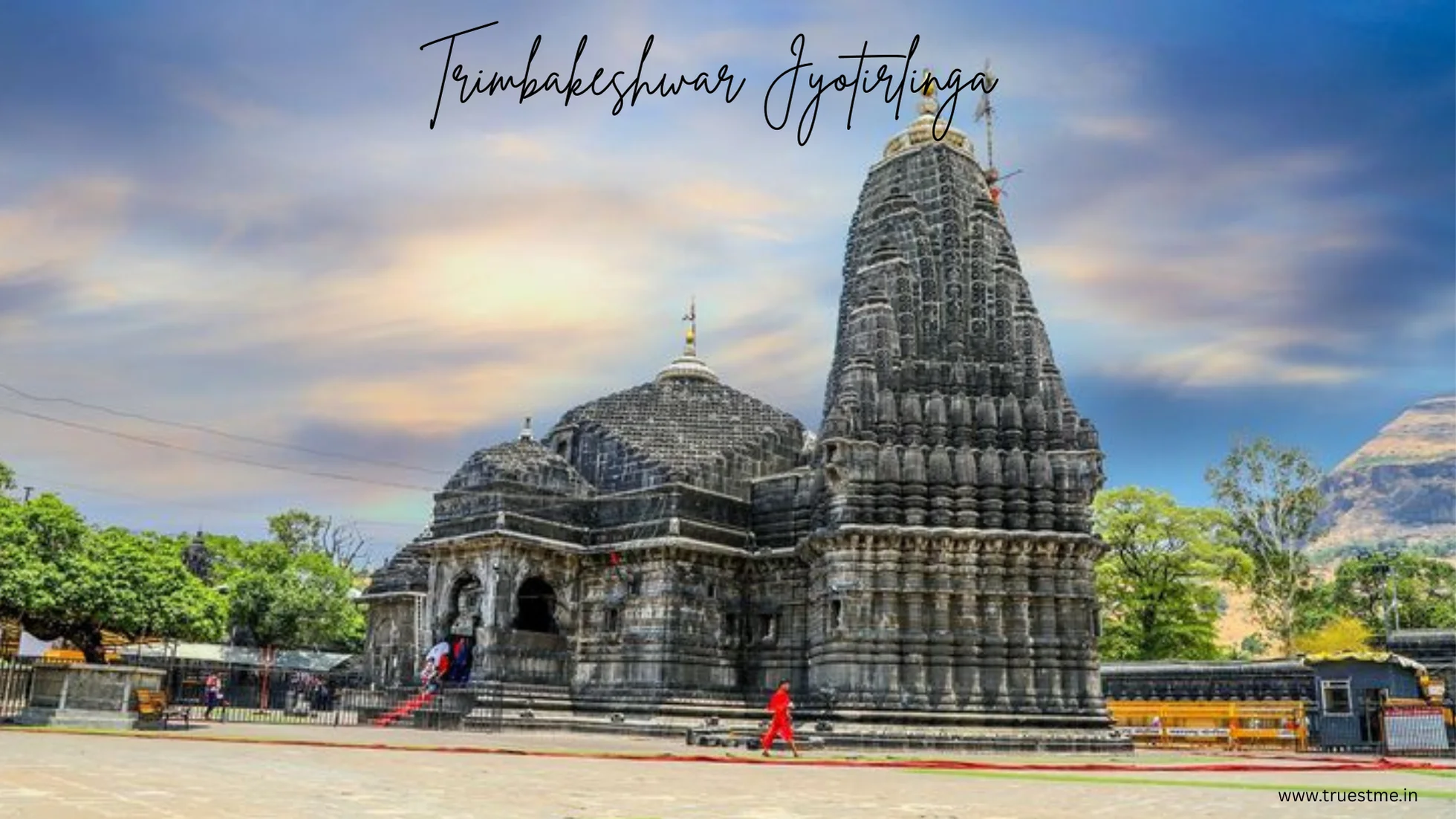
The current temple structure was built in the 18th century by Nana Saheb Peshwa.
Architectural and Historical Highlights:
- Constructed in classic Hemadpanthi style
- Built using black basalt stone
- Intricate carvings depicting gods, goddesses, and mythological scenes
- Survived multiple historical transitions during the Maratha era
The temple architecture reflects strength, devotion, and classical Maharashtrian craftsmanship.
Kushavarta Kund – The Sacred Spiritual Reservoir
One of the most important features of Trimbakeshwar is the Kushavarta Kund, the symbolic source of the Godavari River.
Spiritual Importance:
- Pilgrims take holy dips for purification
- Ritual bathing before darshan is considered highly auspicious
- Site of sacred bathing during Kumbh Mela
It is believed that a dip here cleanses sins and prepares devotees spiritually before entering the sanctum.
Powerful Rituals Performed at Trimbakeshwar
This temple is especially known for rare Vedic rituals that are not widely performed elsewhere.
Narayan Nagbali Puja
- Performed to remove Pitru Dosha (ancestral curse)
- Conducted over 3 days with detailed Vedic chanting
Kaal Sarp Dosha Puja
- Conducted to neutralize astrological afflictions
- Believed to reduce life obstacles and karmic blockages
Tripindi Shraddha
- Ritual for liberation of departed ancestors
- Performed with specific Vedic procedures
These rituals make Trimbakeshwar a center for astrological and ancestral healing.
Role in Kumbh Mela
Trimbakeshwar and Nashik host the Kumbh Mela once every 12 years — one of the largest spiritual gatherings on Earth.
During the Kumbh:
- Saints and Akharas gather
- Shahi Snan (Royal Bath) takes place
- Millions of devotees participate
The spiritual energy during Kumbh Mela is considered extraordinarily powerful.
Temple Darshan & Spiritual Experience
Temple Timings:
- Opens around 5:30 AM
- Closes around 9:00 PM
Special Occasions:
- Maha Shivratri
- Shravan Month
- Mondays (considered sacred for Shiva)
The sanctum is deeply atmospheric — oil lamps, chanting, and rhythmic Vedic hymns create a powerful spiritual vibration.
Best Time to Visit Trimbakeshwar Temple
- October to March – Pleasant weather
Shravan Month – Highly spiritual but crowded
Maha Shivratri – Grand celebrations
Avoid peak summer months due to high temperatures.
How to Reach Trimbakeshwar
- 28 km from Nashik city
- 180 km from Mumbai
- Nearest railway station: Nashik Road
- Easily accessible by road from Mumbai and Pune
Local buses, taxis, and private vehicles are available.
Nearby Spiritual & Tourist Attractions
- Brahmagiri Hill – Trek and origin of Godavari
- Anjaneri Hills – Believed birthplace of Hanuman
- Pandavleni Caves – Ancient Buddhist caves
- Sula Vineyards – Popular tourist attraction
This makes Trimbakeshwar a mix of pilgrimage and heritage tourism.
Why Trimbakeshwar is Unique Among 12 Jyotirlingas
- Only Jyotirlinga representing the Trinity
Associated with origin of a major sacred river
Center for ancestral and astrological rituals
Key location for Kumbh Mela
It represents not just devotion, but karmic transformation and cosmic balance.
Spiritual Conclusion
Trimbakeshwar Jyotirlinga is more than a sacred shrine — it is a spiritual gateway where cosmic symbolism, ancient rituals, and divine energy converge. From the origin of the Godavari River to powerful ancestral ceremonies, every aspect of this temple speaks of purification, rebirth, and spiritual evolution.
For seekers, devotees, and spiritual travelers alike, Trimbakeshwar offers not just blessings — it offers transformation.
Har Har Mahadev