ISKCON Vrindavan (Sri Krishna Balaram Mandir)
Nestled in the sacred town of Vrindavan, Uttar Pradesh, ISKCON Vrindavan, officially known as the Sri Krishna Balaram Mandir, is one of the most revered temples dedicated to Lord Krishna in India. Every year, millions of devotees and international visitors come here to experience peaceful darshan, soulful kirtans, traditional Vedic worship, and the spiritual atmosphere associated with the pastimes of Lord Krishna.
Established by A. C. Bhaktivedanta Swami Prabhupada (Srila Prabhupada), the founder-acharya of the International Society for Krishna Consciousness (ISKCON), the temple was inaugurated in 1975. Since then, it has become one of the most important pilgrimage destinations for devotees of Krishna from across the world.
Unlike many temples that are known only for their architecture, ISKCON Vrindavan offers visitors a complete spiritual experience through daily mangala aarti, bhajans, Harinam Sankirtan, Bhagavad Gita classes, prasadam, festivals, and devotional service.
Whether you are a pilgrim seeking divine blessings or a traveler exploring the spiritual heritage of Braj Bhoomi, the Krishna Balaram Temple Vrindavan is a destination that beautifully combines devotion, culture, and history.
About ISKCON Vrindavan
ISKCON Vrindavan, popularly known as the Sri Krishna Balaram Mandir, is one of the most significant temples of the International Society for Krishna Consciousness (ISKCON).
The temple is located in Raman Reti, one of the most sacred areas of Vrindavan, where devotees believe Lord Krishna and Lord Balarama spent time during their childhood pastimes.
Unlike many traditional temples, this temple welcomes visitors from every nationality, language, and background. People from more than 100 countries visit every year to chant the Hare Krishna Mahamantra, attend kirtans, study Vedic scriptures, and participate in devotional activities.
The temple complex also includes:
- Beautiful gardens
- Srila Prabhupada Samadhi Mandir
- Srila Prabhupada Museum
- Goshala (Cow Protection Centre)
- Guest House
- Govinda's Restaurant
- Book Store
- Gift Shops
- Bhagavad Gita Learning Center
These facilities make ISKCON Temple Vrindavan one of the most organized spiritual destinations in India.
Why is ISKCON Vrindavan Famous?
Many people wonder why ISKCON Vrindavan is among the most visited Krishna temples in the world.
The answer lies in its unique spiritual atmosphere.
Unlike ordinary sightseeing destinations, every activity inside the temple revolves around devotion to Lord Krishna.
Visitors come here for:
- Daily Darshan of Sri Sri Krishna-Balaram
- Soulful Hare Krishna Kirtans
- Peaceful Meditation
- Bhagavad Gita Classes
- Spiritual Retreats
- Delicious Satvik Prasadam
- Janmashtami Celebrations
- Gaura Purnima Festival
- Kartik Month Celebrations
- International Devotee Community
The temple is also one of the most important centers for spreading the teachings of the Bhagavad Gita and Srimad Bhagavatam across the world.
History of ISKCON Vrindavan
The history of ISKCON Vrindavan is closely connected with the life and mission of His Divine Grace A. C. Bhaktivedanta Swami Prabhupada, the founder-acharya of ISKCON.
After establishing the International Society for Krishna Consciousness in New York City in 1966, Srila Prabhupada dedicated his life to spreading Krishna consciousness around the world.
As thousands of people from Europe, America, Africa, and Asia embraced Krishna bhakti, Srila Prabhupada wished to establish a magnificent temple in Vrindavan—the sacred land where Lord Krishna spent His childhood.
This dream became a reality with the construction of the Sri Krishna Balaram Mandir, which was officially inaugurated on 20 April 1975.
Srila Prabhupada personally chose the principal deities of Sri Sri Krishna-Balaram because Vrindavan is traditionally revered as the place where the two divine brothers performed many of their childhood pastimes.
Today, the temple stands as one of the most influential centers of Krishna devotion, attracting millions of visitors every year from India and around the globe.
About Srila Prabhupada
No discussion of ISKCON Vrindavan History is complete without understanding the contribution of Srila Prabhupada.
Born in 1896 in Kolkata as Abhay Charan De, he dedicated his life to spreading the teachings of Lord Krishna based on the Bhagavad Gita and Srimad Bhagavatam.
Despite beginning his international mission at the age of 69, he traveled extensively, established more than 100 ISKCON centers worldwide during his lifetime, translated major Vedic scriptures into English with commentaries, and inspired millions to practice bhakti-yoga through chanting the Hare Krishna Mahamantra.
After his earthly departure in 1977, his legacy continues through ISKCON temples, educational institutions, farms, and cultural centers across the globe.
His Samadhi Mandir, located within the ISKCON Vrindavan campus, is a place where devotees pay their respects and remember his extraordinary contribution.
Spiritual Importance of ISKCON Vrindavan
Vrindavan itself is regarded as one of the holiest places in Hinduism because it is associated with the childhood and youthful pastimes of Lord Krishna.
The Sri Krishna Balaram Mandir holds special significance because it focuses on the worship of Krishna and His elder brother Balarama, reflecting the traditions of Gaudiya Vaishnavism.
Devotees believe that chanting the Hare Krishna Mahamantra, participating in kirtan, hearing discourses on the Bhagavad Gita, and engaging in devotional service help deepen one's spiritual connection with Lord Krishna.
The temple also emphasizes the principles taught by Chaitanya Mahaprabhu, who encouraged the congregational chanting (sankirtan) of the holy names as a path to spiritual growth.
For many visitors, the peaceful environment, devotional music, and daily worship make ISKCON Vrindavan not only a pilgrimage destination but also a place for reflection and inner peace.
Temple Architecture
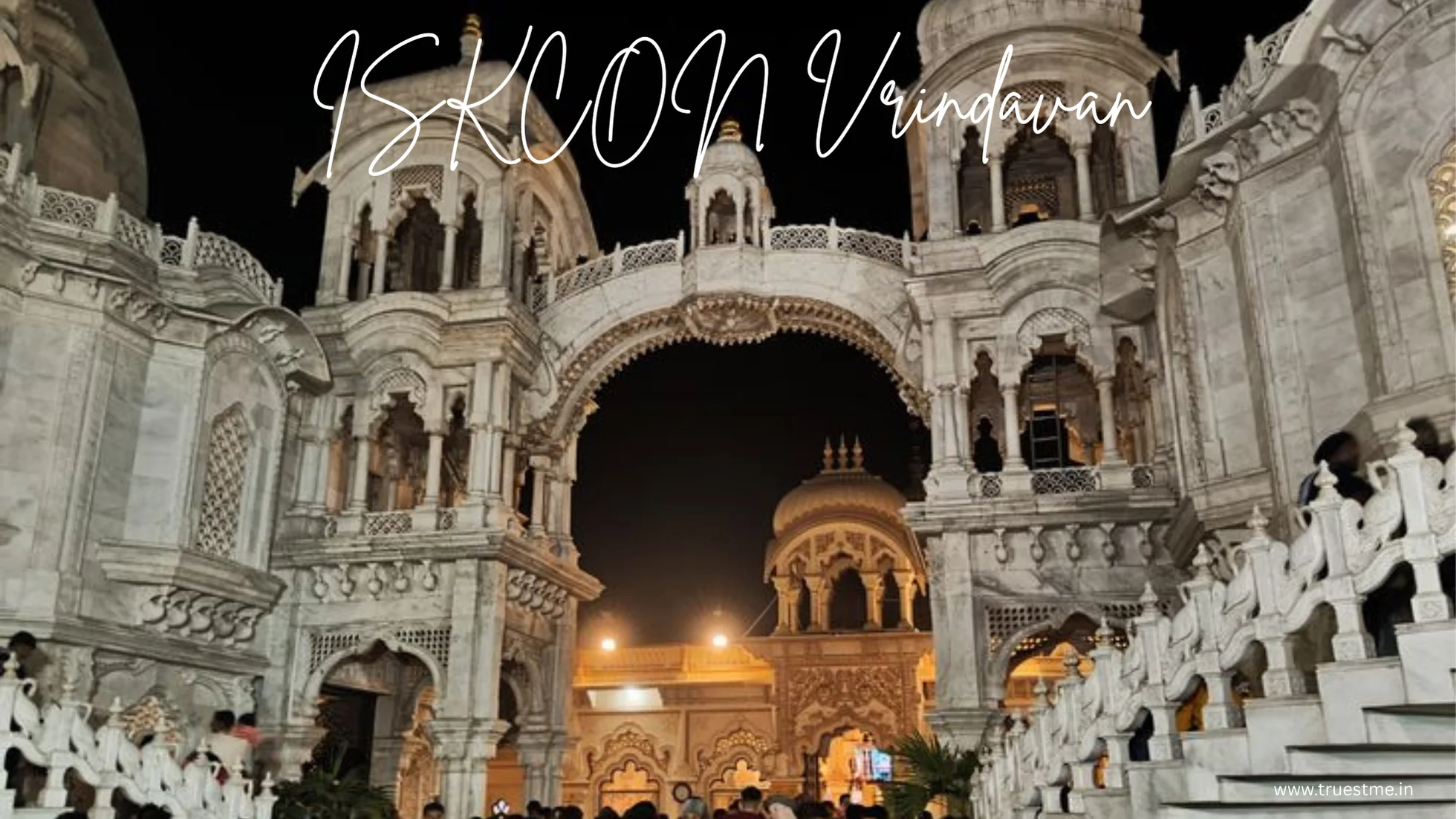
The architecture of ISKCON Temple Vrindavan combines traditional Indian temple design with practical features for accommodating thousands of visitors.
The temple is primarily built using white marble, creating a bright and serene atmosphere. The complex features beautifully carved pillars, elegant arches, spacious courtyards, and finely crafted marble floors that enhance its devotional ambiance.
The central prayer hall is designed to allow large congregations to participate comfortably in darshan, kirtans, and festivals. Natural light, open spaces, and decorative carvings contribute to the temple's peaceful environment.
The temple complex also includes landscaped gardens, fountains, devotional exhibits, and areas for spiritual gatherings, making it both architecturally attractive and functionally designed for pilgrims.
Main Deities Worshipped
The sanctum of Sri Krishna Balaram Mandir houses three beautifully decorated altars:
1. Sri Sri Krishna-Balaram
The central altar is dedicated to Lord Krishna and Lord Balarama, celebrating their divine brotherhood and childhood pastimes in Vrindavan.
2. Sri Sri Radha-Shyamasundar
Another altar is devoted to Srimati Radharani and Lord Krishna (Shyamasundar), representing divine love and devotion.
3. Sri Sri Gaura-Nitai
The third altar features Sri Chaitanya Mahaprabhu (Gaura) and Lord Nityananda (Nitai), who are revered in the Gaudiya Vaishnava tradition for spreading the chanting of the Hare Krishna Mahamantra.
The deities are adorned daily with fresh flowers, traditional garments, and ornaments, and each darshan offers a unique visual experience.
Daily Spiritual Activities
A typical day at ISKCON Vrindavan includes a range of devotional practices:
- Mangala Aarti
- Tulasi Aarti
- Guru Puja
- Bhagavatam Class
- Japa Meditation
- Raj Bhoga Darshan
- Sandhya Aarti
- Evening Kirtan
- Bhagavad Gita Discourses
- Prasadam Distribution
These activities create an atmosphere of continuous worship throughout the day, allowing visitors to participate according to their schedule.
Why Every Krishna Devotee Should Visit ISKCON Vrindavan
A visit to ISKCON Vrindavan is often more than a sightseeing experience. The temple provides an opportunity to immerse oneself in devotional music, sacred teachings, and the spiritual heritage of Braj.
Visitors appreciate:
- A peaceful and devotional atmosphere
- Beautiful deity darshan
- Continuous kirtans and bhajans
- Clean and well-maintained premises
- Opportunities to learn about Krishna consciousness
- Access to spiritual literature
- Satvik prasadam
- A welcoming environment for devotees from around the world
Whether you are visiting Vrindavan for the first time or returning as a devotee, the temple offers a meaningful spiritual experience.
Interesting Facts About ISKCON Vrindavan
- The temple's official name is Sri Krishna Balaram Mandir.
- It was inaugurated on 20 April 1975.
- The temple was founded by A. C. Bhaktivedanta Swami Prabhupada.
- It is located in the sacred Raman Reti area of Vrindavan.
- Devotees from more than 100 countries visit the temple every year.
- The temple complex includes Srila Prabhupada's Samadhi Mandir, guest accommodation, a book shop, gardens, and prasadam facilities.
- It is one of the most prominent ISKCON centers in the world and an important pilgrimage destination for followers of Gaudiya Vaishnavism.
ISKCON Vrindavan Darshan Timings (2026)
One of the most common questions among visitors is about the ISKCON Vrindavan Darshan Timings. The temple follows a well-organized daily schedule that includes multiple darshan sessions, devotional ceremonies, and spiritual discourses.
As the temple schedule may occasionally change during major festivals such as Janmashtami, Gaura Purnima, Radhashtami, and Kartik Month, it is always recommended to confirm the latest timings before your visit.
Regular Darshan Timings
| Darshan | Time |
|---|---|
| Morning Darshan | 4:30 AM – 1:00 PM |
| Evening Darshan | 4:00 PM – 8:30 PM |
The temple remains closed between 1:00 PM and 4:00 PM for deity rest and temple preparations.
Complete ISKCON Vrindavan Aarti Timings
Participating in the ISKCON Vrindavan Aarti is one of the most spiritually uplifting experiences for devotees. The temple conducts several daily aartis accompanied by melodious bhajans, traditional musical instruments, and congregational chanting of the Hare Krishna Mahamantra.
Daily Aarti Schedule
| Ceremony | Time |
|---|---|
| Mangala Aarti | 4:30 AM |
| Tulasi Aarti | 5:00 AM |
| Japa Meditation | 5:15 AM onwards |
| Shringar Darshan & Guru Puja | 7:15 AM |
| Srimad Bhagavatam Class | 8:00 AM |
| Raj Bhoga Aarti | 12:00 PM |
| Temple Closes | 1:00 PM |
| Temple Reopens | 4:00 PM |
| Sandhya Aarti | 6:30 PM |
| Bhagavad Gita Class / Evening Programs (varies by day) | After Sandhya Aarti |
| Shayana Aarti | 8:15 PM |
| Temple Closes | 8:30 PM |
Among all ceremonies, Mangala Aarti is considered especially sacred, as devotees gather before sunrise to begin the day with prayers and kirtan.
ISKCON Vrindavan Entry Fee
A major advantage for pilgrims is that there is no entry fee to visit ISKCON Vrindavan (Sri Krishna Balaram Mandir).
Entry Details
- Temple Entry Fee: Free
- Darshan: Free
- Aarti Participation: Free
- Kirtan Attendance: Free
- Bhagavad Gita Classes: Usually open to visitors (some special programs or retreats may require prior registration)
Visitors are welcome to make voluntary donations for temple maintenance, prasadam distribution, educational activities, and cow protection projects.
Best Time to Visit ISKCON Vrindavan
The temple welcomes visitors throughout the year, but the overall experience can vary depending on the season and festival calendar.
October to March (Best Season)
This is widely considered the most pleasant time to visit due to cooler weather, making it comfortable for darshan and sightseeing.
Festivals
If you wish to experience the temple at its most vibrant, plan your visit during:
- Janmashtami
- Radhashtami
- Gaura Purnima
- Kartik (Damodar) Month
- Holi (Braj Region Celebrations)
These occasions feature elaborate decorations, extended kirtans, cultural programs, and large gatherings of devotees.
Keep in mind that festival days are also the busiest, so arriving early is advisable.
How to Reach ISKCON Vrindavan
Located in the Raman Reti area of Vrindavan, the temple is well connected by road, rail, and air.
By Air
The nearest airport is:
- Agra Airport – approximately 75 km (limited flight connectivity)
For most domestic and international travelers, the preferred airport is:
- Indira Gandhi International Airport (Delhi) – approximately 160–170 km
From Delhi Airport, visitors can hire a taxi or take a train to Mathura and then continue to Vrindavan.
By Train
The nearest major railway station is:
Mathura Junction (MTJ) – approximately 12 km from the temple.
Mathura Junction is well connected to major Indian cities, including Delhi, Mumbai, Kolkata, Chennai, Jaipur, Ahmedabad, and Varanasi.
From the station, visitors can reach the temple by:
- Auto-rickshaw
- Taxi
- App-based cab (availability may vary)
- Shared e-rickshaw on some routes
By Road
Vrindavan has excellent road connectivity with nearby cities.
Approximate distances:
- Delhi – 160 km
- Agra – 75 km
- Mathura – 12 km
- Jaipur – 230 km
Regular government and private buses, taxis, and self-drive vehicles are available.
Parking Facility
Visitors arriving by private vehicle will find paid parking areas near the temple vicinity. During major festivals and weekends, parking fills up quickly, so reaching early is recommended.
ISKCON Vrindavan Guest House & Accommodation
Many devotees prefer staying within or near the temple to participate in early morning and evening spiritual programs.
The temple complex offers guest accommodation, subject to availability and the temple's booking policies.
Additionally, Vrindavan has a wide range of hotels, dharamshalas, and guest houses catering to different budgets.
Accommodation options include:
- Budget guest houses
- Mid-range hotels
- Premium hotels
- Family-friendly stays
- Ashram-style accommodations
During festivals and holiday seasons, advance booking is strongly recommended due to high demand.
Govinda's Restaurant & Prasadam
One of the highlights of visiting ISKCON Vrindavan is enjoying pure vegetarian satvik food.
The temple complex is home to Govinda's Restaurant, known for serving freshly prepared vegetarian meals inspired by traditional Indian and devotional cuisine.
Visitors can also receive prasadam, which is food first offered to the deities before being served to devotees.
Popular offerings often include:
- Thali meals
- Khichdi
- Rice preparations
- Chapati
- Paneer dishes
- Sweets
- Fresh fruit juices
- Lassi
- Snacks
The emphasis is on cleanliness, freshness, and sattvic ingredients without onion or garlic in many preparations.
Temple Book Store
The temple houses a well-stocked book shop where visitors can purchase:
- Bhagavad Gita As It Is
- Srimad Bhagavatam
- Chaitanya Charitamrita
- Children's spiritual books
- Japa malas
- Tulsi beads
- Incense
- Devotional music
- Souvenirs and gifts
Many books are available in English, Hindi, and several international languages.
Daily Spiritual Programs
Apart from darshan, visitors can participate in a variety of devotional activities throughout the day:
- Hare Krishna Kirtan
- Bhagavad Gita Classes
- Srimad Bhagavatam Discourses
- Japa Meditation
- Temple Tours
- Spiritual Counseling
- Devotee Association
- Cultural Programs (on selected days)
These programs provide an opportunity to learn more about Krishna consciousness and the teachings of Gaudiya Vaishnavism.
Essential Visitor Tips
To make your visit smooth and spiritually fulfilling, keep these tips in mind:
- Arrive early, especially for Mangala Aarti.
- Wear modest clothing suitable for a place of worship.
- Remove footwear before entering the temple.
- Maintain silence and respect during prayers and aarti.
- Follow the instructions of temple volunteers and security staff.
- Keep your belongings secure, particularly during crowded festivals.
- Stay hydrated during the summer months.
- If visiting during Janmashtami or Kartik, expect large crowds and plan accordingly.
- Consider spending time in the temple gardens and attending a Bhagavad Gita discourse for a deeper spiritual experience.
Places to Visit Near ISKCON Vrindavan
A visit to ISKCON Vrindavan (Sri Krishna Balaram Mandir) can easily be combined with other important temples and sacred sites in Vrindavan. Most of these attractions are located within a short driving distance, making it possible to explore several places in a single day.
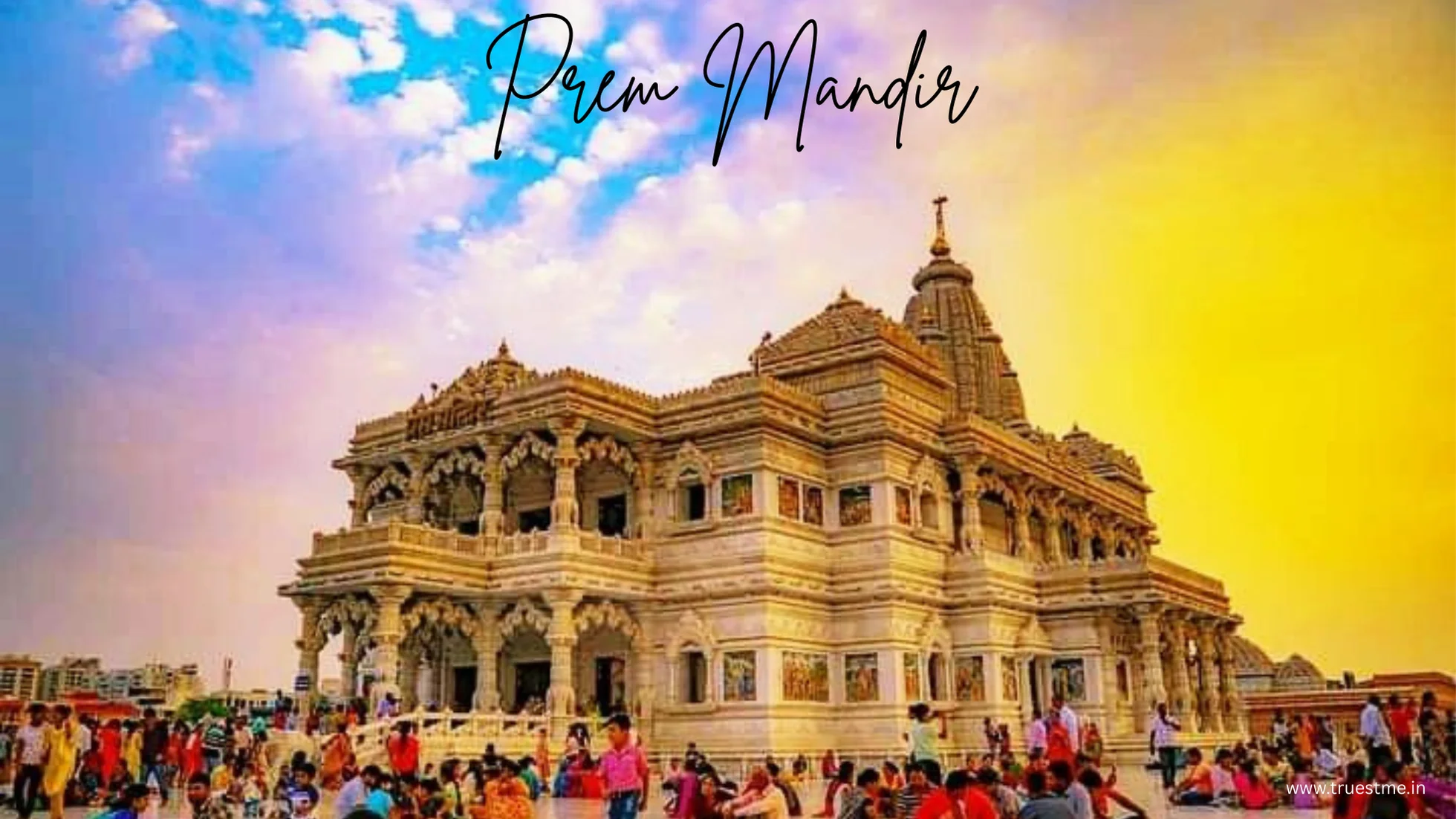
1. Prem Mandir
Located just a few minutes from ISKCON Vrindavan, Prem Mandir is one of the most beautiful temples in the city. Built in white Italian marble, it is dedicated to Radha Krishna and Sita Ram. The temple is especially popular for its evening musical fountain show and stunning illumination after sunset.
Distance from ISKCON: Approximately 1 km
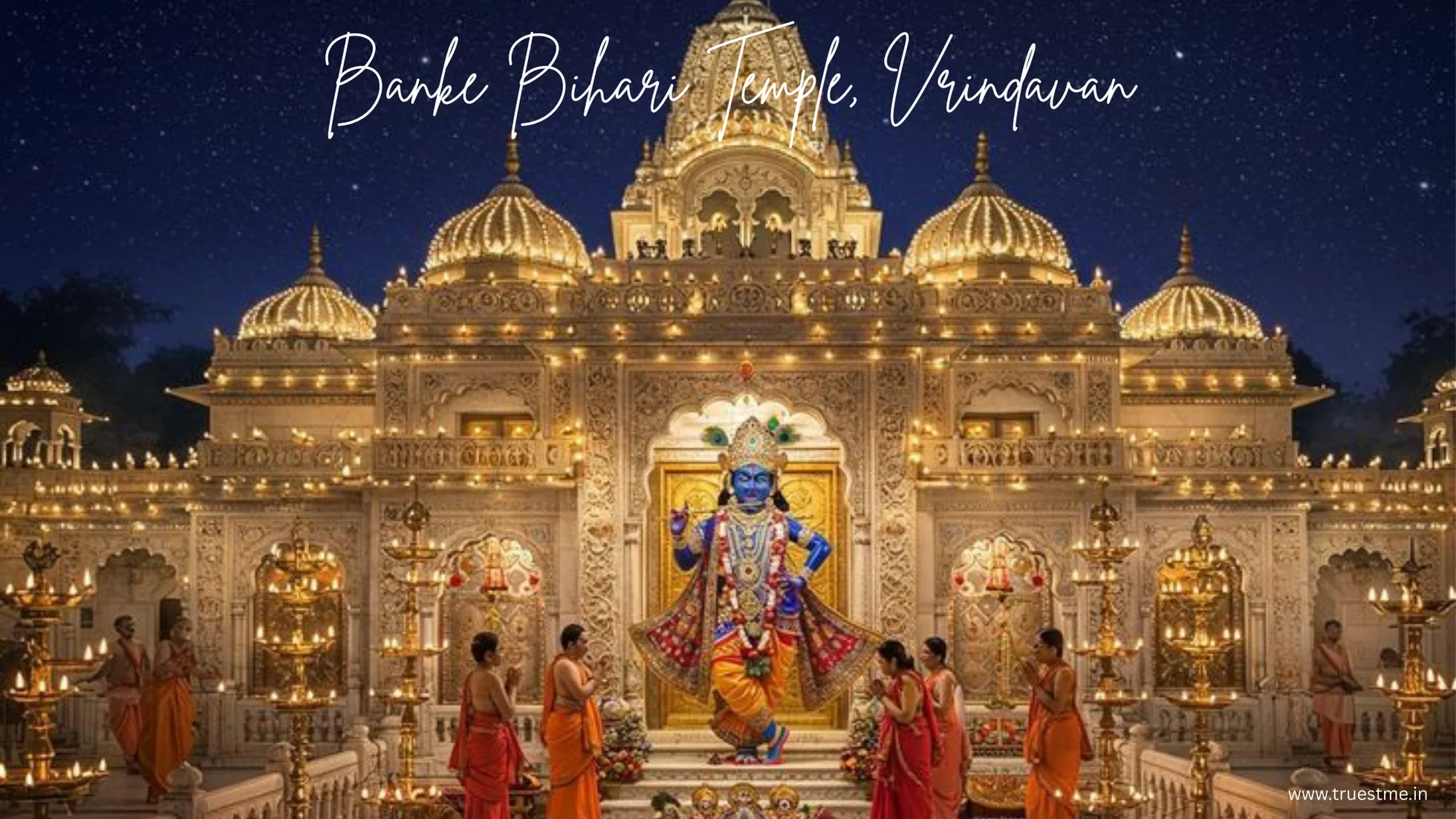
2. Banke Bihari Temple
The Banke Bihari Temple is among the most revered Krishna temples in India. Dedicated to Lord Krishna in the form of Banke Bihari Ji, it attracts thousands of devotees every day. The temple follows unique darshan traditions that make the experience memorable for pilgrims.
Distance from ISKCON: Approximately 2 km
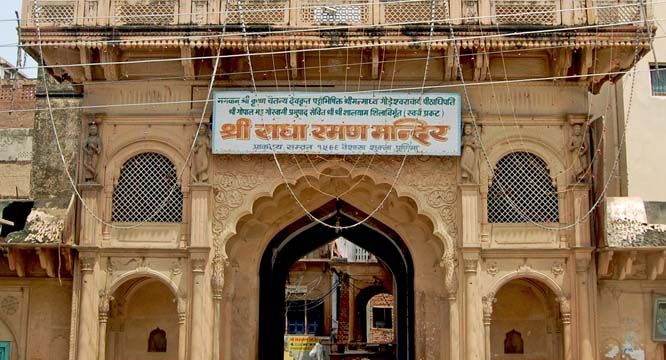
3. Radha Raman Temple
Established in the 16th century by Gopal Bhatta Goswami, the Radha Raman Temple is renowned for its self-manifested deity of Lord Krishna and its rich Gaudiya Vaishnava heritage.
Distance: Approximately 2.5 km
4. Nidhivan
Nidhivan is one of Vrindavan's most sacred groves. According to local tradition, it is associated with the divine Raas Leela of Lord Krishna and Radha. Visitors are requested to maintain respect and follow temple guidelines while visiting.
Distance: Approximately 2.5 km
5. Seva Kunj
Located near Nidhivan, Seva Kunj is another spiritually significant site connected with the pastimes of Radha and Krishna. It is known for its peaceful atmosphere and devotional importance.
6. Radha Damodar Temple
This historic temple is closely associated with Srila Jiva Goswami and is an important pilgrimage site within the Gaudiya Vaishnava tradition. Many devotees visit it after offering prayers at ISKCON Vrindavan.
7. Shri Rangji Temple
Famous for its South Indian architectural style, Shri Rangji Temple is dedicated to Lord Ranganatha (a reclining form of Lord Vishnu). Its towering gopuram and expansive temple complex make it one of Vrindavan's notable landmarks.
8. Keshi Ghat
Situated on the banks of the Yamuna River, Keshi Ghat is a serene place for evening prayers, boat rides, and witnessing the Yamuna Aarti. It is also associated with Lord Krishna's pastimes.
Major Festivals Celebrated at ISKCON Vrindavan
The temple celebrates numerous Vaishnava festivals with devotion, cultural programs, and elaborate decorations.
Janmashtami
The appearance day of Lord Krishna is the largest annual celebration. The temple is decorated with flowers and lights, and thousands of devotees gather for special kirtans, abhishekam, and midnight celebrations.
Radhashtami
Celebrated as the appearance day of Srimati Radharani, this festival features special darshan, devotional singing, and discourses.
Gaura Purnima
This festival commemorates the appearance of Sri Chaitanya Mahaprabhu, whose teachings form the foundation of the ISKCON movement.
Kartik (Damodar Month)
The month of Kartik is especially sacred in Vrindavan. Every evening, devotees offer lamps while singing the Damodar Ashtakam, creating a deeply devotional atmosphere.
Govardhan Puja
This festival remembers Lord Krishna's lifting of Govardhan Hill and includes the traditional Annakut offering of a wide variety of vegetarian preparations.
Ratha Yatra
ISKCON centers worldwide celebrate the Ratha Yatra festival with public processions, kirtans, and devotional activities. Special programs are also organized in Vrindavan.
Why ISKCON Vrindavan is Unique
Several factors distinguish ISKCON Vrindavan from other pilgrimage sites:
- Founded by Srila Prabhupada, whose global mission introduced Krishna consciousness to millions.
- Daily worship of Sri Sri Krishna-Balaram, Sri Sri Radha-Shyamasundar, and Sri Sri Gaura-Nitai.
- A welcoming international community of devotees.
- Regular Bhagavad Gita and Srimad Bhagavatam classes.
- Clean, organized, and well-maintained temple complex.
- Continuous devotional music and kirtan.
- Guest accommodation, prasadam facilities, and a spiritual book store within the campus.
Frequently Asked Questions (FAQs)
1. Where is ISKCON Vrindavan located?
ISKCON Vrindavan (Sri Krishna Balaram Mandir) is located in the Raman Reti area of Vrindavan, Uttar Pradesh, India.
2. What is the official name of ISKCON Vrindavan?
The official name is Sri Krishna Balaram Mandir.
3. Who founded ISKCON Vrindavan?
The temple was established by His Divine Grace A. C. Bhaktivedanta Swami Prabhupada (Srila Prabhupada).
4. When was ISKCON Vrindavan inaugurated?
The temple was inaugurated on 20 April 1975.
5. What are the darshan timings of ISKCON Vrindavan?
Generally, darshan is available from 4:30 AM to 1:00 PM and 4:00 PM to 8:30 PM, though timings may vary on festival days.
6. Is there an entry fee?
No. Entry to the temple and participation in regular darshan and aarti are free.
7. Which is the nearest railway station?
Mathura Junction, approximately 12 km away.
8. Which is the nearest airport?
Agra Airport is the nearest airport, while Indira Gandhi International Airport (Delhi) offers the best connectivity for most travelers.
9. Is accommodation available?
Yes. Guest accommodation is available subject to availability and the temple's booking policies. Many hotels and guest houses are also located nearby.
10. Is photography allowed?
Photography is generally permitted in outdoor areas. Restrictions may apply inside the main temple and during worship, so visitors should follow temple guidelines.
11. What is the best time to visit?
The most comfortable period is October to March, while festivals such as Janmashtami, Radhashtami, Gaura Purnima, and Kartik offer a vibrant devotional atmosphere.
12. Can international visitors visit the temple?
Yes. The temple welcomes visitors from all countries and backgrounds, provided they respect the temple's customs and code of conduct.
Final Conclusion
A visit to ISKCON Vrindavan (Sri Krishna Balaram Mandir) is much more than a temple tour—it is an opportunity to experience the devotional culture of Braj, hear the chanting of the Hare Krishna Mahamantra, and learn about the teachings of Lord Krishna through the Gaudiya Vaishnava tradition.
Whether you come for darshan, Mangala Aarti, Bhagavad Gita classes, or simply to enjoy the peaceful atmosphere, the temple offers an experience that combines spirituality, culture, and hospitality. Along with nearby attractions such as Prem Mandir, Banke Bihari Temple, and Keshi Ghat, it forms an essential part of any Vrindavan pilgrimage.
If you are planning a trip to the sacred land of Krishna, ISKCON Vrindavan deserves a place at the top of your itinerary.