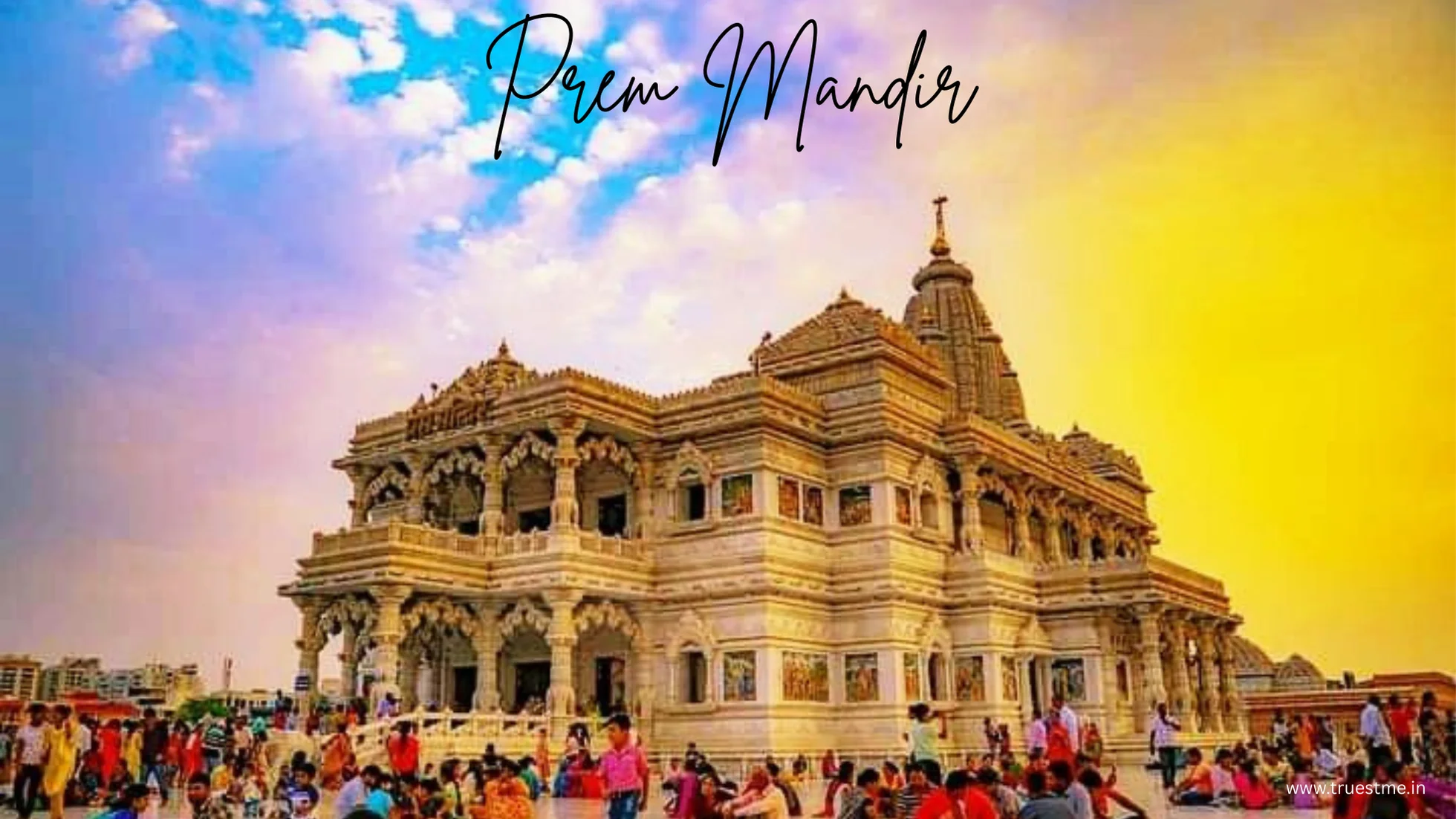
The Prem Mandir is not merely a temple — it is a grand spiritual statement carved in white marble. Located in the sacred town of Vrindavan, Prem Mandir represents divine love (Prem) as expressed in the eternal relationship between Radha and Krishna.
Unlike many ancient temples shaped by centuries of evolution, Prem Mandir is a modern creation built with traditional devotion and classical craftsmanship. It combines theology, architecture, sculpture, music, and symbolism into a unified spiritual experience.
Vrindavan: The Sacred Landscape of Krishna Bhakti
To understand Prem Mandir deeply, we must first understand Vrindavan itself.
Vrindavan is considered one of the holiest towns in Hinduism, especially in the Vaishnav tradition. According to scriptures such as the Bhagavata Purana, it is the place where Lord Krishna:
- Spent his childhood
- Performed Raas Leela
- Lifted Govardhan Hill
- Subdued the serpent Kaliya
The entire town is seen not just as geography but as sacred divine ground — a living spiritual landscape. Prem Mandir stands as a contemporary expression of that timeless devotion.
Vision and Founder: Jagadguru Kripalu Maharaj
Prem Mandir was established by Jagadguru Kripalu Maharaj, a revered spiritual leader and founder of Jagadguru Kripalu Parishat.
His vision was clear:
To create a temple that would:
- Spread the message of divine love
- Educate people about Radha-Krishna devotion
- Present scriptural teachings visually through sculpture
- Inspire both devotees and modern visitors
Construction began in 2001 and the temple was inaugurated in 2012. The project reportedly involved over 1,000 artisans and skilled craftsmen.
Architectural Philosophy and Sacred Geometry
Prem Mandir is built entirely from Italian white marble, symbolizing purity and spiritual illumination.
Structural Details:
- Spread across approximately 54 acres
- Two-storied main temple
- Elevated plinth platform
- Grand stairways leading to the sanctum
The temple follows traditional Nagara-style North Indian temple architecture while incorporating modern structural engineering.
Symbolic Elements:
- White marble → Purity of divine love
- Symmetry → Balance between devotion and surrender
- Open courtyard → Inclusiveness and universal spirituality
Every carving and design element is intentional, not decorative.
Sculptural Storytelling: Krishna Leelas in Marble
One of the most extraordinary aspects of Prem Mandir is its narrative sculpture panels.
The outer walls and gardens feature large-scale sculptural depictions of:
- Krishna lifting Govardhan Hill
- Raas Leela with Gopis
- Kaliya Naag Mardan
- Jhulan Leela (Swing Festival)
These sculptures are not random decorations. They serve as visual scripture, allowing visitors to understand sacred stories even without reading religious texts.
The detailing is remarkable — from facial expressions to flowing garments — all carved meticulously from marble.
Interior Sanctum and Deity Arrangement
Inside the temple, the spiritual experience deepens.
Ground Floor:
Radha-Krishna idols are placed at the center. Their posture and expressions emphasize divine love and devotion (Madhurya Bhava).
First Floor:
Sita-Ram idols are installed, representing another form of divine love — one of righteousness, duty, and ideal marital devotion.
This dual arrangement conveys an important theological message:
Divine love manifests in different forms but leads to the same spiritual truth.
The sanctum is adorned with:
- Marble pillars with intricate carvings
- Gold-plated decorative elements
Floral and geometric motifs inspired by classical Indian design
Light, Illumination, and Spiritual Atmosphere
One of the defining features of Prem Mandir is its evening illumination.
After sunset, the temple is lit with color-changing LED lights. The marble surface reflects these colors, creating a glowing aura around the structure.
Unlike typical temple lighting, this illumination is designed to:
- Enhance the spiritual ambiance
- Highlight architectural carvings
- Create a meditative visual experience
The Musical Fountain Show
Every evening, a musical fountain show is conducted in the temple complex.
The fountains move rhythmically to devotional songs dedicated to Radha and Krishna. This combination of:
- Water choreography
- Devotional music
- Marble backdrop
- Night lighting
creates a multi-sensory spiritual experience.
For many visitors, this becomes the emotional highlight of their visit.
Religious Importance in the Vaishnav Tradition
Prem Mandir actively promotes Krishna Bhakti and devotional service.
Major festivals celebrated with grandeur include:
- Janmashtami
- Radhashtami
- Holi
- Diwali
- Kartik Month Celebrations
During these festivals:
- The temple is decorated with flowers and lights
- Special aartis are performed
- Devotional singing (kirtan) fills the complex
The temple becomes a center of collective spiritual energy.
Social and Cultural Impact
Prem Mandir has significantly impacted religious tourism in Vrindavan.
It attracts:
- Devotees
- Architecture enthusiasts
- Photographers
- International tourists
Its modern yet traditional presentation makes it accessible to younger generations while preserving scriptural authenticity.
It also contributes economically to the local community through tourism-related activities.
Visiting Information and Travel Guidance
Timings:
- Morning: 8:30 AM – 12:00 PM
- Evening: 4:30 PM – 8:30 PM
Entry: Free
Best Time to Visit Prem Mandir:
October to March for pleasant weather
Evening for illumination and fountain show
Nearby Attractions:
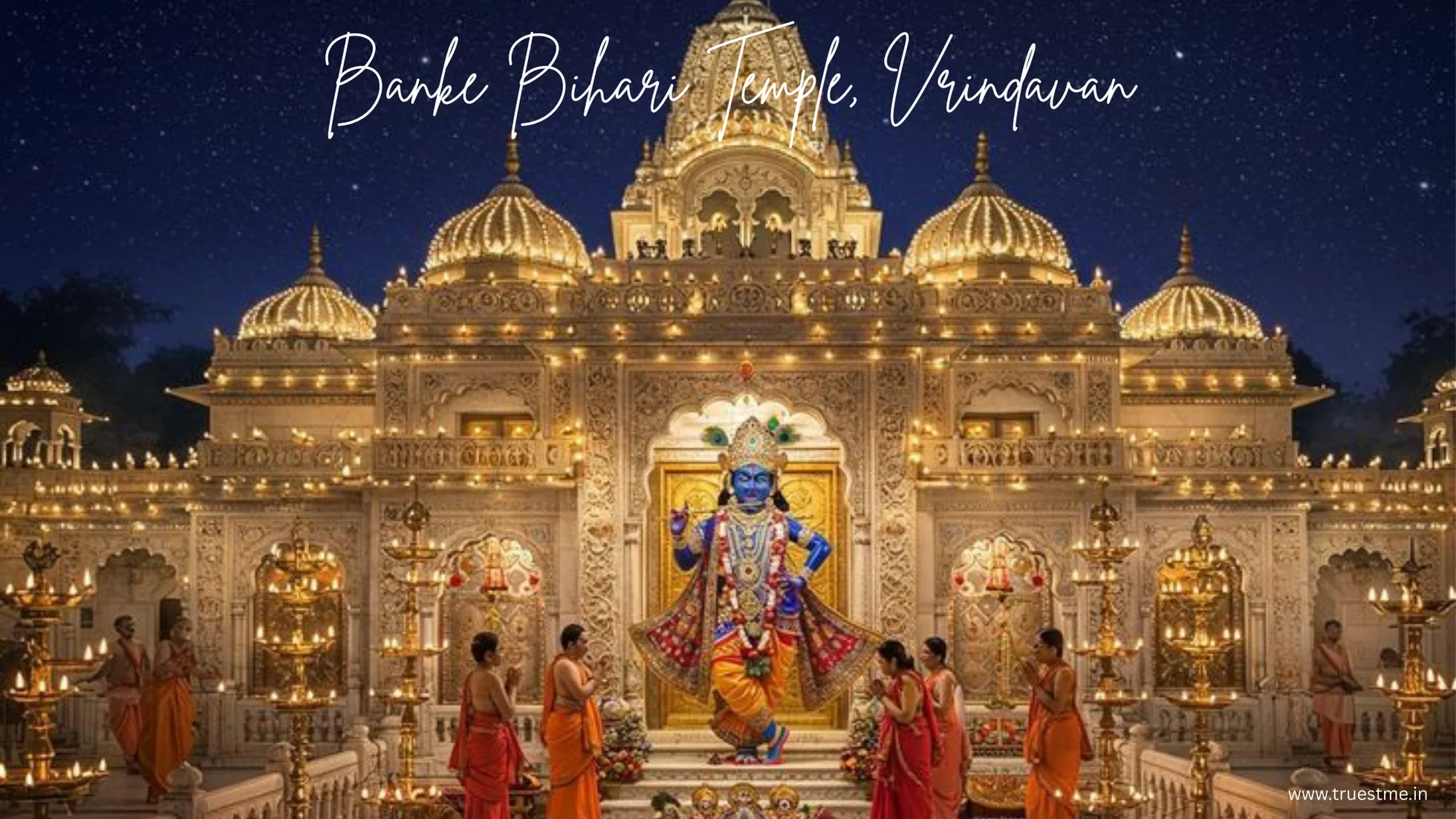
- Banke Bihari Temple
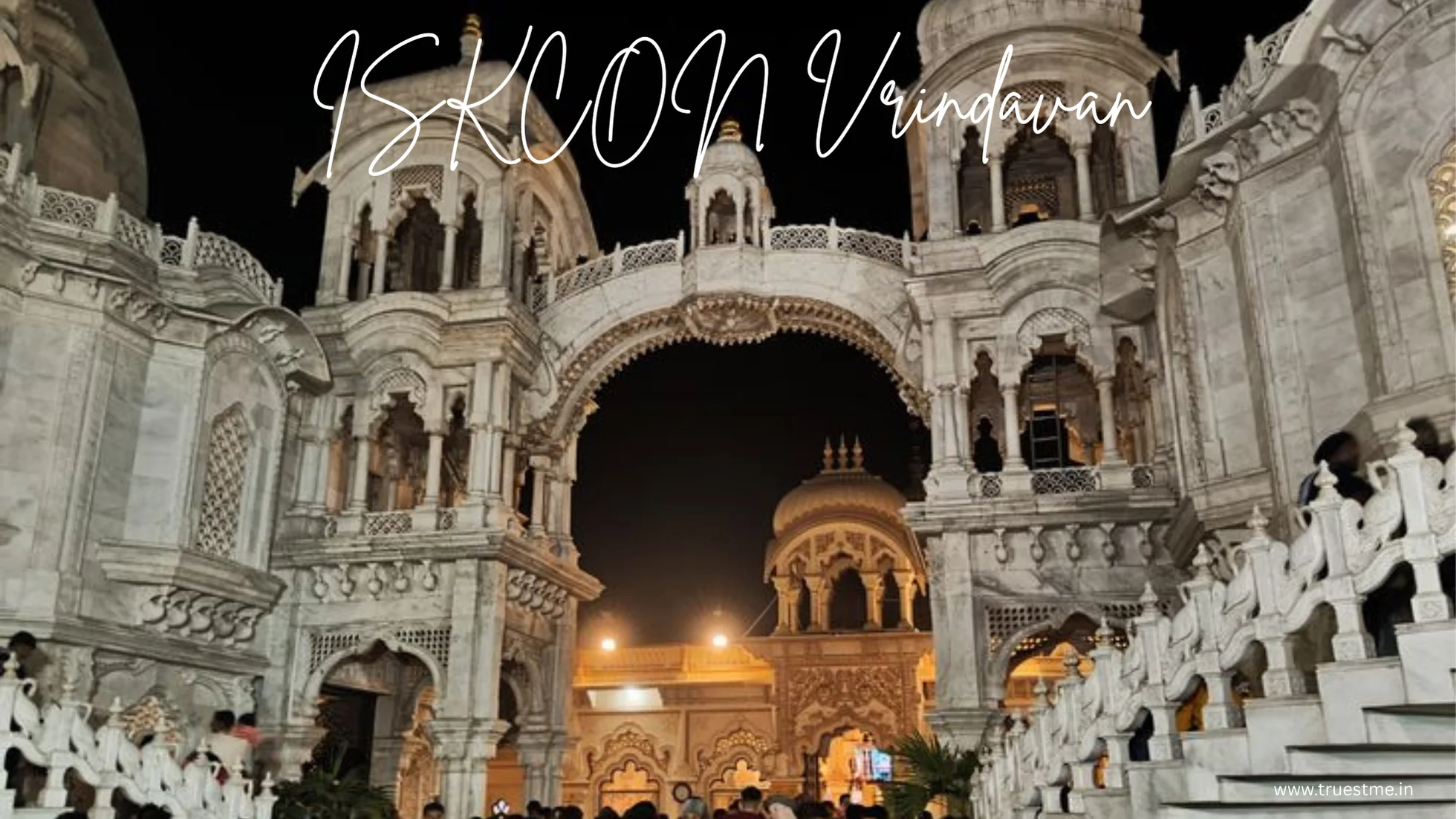
- ISKCON Temple, Vrindavan
- Nidhivan
- Mathura
Why Prem Mandir Is More Than a Modern Temple
Prem Mandir is:
- A theological teaching tool
- A devotional art gallery
- A spiritual retreat
- A modern architectural achievement
- A celebration of divine love
It bridges ancient scripture with modern presentation. It makes philosophy visible. It transforms marble into devotion.