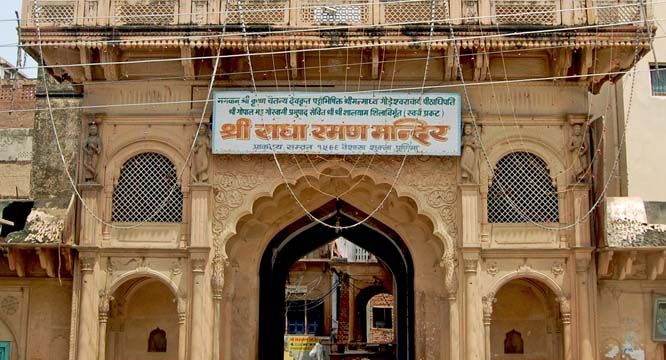
Vrindavan, the sacred land of Lord Krishna’s divine pastimes, is home to numerous temples, each representing centuries of devotion, culture, and spirituality. Among these, the Radha Raman Temple is uniquely revered for its intimate form of worship, rich historical significance, and profound spiritual teachings.
Founded by Gopala Bhatta Goswami in the 16th century, the temple is celebrated for the self-manifested (Swayambhu) deity of Radha Raman, which represents Krishna’s Madhurya Bhava, the sweet and loving aspect of divine interaction with devotees. Over centuries, this temple has remained a living center of devotion, spirituality, and cultural preservation, attracting pilgrims, scholars, and international devotees alike.
Location and Spiritual Context
The temple is located in Vrindavan, a spiritual hub that has inspired devotional movements for centuries.
Vrindavan’s Spiritual Importance: Considered the playground of Lord Krishna’s childhood and youth pastimes, this town is sanctified by tales from the Bhagavata Purana and other scriptures.
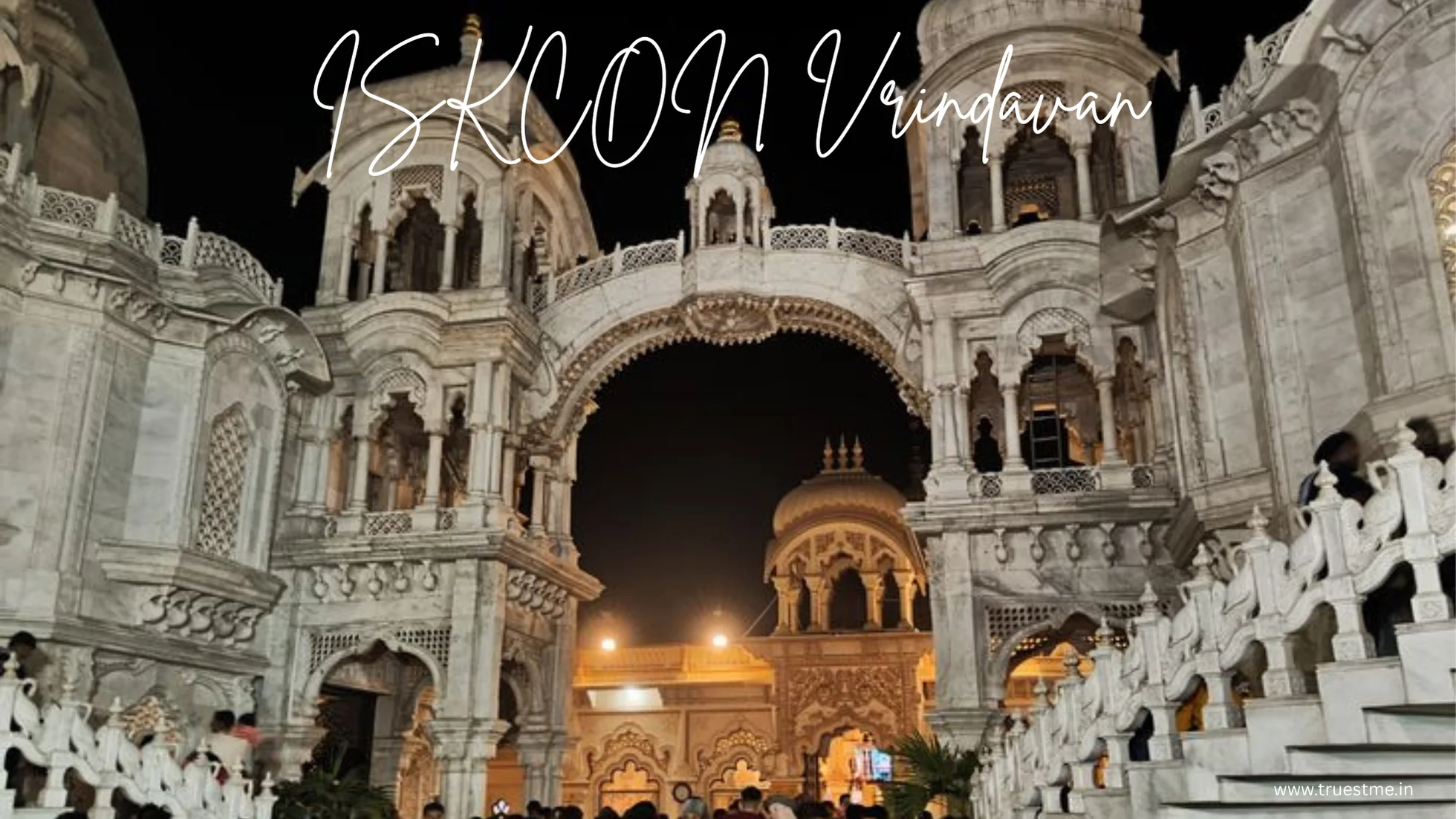
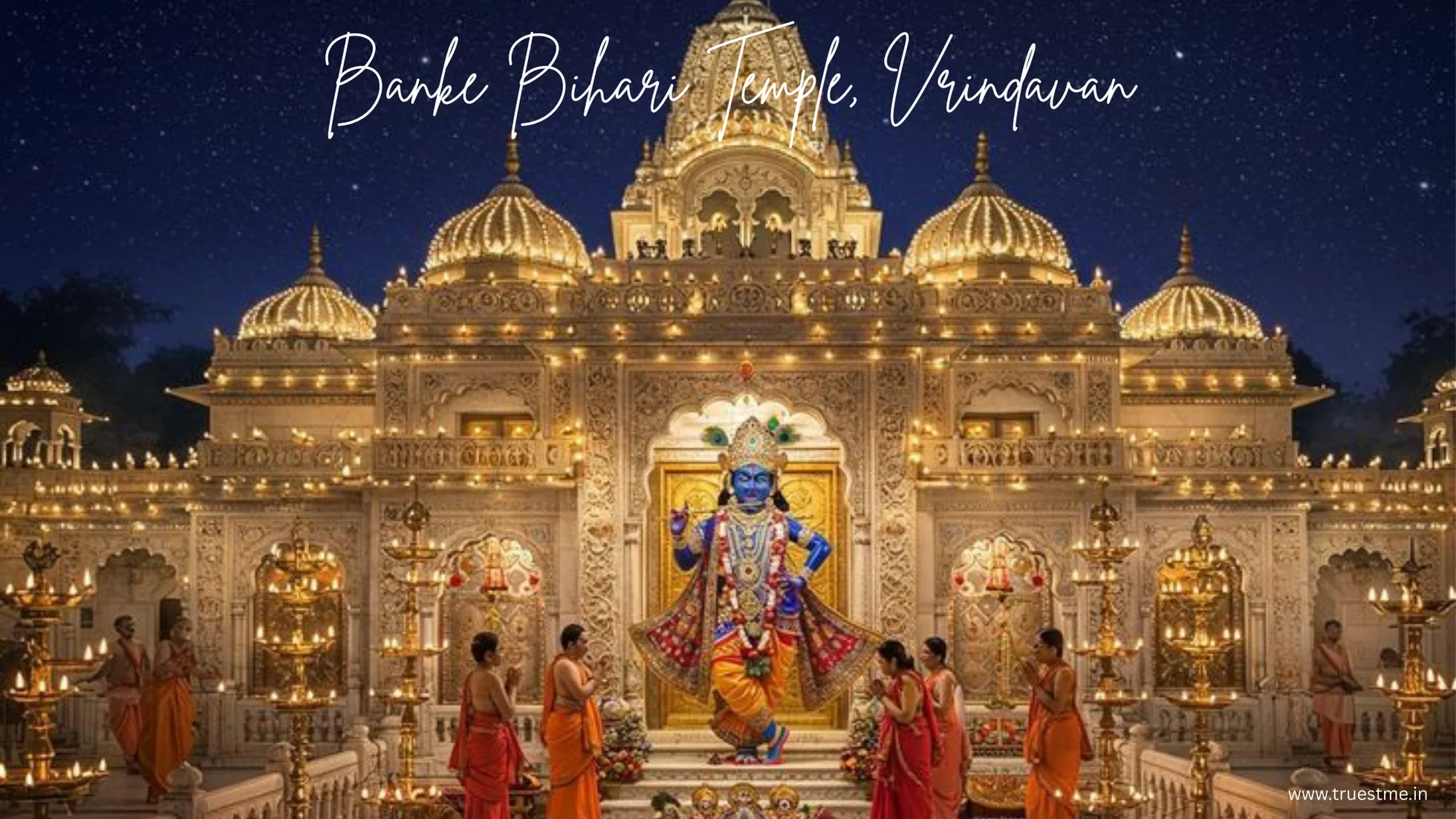
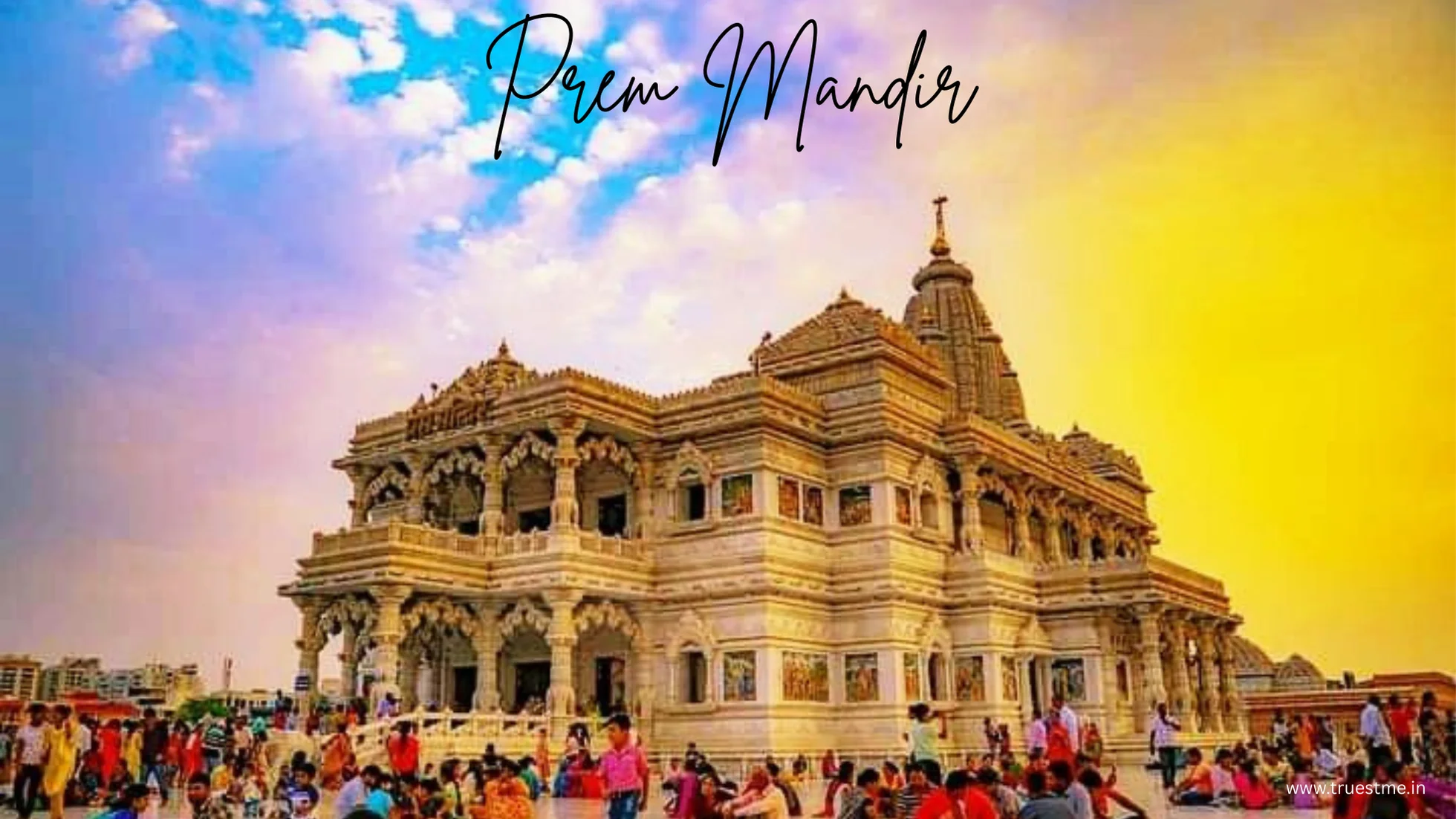
Proximity to Other Temples: Radha Raman Temple is near iconic sites such as Banke Bihari Temple, Prem Mandir, and ISKCON Temple, Vrindavan, making it part of a comprehensive Krishna pilgrimage circuit.
Devotional Ecosystem: Unlike grand temple complexes, Radha Raman Temple emphasizes personal, intimate interaction with the deity, reflecting the town’s spiritual ethos.
Historical Background
Radha Raman Temple was established by Gopala Bhatta Goswami, one of the six principal disciples of Chaitanya Mahaprabhu, the 16th-century saint who propagated Gaudiya Vaishnavism.
Key historical highlights:
16th Century Origins: The deity of Radha Raman appeared spontaneously (Swayambhu) as a result of Gopala Bhatta’s intense devotion.
Gaudiya Vaishnav Connection: The temple became a nucleus for Chaitanya Mahaprabhu’s teachings, emphasizing loving devotion (bhakti) and chanting the holy names of Krishna.
Preservation of Tradition: For centuries, the temple has been a center for devotional education, bhajans, and scriptural study, maintaining a living link to the spiritual culture of Vrindavan.
Cultural Impact: Many poets, scholars, and musicians have drawn inspiration from the temple’s devotional ambiance, enriching devotional literature and performing arts.
Architecture and Temple Layout
Radha Raman Temple reflects traditional North Indian (Nagara) architectural style with deep symbolic meaning:
Sanctum (Garbhagriha): Small and intimate, designed to facilitate personal interaction with the deity.
Courtyard: Supports congregational worship, kirtans, and festivals.
Pillared Halls and Mandap: Houses devotees during special events and religious ceremonies.
Sculptures and Murals: Illustrate Krishna-Radha pastimes, spiritual stories, and the teachings of the Goswamis.
Symbolism in Design:
- Intimate sanctum → personal spiritual connection
- Courtyard → communal devotion and collective bhakti
- Murals → devotional storytelling and scriptural education
The Deity – Radha Raman
The self-manifested deity of Radha Raman is the heart of the temple:
Form and Posture: Standing Krishna with flute, radiating sweetness and compassion.
Spiritual Significance: Embodies Krishna’s Madhurya Bhava, emphasizing loving, intimate relationships with devotees.
Daily Worship: Includes dressing (Vastra), offerings (Bhog), and aartis.
Unique Aspect: Devotees believe that the deity responds spiritually to sincere love and devotion, offering a transformative experience.
Radha Raman Temple encourages direct, personal devotion, making it a profound spiritual destination.
Daily Rituals and Devotional Practices
The temple maintains a strict, structured routine of devotion:
Mangala Aarti (Early Morning): Waking the deity with songs, prayers, and ceremonial lamps.
Bhog Offerings: Carefully prepared food is offered, symbolizing love and service.
Midday Darshan: Time for meditation and personal reflection.
Evening Aarti: Main congregational ceremony with singing, dancing, and lamps.
Continuous Kirtans: Daily devotional singing reinforces spiritual immersion and community participation.
These rituals blend personal devotion with collective spirituality, fostering a dynamic spiritual environment.
Festivals Celebrated
Radha Raman Temple celebrates festivals with vibrant devotion and theological significance:
Janmashtami: Midnight celebration of Krishna’s birth with drama, bhajans, and ritualistic worship.
Radhashtami: Honoring Radha with decorations, chanting, and offerings.
Holi: Colors festival representing Krishna’s playful pastimes with Gopis.
Diwali & Kartik Month: Extended celebrations with lamps, devotional music, and community worship.
These festivals immerse devotees in spiritual ecstasy, combining devotion, art, and cultural heritage.
Spiritual Significance
Radha Raman Temple is central to Madhurya Bhava devotion in Gaudiya Vaishnavism:
Personal Bhakti: Encourages intimate, loving devotion to Krishna.
Scriptural Connection: Practices follow teachings of Chaitanya Mahaprabhu and the Goswamis.
Community Building: Temple activities foster collective devotion, learning, and cultural continuity.
Transformative Experience: Devotees often experience emotional upliftment, peace, and spiritual inspiration after visiting.
Visiting Information and Guidelines
Opening Hours: 4:30 AM – 12:00 PM; 4:00 PM – 8:30 PM
Entry: Free
Visitor Guidelines:
- Modest clothing required
- Maintain silence and decorum in sanctum
- Photography prohibited inside sanctum
- Participate in aartis and kirtans to enhance experience
Best Time to Visit: Early morning for quiet meditation; evening for aarti and devotional singing.
How to Reach Radha Raman Temple
Railway: Mathura Junction – 15 km
Airports: Agra – 75 km, Delhi – 150 km
Road: Accessible by bus, taxi, or self-drive
Local Transport: Auto-rickshaws, cycle rickshaws, taxis
Nearby Attractions
- Banke Bihari Temple
- Prem Mandir
- ISKCON Temple, Vrindavan
- Mathura
This enables a full Vrindavan pilgrimage experience, tracing Krishna’s divine pastimes across temples.
Travel Tips
- Dress modestly and respectfully
- Visit early mornings for meditation, evenings for vibrant aartis
- Participate in kirtans and bhajans to fully engage spiritually
- Carry water and light snacks for extended visits
- Avoid peak festival hours if seeking a quieter experience
Conclusion
Radha Raman Temple is not just a historic site; it is a living center of devotion, culture, and spiritual education.
With its:
- Self-manifested deity of Radha Raman
- Rich devotional rituals and daily aartis
- Festivals full of music, dance, and devotion
- Deep ties to Gaudiya Vaishnav philosophy
…it offers an immersive and transformative spiritual experience, making it an essential destination for devotees, scholars, and cultural travelers visiting Vrindavan.