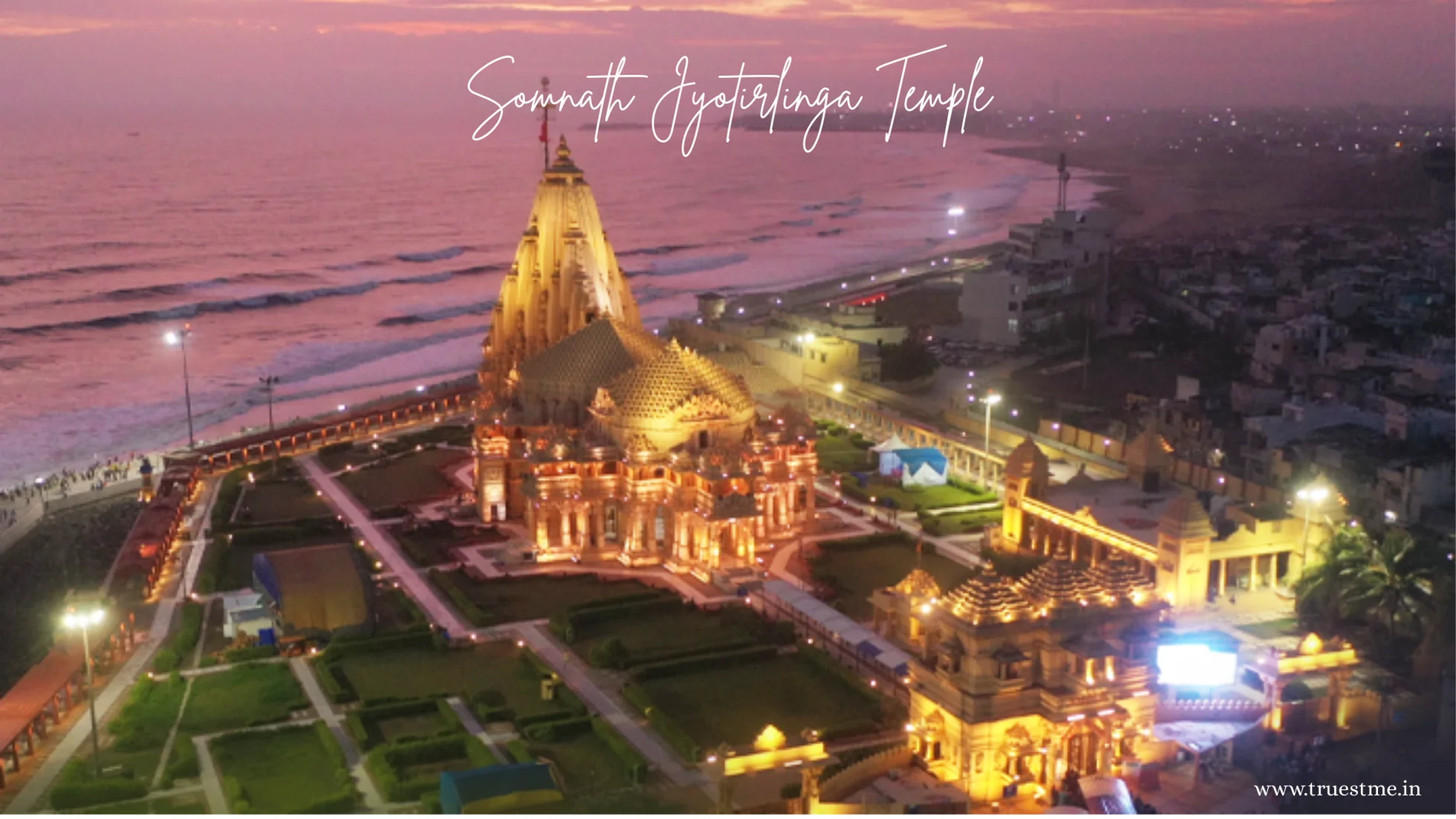
Located on the sacred shores of the Arabian Sea, Somnath Temple is not just a temple but a timeless symbol of devotion, resilience, and divine energy. Known as the first among the twelve Jyotirlingas of Lord Shiva, Somnath holds immense religious, historical, and cultural importance in India. For centuries, it has attracted saints, pilgrims, historians, and travelers who come seeking spiritual peace and divine blessings.
This temple represents the eternal victory of faith over destruction, as it has been rebuilt multiple times despite repeated invasions, making it one of the most historically significant temples in the world.
1. Location & Geographical Significance
Somnath Temple is situated in Prabhas Patan near Veraval in the western state of Gujarat. The temple stands at the edge of the Arabian Sea, offering a mesmerizing coastal view that enhances its spiritual atmosphere.
One of the most unique geographical aspects of the temple is the famous Arrow Pillar (Baan Stambh), which indicates that there is no land in a straight line between Somnath and Antarctica. This symbolizes the temple’s position as a sacred point facing the infinite ocean, representing spiritual vastness and eternity.
2. Mythological Importance of Somnath Jyotirlinga
According to Hindu scriptures, Somnath is deeply connected with the story of the Moon God (Chandra). It is believed that Chandra was cursed by his father-in-law Daksha and lost his radiance. To regain his brightness, he worshipped Lord Shiva at this sacred place with intense devotion. Pleased by his penance, Lord Shiva appeared as a Jyotirlinga and relieved him from the curse.
The name “Somnath” literally means “The Lord of the Moon” (Som = Moon, Nath = Lord). This mythological origin gives the temple a special place in Shaivism and Hindu spiritual traditions.
3. Historical Evolution & Repeated Reconstructions
Somnath Temple is one of the few temples in the world that has witnessed cycles of destruction and reconstruction over centuries. Historical records suggest that the temple was originally built in ancient times and later reconstructed by various rulers and devotees.
It is believed that the temple was destroyed several times during medieval invasions, yet each time it was rebuilt with even greater devotion. The present temple structure was reconstructed in 1951 under the guidance of Sardar Vallabhbhai Patel, symbolizing India’s cultural revival after independence.
This history makes Somnath not only a religious site but also a monument of national pride and spiritual perseverance.
4. Architectural Grandeur and Temple Design
The temple is built in the traditional Chalukya style (Kailash Mahameru Prasad style) of architecture, known for its intricate carvings, grand pillars, and majestic spire (Shikhara). The temple’s structure reflects classical Hindu temple architecture combined with coastal aesthetics.
Key Architectural Highlights:
- Height of Shikhara: Approximately 155 feet
- Intricately carved stone structure
- Sea-facing temple alignment
- Golden Kalash at the top of the temple
- Baan Stambh (Arrow Pillar) facing the ocean
The temple’s design symbolizes strength, divinity, and cosmic alignment, making it architecturally and spiritually unique.
5. Spiritual Significance Among the 12 Jyotirlingas
Somnath is considered the first Jyotirlinga among the twelve sacred Jyotirlingas dedicated to Lord Shiva across India. In Hindu belief, Jyotirlingas represent the infinite light form of Lord Shiva.
Visiting Somnath Jyotirlinga is believed to:
- Remove negative karma
- Grant spiritual liberation (Moksha)
- Bring peace and prosperity
- Strengthen devotion and inner calm
The temple is mentioned in sacred texts such as Shiva Purana, Skanda Purana, and Rig Veda, highlighting its ancient religious importance.
6. Daily Darshan, Aarti & Ritual Practices
The temple follows a disciplined schedule of rituals that enhance the devotional experience.
Darshan Timings:
- Morning Opening: 6:00 AM
- Afternoon Darshan: Continues throughout the day
- Closing Time: Around 9:30 PM
Aarti Timings:
- Morning Aarti – 7:00 AM
- Midday Aarti – 12:00 PM
- Evening Aarti – 7:00 PM
The evening aarti, accompanied by Vedic chants and temple bells, creates a deeply spiritual and emotionally uplifting environment for devotees.
7. Sound and Light Show – A Historical Experience
One of the most informative experiences at Somnath is the evening Sound and Light Show held near the temple premises. This show narrates the temple’s history, mythological significance, and reconstruction journey using visual storytelling and narration.
It helps visitors understand the deeper cultural and historical legacy of Somnath Temple in an engaging way.
8. Best Time to Visit Somnath Temple
The most ideal time to visit is from October to March when the weather is pleasant and suitable for temple visits and sightseeing.
Seasonal Insights:
- Winter (Best): Pleasant climate and comfortable darshan
- Summer (March–June): Hot coastal weather
- Monsoon (July–September): Moderate rainfall with fewer crowds
9. Major Festivals Celebrated at Somnath
Maha Shivratri
The grandest festival celebrated with night-long prayers, special abhishekam, and devotional programs.
Shravan Month
A highly sacred month dedicated to Lord Shiva, attracting thousands of pilgrims daily.
Kartik Purnima
Celebrated with spiritual gatherings and special rituals at the temple.
During festivals, the temple atmosphere becomes extremely vibrant, devotional, and spiritually charged.
10. How to Reach Somnath (Complete Travel Guide)
By Air
The nearest airport is Diu Airport, located around 85 km from the temple.
By Train
The nearest railway station is Veraval Railway Station, which is just 7 km from Somnath and well connected to major cities.
By Road
Somnath is well connected by highways from cities like Ahmedabad, Rajkot, Junagadh, and Dwarka via regular buses and private vehicles.
11. Nearby Sacred & Tourist Attractions
Visitors can explore several important spiritual and tourist sites near Somnath:
- Triveni Sangam – Holy confluence of rivers
- Bhalka Tirth – Associated with Lord Krishna’s final moments
- Somnath Beach – Scenic and peaceful coastline
- Junagadh – Historical and cultural destination
12. Accommodation, Food & Pilgrim Facilities
Somnath offers a wide range of accommodation options, including:
- Temple trust dharamshalas (budget-friendly)
- Mid-range hotels and guest houses
- Premium hotels near temple area
The temple trust also provides clean food facilities (Prasad Bhojan), parking, security, medical aid, and cloakroom services for pilgrims.
13. Important Travel Tips for Devotees
- Wear modest and traditional attire
- Mobile phones and electronics may be restricted inside the temple
- Visit early morning for peaceful darshan
- Follow temple discipline and queue system
- Book accommodation in advance during festival seasons
14. Cultural, Spiritual & Meditative Experience
The spiritual energy at Somnath is profoundly calming. The sound of ocean waves, temple bells, and Vedic chants create a deeply meditative atmosphere. Many devotees spend time in silent prayer and meditation near the temple complex to experience inner peace and spiritual clarity.
The temple also represents the fusion of nature and spirituality, as the endless sea in front of the shrine symbolizes infinity and divine consciousness.
15. Why Somnath Temple is a Must-Visit Pilgrimage in India
Somnath Temple is not only a sacred Jyotirlinga but also a symbol of India’s cultural strength, faith, and heritage. Its mythological roots, historical resilience, grand architecture, and spiritual aura make it one of the most important pilgrimage destinations in India.
Conclusion
A visit to Somnath Temple is a deeply transformative spiritual journey that connects devotees with divine energy, ancient history, and cultural heritage. From its mythological origins to its modern reconstruction, the temple stands as an eternal symbol of faith and devotion. Whether you are a pilgrim, history lover, or spiritual traveler, Somnath offers an enriching experience that stays in the heart forever.