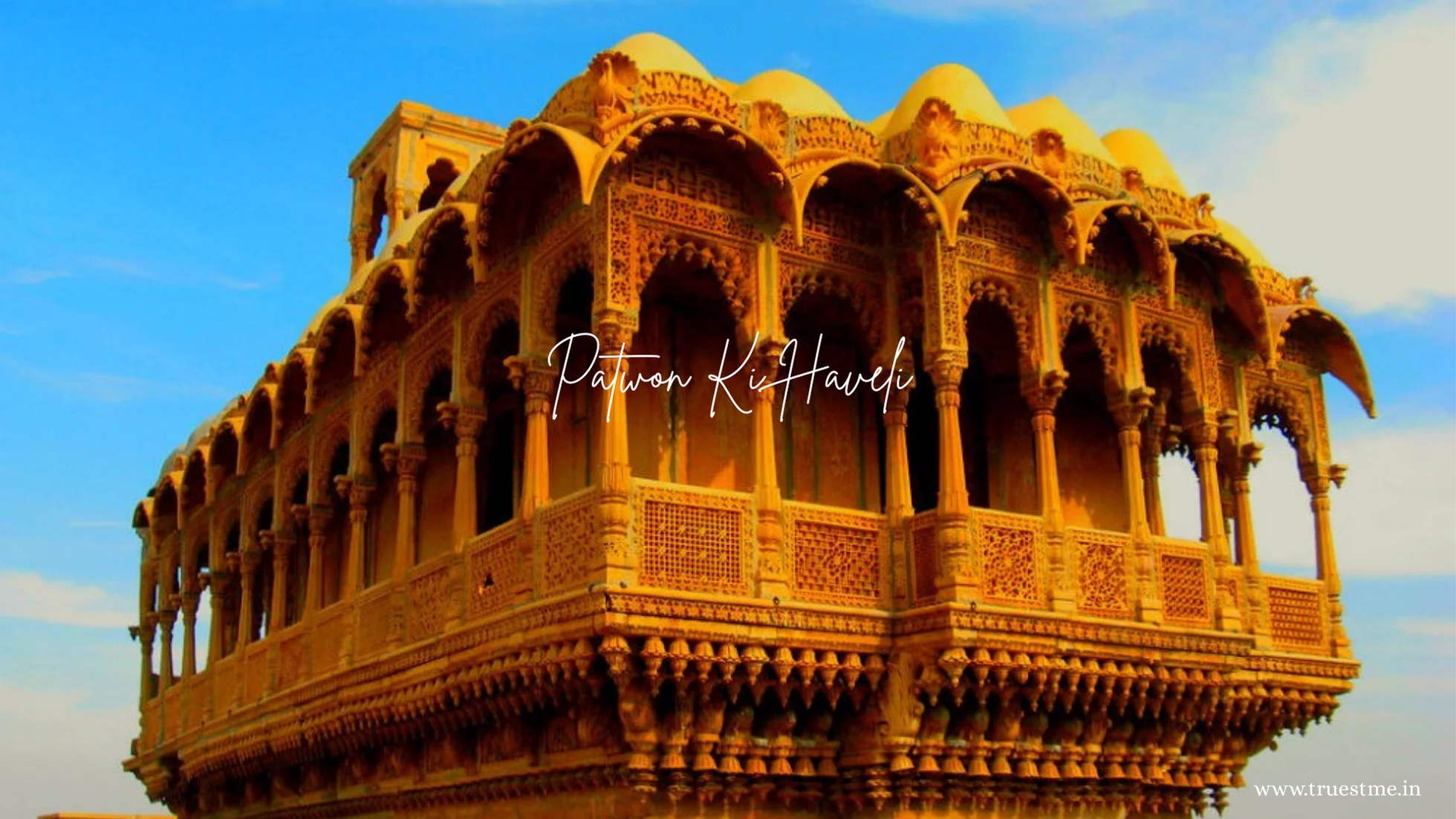
Among the architectural jewels of Rajasthan’s desert heritage, Patwon Ki Haveli holds a special place as a symbol of merchant wealth, artistic excellence, and cultural sophistication. Located in the historic lanes of Jaisalmer, this magnificent cluster of five havelis is one of the most elaborate and intricately designed residential complexes in the region.
Unlike royal palaces built by kings and rulers, Patwon Ki Haveli represents the opulence of the trading community that once dominated the economy of Jaisalmer. With its richly carved sandstone facades, decorative balconies, frescoed interiors, and museum galleries, the haveli offers deep insight into the socio-economic and cultural life of 19th-century merchant families in the Thar Desert.
Historical Background and Origin
Patwon Ki Haveli was commissioned in the early 19th century by Guman Chand Patwa, a wealthy Jain trader and banker known for his flourishing business in gold, silver, brocade, and precious textiles. He was among the richest merchants in Jaisalmer during a time when the city was a thriving trade center on ancient caravan routes connecting India with Central Asia, Persia, and the Middle East.
The construction of the haveli complex began around 1805 and took several decades to complete. Instead of building a single mansion, Guman Chand Patwa constructed five separate havelis for his five sons, symbolizing both family unity and individual prestige.
During that period, merchant families played a crucial role in shaping the urban economy of Jaisalmer, often rivaling royal elites in terms of wealth and influence. Patwon Ki Haveli thus stands as a historical record of the city’s prosperous trading era before the decline of overland trade routes during the colonial period.
Architectural Excellence and Design Philosophy
Patwon Ki Haveli is widely regarded as one of the finest examples of Rajasthani haveli architecture, combining Rajput, Mughal, and local desert architectural elements. Built entirely from golden-yellow sandstone, the structure seamlessly blends with the surrounding landscape, creating a visually harmonious appearance.
Intricate Stone Carvings and Facade
The exterior facade of the haveli is its most striking feature, adorned with:
- Highly detailed floral and geometric carvings
- Ornamental jharokhas (overhanging balconies)
- Delicate jali (lattice) work
- Sculpted pillars and archways
Each inch of the surface is intricately decorated, showcasing the extraordinary craftsmanship of local artisans who used traditional hand-carving techniques without modern machinery.
Climate-Responsive Architecture
The haveli’s architectural design was well adapted to the harsh desert climate of Rajasthan. Thick sandstone walls, narrow corridors, and internal courtyards helped regulate temperature and airflow. The jharokhas and lattice windows allowed ventilation while maintaining privacy for the residents, especially women of the household.
Structure: A Unique Cluster of Five Havelis
One of the most distinctive aspects of Patwon Ki Haveli is that it is not a single mansion but a complex of five interconnected havelis. Each haveli was built with its own unique design, layout, and decorative elements while maintaining overall architectural harmony.
Key Structural Features
- Multi-storied buildings with elaborate rooms
- Central courtyards for light and ventilation
- Private chambers and guest halls
- Hidden passages and storage areas
- Separate sections for business and residence
This layout reflects the dual lifestyle of merchant families who conducted business operations from their homes while maintaining luxurious living spaces.
Interior Artistry and Decorative Elements
Frescoes, Mirror Work, and Paintings
The interiors of the haveli are richly decorated with fresco paintings, mirror work, and ornamental designs that depict mythological themes, daily life scenes, and traditional motifs. Gold paint, glass inlays, and natural pigments were used to enhance the visual appeal of the interiors.
Woodwork and Decorative Ceilings
Carved wooden doors, painted ceilings, and ornamental arches add depth to the haveli’s aesthetic richness. The ceilings often feature symmetrical patterns and vibrant artwork that reflect the artistic tastes of wealthy merchant families.
Museums and Cultural Exhibits
Today, parts of Patwon Ki Haveli have been converted into museums managed by the Archaeological Survey and private authorities. These museum sections display:
- Antique furniture and utensils
- Traditional costumes and jewelry
- Historical manuscripts and documents
- Miniature paintings and artifacts
These exhibits provide valuable insight into the lifestyle, business practices, and cultural traditions of the Patwa family and the broader merchant community of Jaisalmer.
Socio-Economic and Cultural Significance
Patwon Ki Haveli is more than an architectural landmark; it is a representation of the economic power of traders in medieval and early modern Rajasthan. At a time when Jaisalmer prospered through trade caravans, merchant families like the Patwas played a central role in shaping the city’s economy, culture, and urban development.
The haveli also reflects the social structure of that era, where large joint families lived together in grand mansions with designated areas for domestic life, business dealings, and guest hospitality.
Its preservation today highlights the importance of conserving non-royal heritage sites that represent the lives of influential merchant classes, not just kings and warriors.
Artistic Symbolism and Craftsmanship
Every carving and decorative element in Patwon Ki Haveli carries symbolic meaning. Floral motifs often represented prosperity, while geometric patterns reflected balance and harmony. The use of jali screens symbolized both aesthetic elegance and functional design, allowing airflow and diffused light.
The haveli is also a testament to the skill of Jaisalmer’s traditional stone carvers, whose craftsmanship is considered among the finest in Rajasthan.
Best Time to Visit Patwon Ki Haveli
The ideal time to visit is from October to March, when the weather in Jaisalmer remains pleasant and suitable for sightseeing. Summers can be extremely hot due to the desert climate, making exploration difficult during midday hours.
For photography enthusiasts, early morning and late afternoon offer the best lighting conditions, as the golden sandstone glows beautifully under soft sunlight.
Entry Fees, Timings, and Visitor Information
Timings
- Open daily: Approximately 9:00 AM to 5:00 PM
- Museum sections may have separate visiting hours
Entry Fees
- Indian visitors: Nominal ticket fee
- Foreign tourists: Higher ticket fee
- Additional charges for cameras or videography in certain sections
Recommended Visit Duration
- 1.5 to 2 hours for a detailed exploration
How to Reach Patwon Ki Haveli
Location Accessibility
Patwon Ki Haveli is situated in the old city area, about 1.5 km from Jaisalmer Fort, making it easily accessible by foot, auto-rickshaw, or taxi.
By Air
The nearest airport is Jaisalmer Airport, while the nearest major airport with better connectivity is in Jodhpur.
By Train
Jaisalmer Railway Station is well connected to major cities such as Delhi, Jaipur, and Jodhpur.
By Road
Well-maintained highways connect Jaisalmer to major cities across Rajasthan, making road travel convenient via buses and private vehicles.
Nearby Tourist Attractions
Visitors exploring Patwon Ki Haveli can also visit several nearby historical and cultural sites:
- Gadisar Lake – A historic man-made reservoir with temples and ghats
- Nathmal Ki Haveli – Known for its symmetrical architecture
- Salim Singh Ki Haveli – Famous for its distinctive peacock-shaped roof
- Local markets of Jaisalmer – Ideal for handicrafts and traditional souvenirs
Conservation Challenges and Preservation Efforts
Due to its age and sandstone structure, Patwon Ki Haveli faces challenges such as weathering, environmental impact, and tourist pressure. Conservation efforts by heritage authorities aim to preserve its delicate carvings, frescoes, and structural integrity. Sustainable tourism practices and controlled visitor access are increasingly emphasized to protect this historical monument for future generations.
Interesting Facts About Patwon Ki Haveli
It is one of the first and largest havelis constructed in Jaisalmer.
The haveli complex took nearly 50 years to complete.
It was built by a merchant family rather than royal rulers.
Each of the five havelis has a distinct architectural style.
The haveli is considered a prime example of merchant-era luxury architecture in India.
Travel Tips for Visitors
Hire a knowledgeable guide to understand the historical details and symbolism.
Visit early in the day to avoid crowds and heat.
Wear comfortable footwear for exploring multiple floors and narrow passages.
Respect heritage guidelines and avoid touching delicate carvings or artwork.
Combine the visit with nearby attractions for a comprehensive heritage tour.
Conclusion
Patwon Ki Haveli is a remarkable testament to the artistic brilliance, economic prosperity, and cultural depth of Jaisalmer’s merchant community. Its intricate carvings, grand architectural design, and historical importance make it one of the most informative and visually captivating heritage sites in Rajasthan.