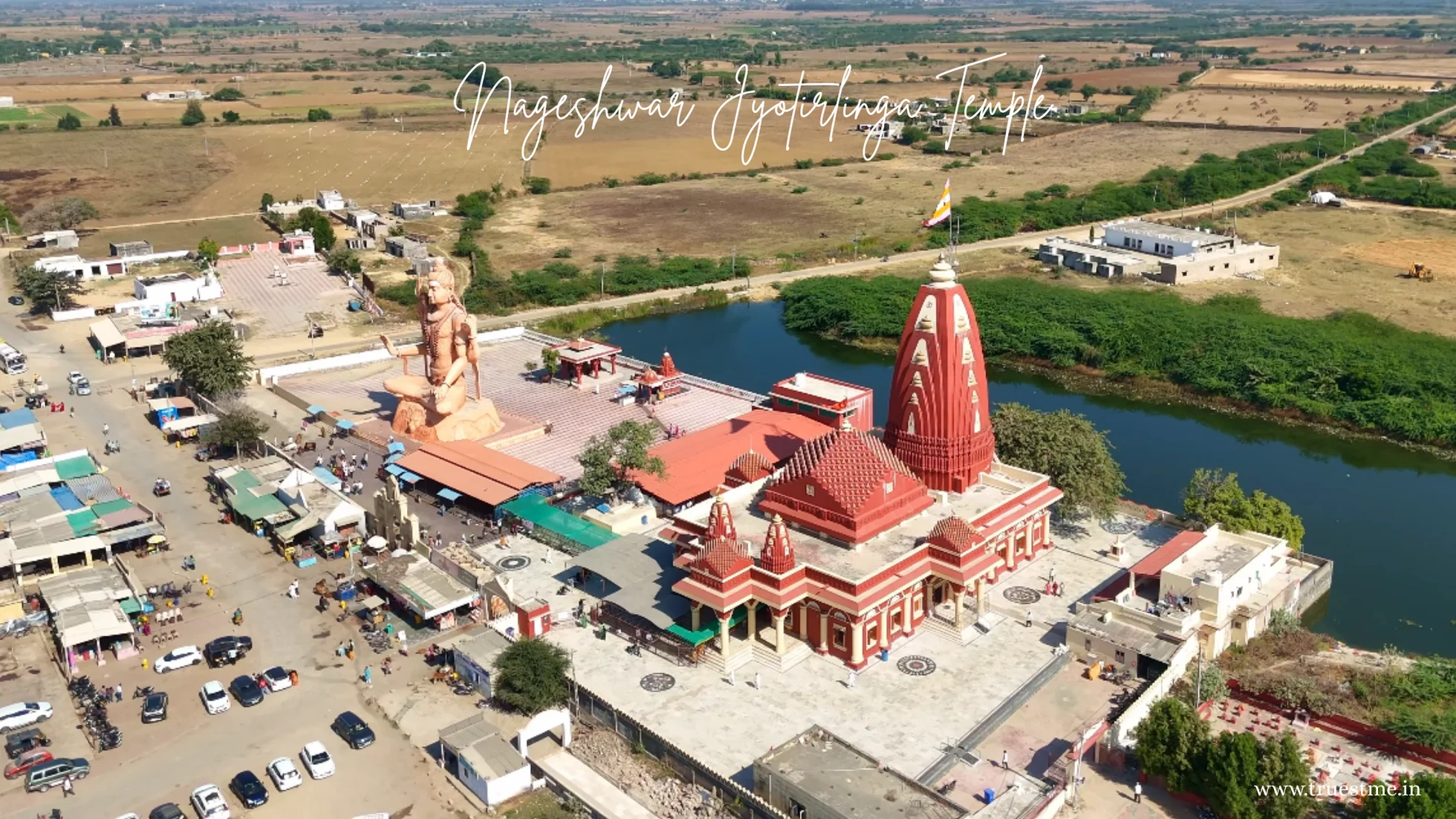
Situated along the sacred coastal route near Dwarka, the divine Nageshwar Jyotirlinga Temple is one of the twelve revered Jyotirlingas of Lord Shiva, making it one of the holiest pilgrimage sites in Hinduism. This ancient shrine represents Lord Shiva as the supreme protector who destroys fear, negativity, and evil forces. Surrounded by a serene and spiritually charged atmosphere, the temple draws thousands of devotees, saints, and spiritual seekers throughout the year.
Unlike many other temples that are known mainly for architecture, Nageshwar Jyotirlinga is deeply rooted in sacred scriptures, mythology, and devotional traditions, making it a spiritually transformative destination rather than just a tourist attraction.
Scriptural and Mythological Significance of Nageshwar Jyotirlinga
The Nageshwar Jyotirlinga is prominently mentioned in the Shiva Purana, one of the most important scriptures dedicated to Lord Shiva. According to the ancient legend, a demon named Daruka terrorized devotees and imprisoned a Shiva devotee named Supriya along with many others in a forest called Darukavana.
Even in captivity, Supriya continued chanting “Om Namah Shivaya” with unwavering devotion. His intense faith invoked Lord Shiva, who appeared in a radiant form, destroyed the demon, and protected his devotees. At that sacred moment, Shiva manifested as a Jyotirlinga at the site, and the place came to be known as Nageshwar—meaning the Lord of Serpents.
The serpent symbolism is deeply philosophical. In Shaivism, the serpent represents control over fear, ego, and worldly attachments. Worshipping Nageshwar Jyotirlinga is believed to free devotees from poisons of life such as anger, fear, and ignorance.
Philosophical Meaning of “Jyotirlinga” and Its Spiritual Power
The term Jyotirlinga is derived from two Sanskrit words: “Jyoti” (divine light) and “Linga” (cosmic symbol of Shiva). Unlike ordinary Shivlings, Jyotirlingas are believed to be self-manifested (Swayambhu) and radiate divine cosmic energy.
Among the 12 Jyotirlingas spread across India, Nageshwar holds a unique place because it symbolizes protection from negativity and spiritual awakening. Devotees believe that sincere worship here helps:
- Remove fear and anxiety
- Protect from negative energies
- Attain inner peace and spiritual clarity
- Strengthen devotion and faith in Lord Shiva
This makes the temple especially significant for those seeking mental peace and spiritual growth.
Historical Background and Evolution of the Temple
The exact historical origin of Nageshwar Jyotirlinga Temple dates back to ancient times, with references found in sacred texts rather than historical inscriptions. The region around Dwarka has been a major center of pilgrimage for thousands of years, especially due to its association with Lord Krishna and Shaivite traditions.
The present temple structure has been renovated in modern times to accommodate the growing number of pilgrims while preserving its sacred sanctity. Despite modernization, the temple still maintains traditional rituals, spiritual discipline, and Vedic worship practices that have been followed for centuries.
Its continuous importance in Hindu pilgrimage routes highlights its enduring religious relevance across generations.
Architectural Grandeur and Temple Complex
The temple architecture is simple yet spiritually majestic, designed to focus more on devotion than ornamentation. The complex is spacious and peaceful, allowing pilgrims to perform darshan and meditation comfortably.
Key Architectural Highlights
- A towering 25-meter statue of Lord Shiva in a meditative posture
- Traditional temple design with a sanctified Garbhagriha (sanctum)
- Sacred Jyotirlinga placed below ground level, enhancing its mystical aura
- Spacious prayer halls and clean temple premises
The large Shiva statue outside the temple has become an iconic landmark and symbolizes divine calm, strength, and protection.
Unique Rituals, Abhishek & Worship Traditions
Daily worship at Nageshwar Jyotirlinga follows traditional Vedic rituals performed by temple priests. The most important ritual is the Abhishek, where the Shivling is bathed with sacred offerings such as:
- Milk
- Water
- Honey
- Bilva leaves
- Sandalwood paste
Devotees can also participate in special pujas like Rudrabhishek, Laghu Rudra, and Maha Rudra, which are considered highly auspicious for removing obstacles and gaining divine blessings.
Chanting of Shiva mantras and Rudram creates a spiritually vibrant environment inside the temple.
Religious Importance in the Dwarka Pilgrimage Circuit
Nageshwar Jyotirlinga holds immense importance as part of the Dwarka pilgrimage route. Pilgrims visiting the sacred Dwarkadhish Temple often include Nageshwar in their spiritual itinerary.
This sacred circuit generally includes:
- Dwarkadhish Temple (Lord Krishna)
- Nageshwar Jyotirlinga (Lord Shiva)
- Bet Dwarka (associated with Lord Krishna)
- Rukmini Devi Temple
This combination of Shaivite and Vaishnavite traditions makes the journey spiritually holistic.
Major Festivals and Grand Celebrations
Maha Shivratri
Maha Shivratri is the most significant festival celebrated with grand devotion. Thousands of pilgrims gather for night-long prayers, special abhisheks, bhajans, and spiritual discourses.
Shravan Month (Sawan)
The holy month of Shravan sees massive footfall of Shiva devotees who offer Jal Abhishek and perform fasting and prayers.
Nag Panchami
As Nageshwar symbolizes the Lord of Serpents, Nag Panchami is also observed with special rituals and devotion.
Darshan Timings, Entry & Temple Guidelines
- Opening Time: Around 5:00 AM
- Closing Time: Around 9:00 PM
- Entry Fee: Free for all devotees
- Special Darshan & Puja: Available with prior booking
- Photography: Restricted inside the sanctum
Devotees are expected to maintain silence, modest dress, and respect temple traditions during darshan.
Best Time to Visit Nageshwar Jyotirlinga
The ideal time to visit is from October to March when the weather in coastal Gujarat is pleasant and suitable for pilgrimage. Early morning darshan provides a calm and less crowded spiritual experience.
For a deeply devotional atmosphere, visiting during Maha Shivratri or the Shravan month offers a unique spiritual vibe, though the temple becomes more crowded.
How to Reach Nageshwar Jyotirlinga Temple
By Air
The nearest airport is Jamnagar Airport (approximately 130 km), well-connected to major Indian cities.
By Train
The nearest railway station is Dwarka Railway Station, which has good connectivity with Ahmedabad, Rajkot, and Surat.
By Road
The temple is located about 16–18 km from Dwarka and is easily accessible by taxi, auto-rickshaw, and buses via well-maintained roads.
Nearby Spiritual & Tourist Attractions
Dwarkadhish Temple
One of the Char Dham pilgrimage sites dedicated to Lord Krishna and a major spiritual center near Nageshwar.
Bet Dwarka
An ancient island believed to be the original residence of Lord Krishna, accessible by ferry.
Rukmini Devi Temple
A sacred temple dedicated to Goddess Rukmini, showcasing ancient architecture and mythology.
Travel Tips for Pilgrims and Devotees
- Visit early morning for peaceful darshan
- Carry water, especially during summer
- Wear traditional and modest clothing
- Avoid peak afternoon heat in summer
- Plan a combined Dwarka pilgrimage for a complete spiritual journey
- Participate in Abhishek for a deeper devotional experience
Why Nageshwar Jyotirlinga Temple is a Spiritually Powerful Destination
Nageshwar Jyotirlinga Temple is not just a place of worship but a sacred center of divine energy, mythology, and spiritual awakening. Its association with ancient scriptures, powerful legends, and Jyotirlinga status makes it one of the most revered Shiva temples in India.
The temple’s peaceful ambiance, deep-rooted mythological importance, and proximity to major pilgrimage sites create a spiritually enriching experience that goes beyond ordinary temple visits. For devotees seeking protection, inner peace, and divine blessings of Lord Shiva, Nageshwar Jyotirlinga offers a profound and soul-stirring journey of faith, devotion, and spiritual transformation.