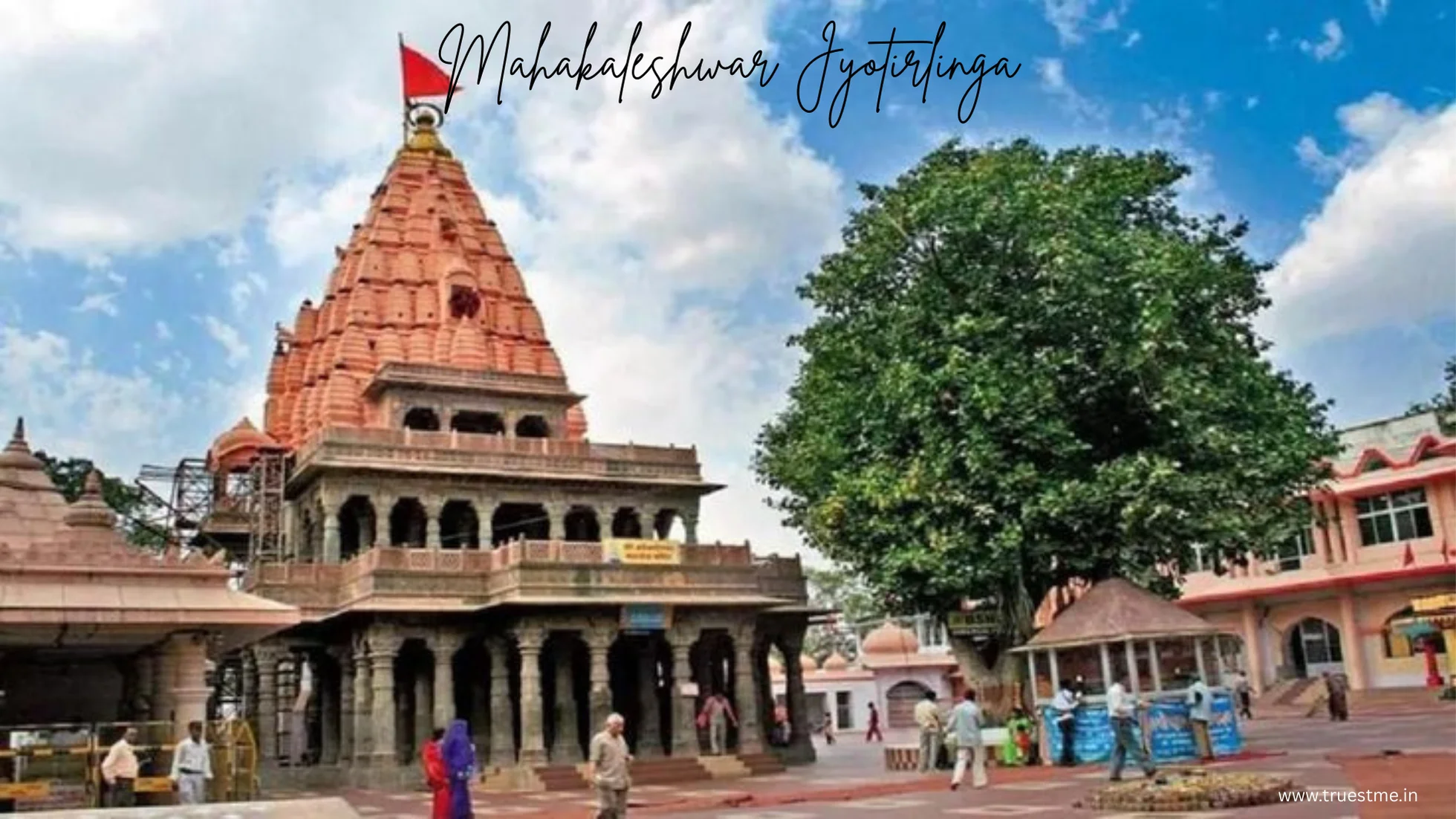
Located in the sacred city of Ujjain on the banks of the holy Shipra River, the Mahakaleshwar Jyotirlinga is one of the most powerful and spiritually significant temples dedicated to Lord Shiva. It is among the twelve sacred Jyotirlingas and holds a unique position as the only south-facing (Dakshinamukhi) Jyotirlinga, symbolizing Lord Shiva as the ruler of time and death. The divine aura, ancient rituals, and deep spiritual vibrations make this temple a major pilgrimage destination for millions of devotees every year.
Revered as “Mahakal” — the Lord of Time — this sacred shrine is not just a temple but a powerful spiritual center where devotees seek protection, liberation, and divine blessings. From the mystical Bhasma Aarti to the temple’s rich mythology and historical legacy, Mahakaleshwar Jyotirlinga offers a deeply transformative spiritual experience.
1. About Mahakaleshwar Jyotirlinga
The Mahakaleshwar Temple is dedicated to Lord Shiva in his fierce and protective form, Mahakal. It is one of the twelve Jyotirlingas, which are considered the most sacred abodes of Lord Shiva across India. The temple is situated in the ancient city of Ujjain, one of the seven Moksha-puris (cities believed to grant liberation).
Key Highlights:
- One of the 12 sacred Jyotirlingas of Lord Shiva
- Only south-facing (Dakshinamukhi) Jyotirlinga
- Self-manifested (Swayambhu) Shiva Lingam
- Located near the sacred Shipra River
- Famous for the unique Bhasma Aarti ritual
The temple complex also houses multiple shrines of various deities, making it a major spiritual and architectural landmark in central India.
2. Mythological Significance of Mahakaleshwar Jyotirlinga
According to Hindu mythology, the origin of Mahakaleshwar Jyotirlinga is deeply rooted in divine legends. It is believed that a demon named Dushan terrorized the region of Avanti (ancient Ujjain) and disturbed the devotees of Lord Shiva.
Hearing the prayers of his devotees, Lord Shiva appeared in a fierce form as Mahakal and destroyed the demon to protect righteousness. After this divine event, Lord Shiva chose to reside permanently in Ujjain as Mahakaleshwar, safeguarding the city and its devotees from evil forces.
Another legend states that the temple represents the cosmic power of time (Kaal), and worshipping Mahakal helps devotees overcome fear, planetary doshas, and the cycle of birth and death.
3. Historical Background of Mahakaleshwar Temple
The history of the temple dates back thousands of years and finds mention in ancient Hindu scriptures and Puranas. The temple has undergone several reconstructions due to invasions and natural decay.
Historically, the temple was rebuilt during the Maratha period in the 18th century under the patronage of Ranoji Shinde. Over time, it evolved into a grand temple complex that reflects traditional Hindu temple architecture combined with deep spiritual symbolism.
Ujjain itself has been an important cultural and spiritual center since ancient times and was once the capital of King Vikramaditya, making the temple even more historically significant.
4. Unique Architecture of Mahakaleshwar Temple
The architecture of Mahakaleshwar Temple is a beautiful blend of Maratha, Bhumija, and Chalukya styles. The temple structure is multi-storied and built in a way that reflects cosmic alignment and spiritual geometry.
Architectural Features:
- Five-level temple structure
- Underground sanctum (Garbhagriha) where the Jyotirlinga is placed
- Massive spire (Shikhara)
- Intricately carved pillars and walls
- Sacred corridors and mandapas
The Jyotirlinga is located below ground level, which enhances the mystical and sacred ambiance of the temple.
5. Spiritual Significance of Mahakaleshwar Jyotirlinga
Mahakaleshwar is considered the protector of devotees from negative energies, untimely death, and planetary afflictions. Unlike other Jyotirlingas, the south-facing orientation symbolizes Lord Shiva’s control over death and time.
Spiritual Benefits of Visiting Mahakaleshwar:
- Liberation from fear and negative energies
- Relief from planetary doshas (especially Shani and Rahu)
- Spiritual awakening and inner peace
- Blessings for longevity and protection
Devotees strongly believe that sincere prayers at Mahakaleshwar can remove life obstacles and grant spiritual strength.
6. The Famous Bhasma Aarti – The Soul of Mahakaleshwar Temple
One of the most unique and sacred rituals performed at the temple is the Bhasma Aarti. This early morning ritual is performed using sacred ash (bhasma), symbolizing the transient nature of life and the ultimate truth of existence.
Key Details About Bhasma Aarti:
- Performed daily before sunrise
- Uses sacred ash as an offering
- Requires prior online or offline booking
- Strict dress code for devotees
- Highly spiritual and rare ritual
Witnessing the Bhasma Aarti is considered a once-in-a-lifetime spiritual experience for Shiva devotees.
7. Temple Timings and Darshan Information
General Darshan Timings:
- Opening Time: 4:00 AM
- Morning Darshan: 6:00 AM – 1:00 PM
- Evening Darshan: 4:00 PM – 11:00 PM
Timings may vary during festivals and special occasions, so checking official updates before visiting is recommended.
8. Major Festivals Celebrated at Mahakaleshwar Temple
The temple comes alive during major Hindu festivals, attracting thousands of pilgrims from across India.
Important Festivals:
- Maha Shivratri (grand celebrations)
- Shravan Month (special Shiva worship)
- Nag Panchami
- Kartik Month Festivals
During Maha Shivratri, the temple is beautifully decorated, and special pujas and processions are आयोजित with great devotion.
9. How to Reach Mahakaleshwar Jyotirlinga, Ujjain
By Air
The nearest airport is Devi Ahilya Bai Holkar Airport (approx. 55 km).
By Train
Ujjain Junction is well-connected to major cities like Delhi, Mumbai, and Bhopal.
By Road
Ujjain has excellent road connectivity with cities such as:
- Indore (55 km)
- Bhopal (190 km)
- Ahmedabad (400+ km)
Regular buses and taxis are available for easy travel.
10. Best Time to Visit Mahakaleshwar Temple
The best time to visit is between October and March when the weather is pleasant. However, the Shravan month and Maha Shivratri are considered the most spiritually significant times to visit.
Avoid peak summer (April–June) due to high temperatures in Madhya Pradesh.
11. Travel Tips for Devotees and Pilgrims
- Book Bhasma Aarti in advance online
- Reach the temple early to avoid long queues
- Follow the dress code for rituals
- Carry valid ID proof
- Stay hydrated during peak seasons
- Respect temple rules and traditions
12. Nearby Attractions in Ujjain
While visiting Mahakaleshwar, devotees can also explore other sacred sites:
- Kal Bhairav Temple
- Harsiddhi Temple
- Ram Ghat
- Mangalnath Temple
These temples enhance the spiritual experience of the Ujjain pilgrimage.
Conclusion
The Mahakaleshwar Jyotirlinga in Ujjain is not just a temple but a profound spiritual destination where faith, history, and divine energy merge. From its powerful mythology and ancient legacy to the mesmerizing Bhasma Aarti and deep cosmic significance, every aspect of this sacred shrine reflects the greatness of Lord Shiva as Mahakal — the Lord of Time.
A visit to Mahakaleshwar Jyotirlinga is believed to cleanse the soul, remove fears, and bring spiritual transformation. Whether you are a devotee, a pilgrim, or a spiritual traveler, this sacred Jyotirlinga offers an unforgettable journey into devotion, divinity, and inner awakening.