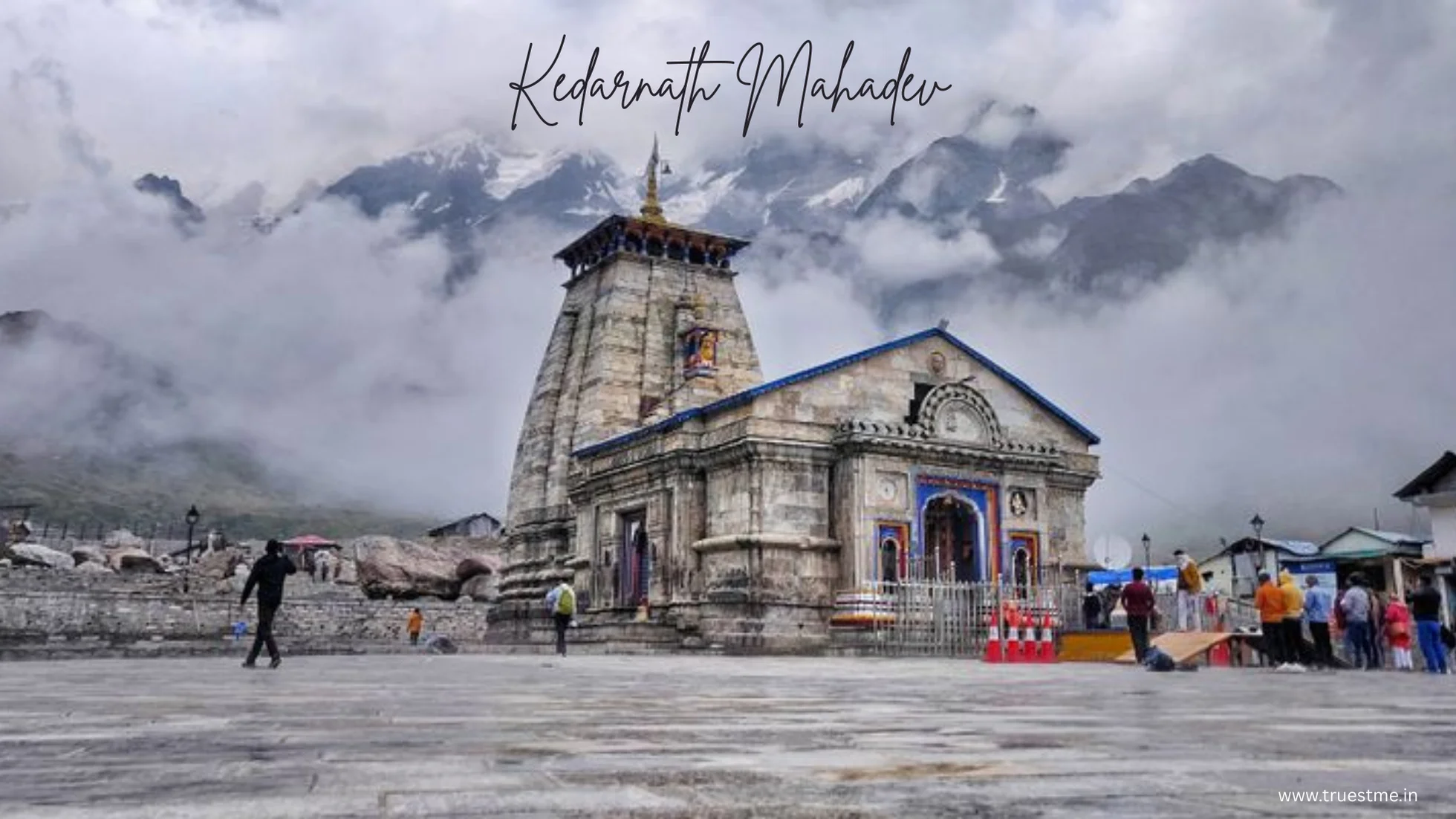
High in the Garhwal Himalayas, surrounded by snow-covered peaks and divine silence, stands the sacred shrine of Kedarnath — one of the holiest temples dedicated to Lord Shiva. Recognized as one of the twelve Jyotirlingas, Kedarnath is not merely a religious destination; it is a powerful spiritual center that has drawn sages, pilgrims, and seekers for centuries.
Situated at an altitude of 11,755 feet above sea level in Uttarakhand, Kedarnath represents faith that survives extreme weather, natural disasters, and time itself. Every year, lakhs of devotees undertake the challenging yatra to seek blessings and inner transformation.
What is a Jyotirlinga? (Spiritual Concept Explained)
The term Jyotirlinga comes from:
- Jyoti – Radiance or Divine Light
- Linga – Symbolic form of Shiva
According to Shiva Purana, Lord Shiva manifested as an infinite pillar of light to settle a dispute between Brahma and Vishnu. That cosmic column of light is called Jyotirlinga.
There are 12 sacred Jyotirlingas across India, each representing a different aspect of Shiva’s divine energy. Kedarnath is unique because:
It is the highest among the 12 Jyotirlingas.
It is located in extreme Himalayan terrain.
It is directly associated with post-Mahabharata events.
Mythological Origins of Kedarnath
The origin of Kedarnath is deeply connected with the epic Mahabharata.
After the Kurukshetra war, the Pandavas were burdened with guilt for killing their own relatives. They sought Lord Shiva’s forgiveness. However, Shiva, unwilling to forgive them easily, disguised himself as a bull and hid in the Himalayas.
When the Pandavas discovered him, Bhima tried to capture the bull. Shiva then disappeared into the ground.
- The hump appeared at Kedarnath.
- The arms appeared at Tungnath.
- The face appeared at Rudranath.
- The navel appeared at Madhyamaheshwar.
- The hair appeared at Kalpeshwar.
These five temples together are known as Panch Kedar.
The hump-shaped Shiva Linga at Kedarnath is worshipped as a symbol of divine forgiveness and transformation.
Historical Background & Adi Shankaracharya’s Role
The present structure of Kedarnath Temple is believed to have been revived in the 8th century by Adi Shankaracharya.
Adi Shankaracharya played a crucial role in:
- Reviving Hindu dharma
- Establishing Char Dham pilgrimage circuits
- Promoting Advaita Vedanta philosophy
His samadhi is located just behind the Kedarnath Temple, making the site spiritually and historically significant.
Architectural Brilliance of Kedarnath Temple
Despite being located in a harsh, earthquake-prone Himalayan zone, the temple has stood firm for centuries.
Structural Highlights:
- Built from massive interlocking grey stone slabs
- Constructed without modern cement technology
- Thick walls designed to withstand snowfall and landslides
- Elevated platform to protect against flooding
The sanctum houses an irregular, pyramid-shaped Shiva Linga — unlike typical smooth lingas seen in other temples.
The temple architecture reflects North Indian Himalayan style and advanced ancient engineering knowledge.
2013 Kedarnath Floods – A Miracle of Survival
In June 2013, devastating flash floods and landslides struck Uttarakhand. Kedarnath valley suffered massive destruction.
However:
The main temple structure remained intact.
A massive boulder (now called Bhim Shila) rolled down and stopped just behind the temple.
The rock diverted floodwaters away from the shrine.
This event strengthened devotees’ belief in divine protection and made Kedarnath globally known.
Spiritual Significance of Kedarnath
Kedarnath is considered a gateway to moksha (liberation).
Devotees believe:
- Visiting Kedarnath washes away past karmas.
- The high altitude amplifies spiritual vibrations.
- The Himalayas act as a natural meditation zone.
It is also part of the sacred Chota Char Dham of Uttarakhand, along with Yamunotri, Gangotri, and Badrinath.
Meditating near the temple during early morning aarti is considered spiritually transformative.
Kedarnath Yatra – Complete Pilgrimage Guide
Trek Route
Base Point: Gaurikund
- Distance: Approx. 16–18 km
- Time Required: 6–8 hours (depending on fitness)
Facilities available:
- Pony & Palki services
- Helicopter services from Phata, Guptkashi, Sirsi
- Medical camps along the route
Best Time to Visit Kedarnath
- May to June – Pleasant weather
- September to October – Clear skies and fewer crowds
Avoid monsoon season (July–August) due to landslide risks.
Winter Closure
Due to heavy snowfall, the temple closes around October/November. During winter, the deity is shifted to Ukhimath for worship.
Climate & Weather Conditions
- Summer Temperature: 5°C to 18°C
- Night temperature can drop below freezing
- Winter: Heavy snowfall, area inaccessible
Always carry:
- Thermal wear
- Waterproof jackets
- Good trekking shoes
- Basic medicines
How to Reach Kedarnath
By Air
Nearest Airport: Jolly Grant Airport, Dehradun (Approx. 238 km from Gaurikund)
By Train
Nearest Railway Stations:
- Rishikesh
- Haridwar
By Road
Regular buses and taxis available to Sonprayag and Gaurikund from major Uttarakhand cities.
Important Rituals & Aarti Timings
- Morning Maha Abhishek Puja
- Rudrabhishek
- Evening Aarti
Devotees can book special pujas in advance through official temple authorities.
Fascinating Facts About Kedarnath
- One of the most remote Jyotirlingas in India
- Temple estimated to be over 1,200 years old
- Survived floods, earthquakes, and extreme weather
- Surrounded by peaks like Kedarnath Dome and Bharatekuntha
Why Kedarnath is More Than Just a Temple
Kedarnath is not about tourism — it is about surrender.
The long trek symbolizes:
- Letting go of ego
- Cleansing of karmas
- Spiritual rebirth
The journey challenges the body but purifies the soul.
Standing before the ancient stone temple in freezing winds, one feels something beyond words — silence, power, and divine presence.
Conclusion
Kedarnath Jyotirlinga represents faith carved in stone and protected by the Himalayas. Its mythological roots, historical importance, architectural strength, and spiritual energy make it one of the most powerful pilgrimage sites in the world.
Whether you visit as a devotee, traveler, or seeker — Kedarnath transforms you.