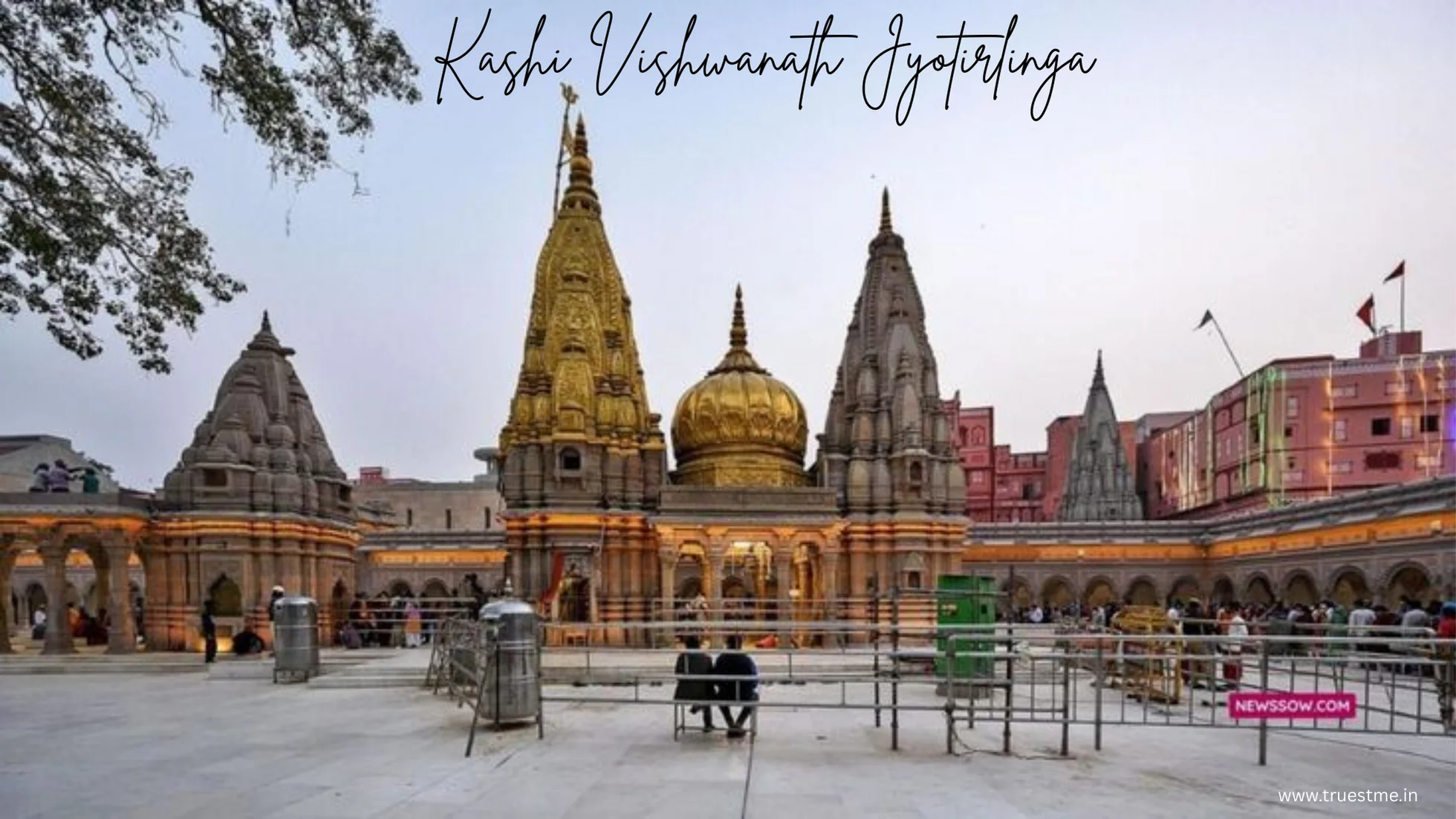
Kashi Vishwanath Jyotirlinga is one of the most sacred pilgrimage sites in India and among the twelve Jyotirlingas of Lord Shiva. Located in the holy city of Varanasi, this temple is believed to be the spiritual center of the universe and the gateway to moksha (liberation).
For thousands of years, saints, scholars, and devotees have traveled to Kashi to seek divine blessings. The presence of the sacred Ganga, powerful Vedic traditions, and the Jyotirlinga itself makes Kashi Vishwanath one of the most spiritually charged places in the world.
1. What is Kashi Vishwanath Jyotirlinga?
The name “Vishwanath” means “Lord of the Universe.” The Jyotirlinga here represents the infinite cosmic light of Shiva. According to Hindu belief, Jyotirlingas are self-manifested (Swayambhu) forms of Shiva, radiating divine energy.
Among the twelve Jyotirlingas, Kashi Vishwanath holds a special place because:
Kashi is considered an eternal city (Anadi Kshetra).
It is believed Shiva personally resides here.
Death in Kashi is said to grant liberation from the cycle of rebirth.
This makes Kashi Vishwanath not just a temple but a cosmic spiritual center.
2. Mythological Significance of Kashi Vishwanath
According to the Shiva Purana:
- Once, a dispute arose between Brahma and Vishnu regarding supremacy.
- Shiva appeared as an infinite pillar of light (Jyoti).
- This divine light form became the Jyotirlinga.
Kashi is believed to rest on Shiva’s trident (Trishul), making it indestructible even during cosmic destruction (Pralaya).
Another belief states that at the time of death in Kashi, Lord Shiva himself whispers the Taraka Mantra into the ears of the devotee, granting moksha.
3. Historical Background of Kashi Vishwanath Temple
The temple has been destroyed and rebuilt several times in history.
The original temple is believed to date back thousands of years.
It was destroyed during medieval invasions.
The present temple structure was rebuilt in 1780 by Ahilyabai Holkar, the queen of Indore.
The golden spire (Shikhara) was later plated with gold by Maharaja Ranjit Singh in 1835.
In recent years, the Kashi Vishwanath Corridor was developed to connect the temple directly to the ghats of the Ganga, enhancing the spiritual and architectural grandeur of the complex.
4. Architecture of Kashi Vishwanath Temple
The temple is built in traditional North Indian (Nagara) architectural style.
Key Features:
- Gold-plated main dome
- Sacred Jyotirlinga placed in a silver altar
- Intricate carvings and sacred inscriptions
- Surrounding smaller shrines dedicated to various deities
Despite its relatively compact size compared to other temples, the spiritual energy inside the sanctum is deeply intense and powerful.
5. Spiritual Importance – Why Kashi is the City of Moksha
Kashi is called:
- Anandavan (Forest of Bliss)
- Avimukta Kshetra (Never abandoned by Shiva)
- Mahashmashana (Great cremation ground)
Spiritual Beliefs:
- Bathing in the Ganga cleanses sins.
- Performing Pind Daan liberates ancestors.
- Visiting Vishwanath grants spiritual awakening.
- Dying in Kashi leads to moksha.
The temple stands close to the famous Dashashwamedh Ghat, where the grand Ganga Aarti is performed daily.
6. Temple Rituals and Aarti Timings
Daily Rituals Include:
- Mangala Aarti (early morning)
- Bhog Aarti
- Sandhya Aarti (evening)
- Shringar Aarti
- Shayan Aarti (night)
Special occasions like Maha Shivratri and Shravan month attract millions of devotees.
7. Best Time to Visit Kashi Vishwanath
October to March – Pleasant weather.
Shravan Month (July–August) – Spiritually vibrant but crowded.
Maha Shivratri – Grand celebrations.
Avoid peak summer due to extreme heat.
8. How to Reach Kashi Vishwanath Temple
By Air: Lal Bahadur Shastri International Airport (Varanasi)
By Train: Varanasi Junction
By Road: Well-connected to major cities in Uttar Pradesh and nearby states.
The temple is located in the narrow lanes (galis) of Varanasi, adding to its ancient charm.
9. Travel Tips for Devotees
- Carry valid ID for entry.
- Mobile phones are not allowed inside the temple.
- Book VIP darshan online during peak seasons.
- Visit early morning for peaceful darshan.
- Combine your visit with Ganga Aarti and nearby ghats.
10. Nearby Places to Visit in Varanasi
- Dashashwamedh Ghat
- Sarnath
- Manikarnika Ghat
- Tulsi Manas Temple
- Sankat Mochan Hanuman Temple
11. Why Kashi Vishwanath is Unique Among Jyotirlingas
- Only Jyotirlinga located in a major living ancient city.
- Direct association with moksha.
- Eternal spiritual energy believed to survive cosmic destruction.
- Strong connection with the sacred river Ganga.
Conclusion
Kashi Vishwanath Jyotirlinga is not just a temple — it is a timeless spiritual experience. In the sacred lanes of Varanasi, amidst temple bells and Vedic chants, devotees feel a connection that goes beyond religion.
Whether you seek peace, liberation, knowledge, or devotion, a visit to Kashi Vishwanath can transform your inner world. It stands as a symbol of eternal light, reminding us that beyond life’s chaos lies divine stillness.
Har Har Mahadev