Jaisalmer Rajasthan Tourism: Explore The Golden City of India
Located in the heart of the Thar Desert, Jaisalmer Rajasthan is one of the most beautiful and historic destinations in India. Popularly known as the "Golden City of India", Jaisalmer attracts travelers with its magnificent forts, golden sandstone architecture, endless sand dunes, desert adventures, rich culture, and royal heritage.
The city is famous for its iconic Jaisalmer Fort, traditional havelis, vibrant markets, folk music, camel safaris, and unforgettable desert experiences. Whether you are planning a family vacation, romantic getaway, adventure trip, or cultural journey, Jaisalmer Tourism offers something unique for every traveler.
This complete Jaisalmer Travel Guide covers the best places to visit in Jaisalmer, things to do, desert safari experiences, travel tips, itinerary ideas, hotels, food, and everything you need to plan your perfect Jaisalmer Rajasthan trip.
Why Jaisalmer is Famous? (The Golden City of Rajasthan)
Jaisalmer is famous for its beautiful golden-colored buildings made from yellow sandstone, which glow like gold during sunrise and sunset. This unique architecture gives the city its famous name – The Golden City of India.
The city was founded in 1156 AD by Rajput ruler Rawal Jaisal, and since then it has played an important role in Rajasthan's history and culture.
Some of the main reasons why Jaisalmer is famous include:
- Historic Jaisalmer Fort
- Beautiful royal havelis
- Thar Desert landscapes
- Camel safari adventures
- Traditional Rajasthani culture
- Desert camping under the stars
- Local handicrafts and markets
- Delicious Rajasthani food
For travelers looking for history, adventure, and cultural experiences, Jaisalmer Rajasthan India is one of the best destinations to explore.
Best Places to Visit in Jaisalmer Rajasthan
Jaisalmer is filled with historical monuments, natural attractions, and cultural experiences. Here are the most famous Jaisalmer Tourist Places that should be included in your travel plan.
1. Jaisalmer Fort – The Living Golden Fort
Jaisalmer Fort is the most famous attraction of the city and one of the largest fully preserved forts in the world. Built in 1156 AD by Rawal Jaisal, this magnificent fort stands proudly on Trikuta Hill.
Unlike many other forts in India, Jaisalmer Fort is still a living fort where thousands of people continue to live inside its walls. The golden sandstone architecture creates a magical view, especially during sunrise and sunset.
Inside the fort, visitors can explore:
- Royal palaces
- Ancient Jain temples
- Traditional houses
- Local shops
- Restaurants
- Handicraft stores
The narrow streets inside the fort showcase the authentic charm of old Rajasthan.
Why Visit Jaisalmer Fort?
- Experience Rajasthan's royal history
- Explore ancient architecture
- Enjoy panoramic views of Jaisalmer city
- Capture beautiful photography
- Learn about Rajput culture
Jaisalmer Fort timing:
Generally open from morning to evening (timings may vary depending on season).
2. Sam Sand Dunes – The Ultimate Jaisalmer Desert Experience
When people think about Jaisalmer Desert City, the first image that comes to mind is the endless golden sand dunes of the Thar Desert.
Located around 40–45 km from the main city, Sam Sand Dunes Jaisalmer is the most popular desert destination.
Here travelers can enjoy:
- Jaisalmer Camel Safari
- Jeep desert safari
- Sunset views
- Traditional Rajasthani dance
- Desert camping
- Night entertainment programs
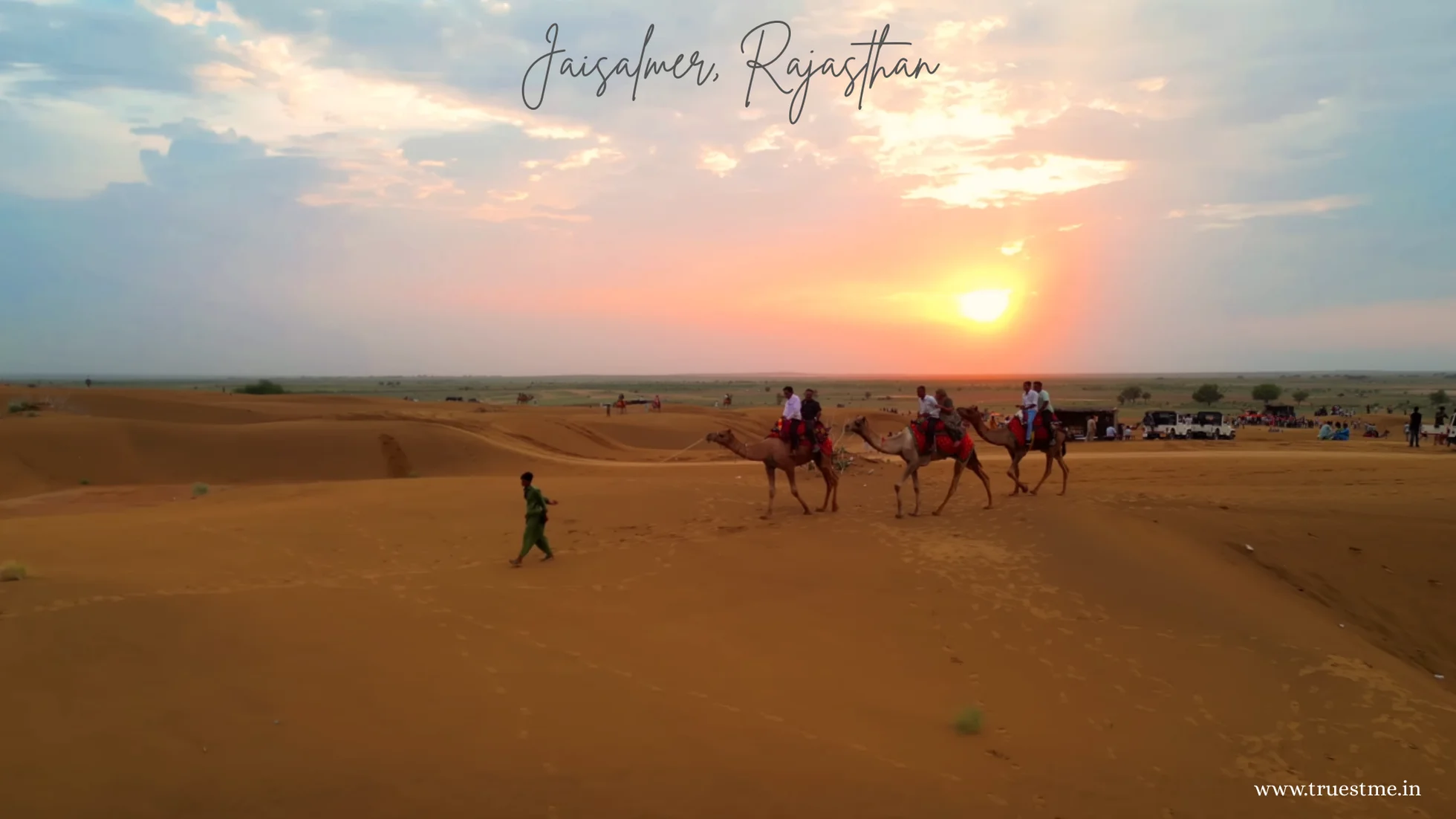
A sunset camel ride over the golden dunes is one of the most memorable experiences of a Jaisalmer Rajasthan trip.
3. Gadisar Lake – Beautiful Sunset Point in Jaisalmer
Gadisar Lake is one of the most peaceful and scenic attractions in Jaisalmer. This historic lake was built in the 12th century by Maharawal Gadsi Singh.
The lake is surrounded by temples, small shrines, and beautiful gateways that reflect Rajasthan's traditional architecture.
Visitors can enjoy:
- Boat rides
- Photography
- Sunset views
- Peaceful evening walks
For photographers and nature lovers, Gadisar Lake is one of the best Jaisalmer sunset points.
4. Patwon Ki Haveli – A Symbol of Royal Architecture
Patwon Ki Haveli is one of the most famous historical places in Jaisalmer. This beautiful mansion was built in the early 19th century by Guman Chand Patwa, a wealthy businessman.
The haveli is famous for:
- Detailed stone carvings
- Beautiful balconies
- Royal rooms
- Traditional artwork
The architecture represents the luxury lifestyle of wealthy merchants of ancient Rajasthan.
It is one of the must-visit Jaisalmer historical places for travelers interested in culture and heritage.
5. Nathmal Ki Haveli
Nathmal Ki Haveli is another beautiful attraction that showcases the artistic excellence of Rajasthan.
The unique feature of this haveli is its detailed craftsmanship created by two architect brothers. The exterior walls contain beautiful carvings of flowers, animals, and traditional designs.
Visitors can explore:
- Traditional Rajasthani architecture
- Handmade artwork
- Ancient designs
- Local handicrafts
6. Salim Singh Ki Haveli
Built in the early 18th century, Salim Singh Ki Haveli is famous for its unique architecture and peacock-shaped roof design.
The haveli was built by Salim Singh, the prime minister of Jaisalmer during that period.
Important features:
- Unique structure
- Beautiful balconies
- Historical importance
- Amazing photography spots
7. Kuldhara Village – The Mysterious Abandoned Village
Located near Jaisalmer, Kuldhara Village is one of the most mysterious attractions in Rajasthan.
This abandoned village was once home to the Paliwal Brahmins. According to local stories, the villagers left the settlement overnight due to difficult circumstances.
Today, visitors come here to explore:
- Ancient ruins
- Desert landscapes
- Historical stories
- Photography locations
Kuldhara is one of the most interesting places to visit near Jaisalmer.
8. Bada Bagh – Royal Cenotaphs Near Jaisalmer
Bada Bagh is a historical garden complex located approximately 6 km from Jaisalmer city.
It contains beautiful royal cenotaphs built in memory of Jaisalmer's rulers.
The location is especially famous for:
- Sunset photography
- Historical architecture
- Peaceful desert views
It is a perfect place for travelers who love history and photography.
9. Tanot Mata Temple
Located near the India-Pakistan border, Tanot Mata Temple is a famous religious destination near Jaisalmer.
The temple is known for its historical importance, especially during the 1965 and 1971 India-Pakistan wars.
Visitors often combine this trip with a visit to:
- Longewala Border
- Border Museum
- Desert landscapes
10. Longewala Border
Longewala is a famous border area known for the historic Battle of Longewala during the 1971 Indo-Pak war.
Visitors can explore:
- War memorial
- Military displays
- Historical information
It is an important destination for those interested in India's military history.
Jaisalmer Tourist Places Map Planning (Suggested Route)
For first-time visitors, this route works well:
Day 1:
- Jaisalmer Fort
- Patwon Ki Haveli
- Nathmal Ki Haveli
- Salim Singh Ki Haveli
- Gadisar Lake
Day 2:
- Sam Sand Dunes
- Camel Safari
- Desert Camping
- Sunset Experience
Day 3:
- Kuldhara Village
- Bada Bagh
- Tanot Mata Temple
- Longewala Border
Jaisalmer Desert Safari: Experience The Magic of Thar Desert
A trip to Jaisalmer Rajasthan is incomplete without experiencing the beauty of the Thar Desert. The golden sand dunes, traditional Rajasthani music, camel rides, and peaceful desert nights make Jaisalmer Desert Safari one of the most unforgettable experiences in India.
The desert safari is one of the main reasons why thousands of travelers visit the Jaisalmer Desert City every year.
Whether you choose a camel ride during sunset, an exciting jeep safari, or a luxury desert camping experience, the desert of Jaisalmer offers a perfect combination of adventure and culture.
Best Desert Safari Places in Jaisalmer Rajasthan
There are mainly two popular desert safari locations near Jaisalmer:
1. Sam Sand Dunes Jaisalmer
Sam Sand Dunes is the most famous desert destination in Jaisalmer. Located around 40 km from the city, it offers a classic Thar Desert experience.
This place is famous for:
- Camel safari
- Jeep safari
- Desert camping
- Cultural performances
- Sunset views
- Traditional Rajasthani food
Most travelers prefer Sam Sand Dunes because it has better facilities and more desert activities.
2. Khuri Sand Dunes Jaisalmer
Khuri Sand Dunes is another beautiful desert location near Jaisalmer.
Compared to Sam Sand Dunes, Khuri is quieter and less crowded, making it ideal for travelers who want a peaceful desert experience.
Highlights of Khuri:
- Natural sand dunes
- Authentic village atmosphere
- Traditional lifestyle experience
- Peaceful desert nights
Jaisalmer Camel Safari Experience
A Jaisalmer Camel Safari is one of the most popular activities among tourists.
Riding a camel across the golden sand dunes while watching the sunset creates a memorable travel experience.
During a camel safari, visitors can enjoy:
- Desert landscapes
- Sunrise and sunset views
- Photography opportunities
- Local village visits
- Traditional desert lifestyle
The best time for camel safari is usually during evening hours because the weather becomes pleasant and the sunset view is breathtaking.
Jaisalmer Desert Safari Price (Approximate Guide)
The cost of a desert safari depends on the type of package you choose.
Approximate prices:
Camel Safari:
₹500 – ₹1500 per person
Jeep Safari:
₹1000 – ₹2500 per person
Desert Camping Package:
₹2500 – ₹8000+ per person
Luxury camps may cost more depending on facilities, location, and services.
Prices can change according to season, especially during winter months when tourism is at its peak.
Jaisalmer Desert Camping: Spend A Night Under The Stars
One of the best Things To Do in Jaisalmer is staying overnight in a desert camp.
A desert camping experience usually includes:
- Traditional welcome ceremony
- Folk music performance
- Kalbelia dance
- Rajasthani dinner
- Bonfire
- Camel ride
- Stargazing experience
Luxury desert resorts provide comfortable tents with modern facilities, while traditional camps offer a more authentic desert lifestyle.
Spending a night in the Thar Desert is an experience that makes your Jaisalmer Trip truly special.
Things To Do in Jaisalmer Rajasthan
Apart from forts and historical monuments, Jaisalmer offers many exciting activities.
1. Explore Jaisalmer Fort
Walking through the narrow streets of the living fort is one of the best experiences in the city.
You can explore:
- Ancient temples
- Royal architecture
- Local shops
- Traditional houses
2. Enjoy Sunset at Jaisalmer Sand Dunes
Watching the sun disappear behind the golden dunes is one of the most beautiful moments in Jaisalmer.
Popular sunset locations:
- Sam Sand Dunes
- Khuri Sand Dunes
- Bada Bagh
- Gadisar Lake
3. Experience Rajasthani Culture
Jaisalmer is famous for its rich culture and heritage.
Visitors can enjoy:
- Folk music
- Traditional dance
- Local costumes
- Desert festivals
- Handmade crafts
The cultural experience is one of the biggest highlights of Jaisalmer Rajasthan Tourism.
4. Explore Jaisalmer Markets
Shopping is another exciting activity in Jaisalmer.
Popular markets include:
- Sadar Bazaar
- Manak Chowk
- Fort Market
Things to buy:
- Leather products
- Rajasthani handicrafts
- Traditional jewelry
- Textiles
- Souvenirs
5. Taste Famous Jaisalmer Food
The food of Jaisalmer represents authentic Rajasthani flavors.
Popular dishes include:
- Dal Baati Churma
- Ker Sangri
- Gatte Ki Sabzi
- Bajra Roti
- Rajasthani Thali
- Makhaniya Lassi
Trying local food is an important part of the Jaisalmer Travel Guide experience.
Best Time To Visit Jaisalmer Rajasthan
The weather plays an important role when planning a Jaisalmer Rajasthan Trip.
Winter Season (October to March) – Best Time
Winter is considered the best time to visit Jaisalmer.
Temperature:
- Day: 15°C – 25°C
- Night: 5°C – 15°C
Benefits:
- Comfortable sightseeing
- Best desert safari experience
- Pleasant weather
- Cultural events
This season is ideal for:
- Camel safari
- Desert camping
- Photography
- Outdoor activities
Summer Season (April to June)
Summer in Jaisalmer can be extremely hot.
Temperature can reach:
- 40°C – 48°C
Travel during summer is possible but outdoor activities may become uncomfortable.
Monsoon Season (July to September)
Jaisalmer receives limited rainfall.
The weather becomes slightly better, but desert activities may be limited.
Jaisalmer Itinerary For 2 Days
If you have only two days, follow this plan:
Day 1: Explore Historical Jaisalmer
Morning:
- Jaisalmer Fort
- Jain Temples
- Patwon Ki Haveli
Afternoon:
- Nathmal Ki Haveli
- Salim Singh Ki Haveli
- Local Market
Evening:
- Gadisar Lake Sunset
Day 2: Desert Adventure
Morning:
- Kuldhara Village
- Bada Bagh
Afternoon:
- Sam Sand Dunes
Evening:
- Camel Safari
- Sunset Photography
Night:
- Desert Camping
- Cultural Program
Jaisalmer Itinerary For 3 Days
Day 1:
- Jaisalmer Fort
- Havelis
- Gadisar Lake
- Market Visit
Day 2:
- Sam Sand Dunes
- Camel Safari
- Jeep Safari
- Desert Camping
Day 3:
- Kuldhara Village
- Tanot Mata Temple
- Longewala Border
- Bada Bagh
This itinerary covers the best Jaisalmer Tourist Places and experiences.
How To Reach Jaisalmer Rajasthan
Jaisalmer is well connected with major cities of India through air, rail, and road networks.
Reach Jaisalmer By Air
The nearest airport is:
Jaisalmer Airport
Flights are available from selected Indian cities during tourist seasons.
For international travelers, the nearest major airports are:
- Jodhpur Airport
- Jaipur International Airport
From the airport, taxis and local transport are available.
Reach Jaisalmer By Train
Jaisalmer Railway Station connects the city with major destinations.
Popular routes include:
- Jaisalmer to Jodhpur
- Jaisalmer to Jaipur
- Jaisalmer to Delhi
Train travel is a convenient option for budget travelers.
Reach Jaisalmer By Road
Jaisalmer has good road connectivity with:
- Jodhpur
- Jaipur
- Bikaner
- Delhi
Bus services and private taxis are available.
Road trips to Jaisalmer offer beautiful views of Rajasthan's landscapes.
Jaisalmer Travel Budget (Approximate)
A budget-friendly Jaisalmer trip can be planned according to your travel style.
Budget Trip:
- Stay: ₹800–₹2000 per night
- Food: ₹300–₹800 per day
- Transport: ₹500–₹1500
- Safari: ₹1000–₹3000
Luxury Trip:
- Luxury hotel/camp
- Private transport
- Premium desert experience
Cost depends on season, accommodation, and activities.
Best Hotels in Jaisalmer Rajasthan: Where To Stay During Your Trip
Choosing the right accommodation plays an important role in making your Jaisalmer Rajasthan trip comfortable and memorable. The city offers everything from budget hotels to luxury desert resorts with traditional Rajasthani hospitality.
Whether you want to stay near Jaisalmer Fort, experience a peaceful desert camp near Sam Sand Dunes, or enjoy luxury facilities, there are plenty of options available.
Best Areas To Stay in Jaisalmer
1. Near Jaisalmer Fort
Staying near the fort is a great option for travelers who want to explore the city's history and culture.
Benefits:
- Close to major tourist attractions
- Easy access to markets
- Walking distance from restaurants
- Experience old city atmosphere
Best for:
- First-time visitors
- Families
- Culture lovers
2. Sam Sand Dunes Desert Camps
For a unique desert experience, staying at a desert camp near Sam Sand Dunes is highly recommended.
Facilities usually include:
- Luxury tents
- Traditional dinner
- Folk dance performances
- Camel safari
- Bonfire
- Desert activities
A night in the desert is one of the most memorable parts of Jaisalmer Tourism.
3. Budget Hotels in Jaisalmer Rajasthan
Budget travelers can find many affordable hotels offering comfortable rooms and basic facilities.
Budget accommodation usually includes:
- Clean rooms
- Wi-Fi
- Restaurant facilities
- Local sightseeing assistance
Luxury Resorts in Jaisalmer Rajasthan
For travelers looking for premium experiences, luxury desert resorts provide royal-style accommodation.
Luxury camps offer:
- Spacious tents
- Private dining
- Cultural performances
- Desert views
- Premium services
A luxury stay is perfect for:
- Couples
- Honeymoon travelers
- Family vacations
- Special occasions
Places To Visit Near Jaisalmer Rajasthan
Apart from the main city attractions, there are several beautiful destinations nearby.
1. Kuldhara Village
Distance from Jaisalmer:
Approximately 30 km
Highlights:
- Historical ruins
- Desert landscape
- Ancient village architecture
2. Tanot Mata Temple
Distance from Jaisalmer:
Approximately 120 km
Highlights:
- Religious importance
- Border area experience
- Historical connection
3. Longewala Border
Distance from Jaisalmer:
Approximately 120 km
Highlights:
- War history
- Border tourism
- Military museum
4. Bada Bagh
Distance from Jaisalmer:
Approximately 6 km
Highlights:
- Royal cenotaphs
- Photography
- Sunset views
Jaisalmer Culture and Heritage
The culture of Jaisalmer represents the royal traditions of Rajasthan.
The city is famous for:
- Folk music
- Traditional dance
- Colorful dresses
- Handicrafts
- Desert festivals
- Royal architecture
The famous Jaisalmer Desert Festival attracts visitors from around the world with cultural programs, camel competitions, and traditional performances.
Jaisalmer Travel Tips For First Time Visitors
Follow these tips to make your journey comfortable:
1. Visit During Winter
October to March is the best period for sightseeing and desert activities.
2. Carry Comfortable Clothes
Wear light clothes during the day and carry warm clothes for desert nights.
3. Book Desert Camps in Advance
During peak season, camps get fully booked quickly.
4. Carry Cash
Some local markets and small shops may have limited digital payment options.
5. Respect Local Culture
Jaisalmer is rich in traditions, so respect local customs and heritage sites.
Frequently Asked Questions (FAQ) About Jaisalmer Rajasthan
Q1. What is Jaisalmer famous for?
Jaisalmer is famous for its golden sandstone architecture, Jaisalmer Fort, Thar Desert, camel safari, desert camping, and rich Rajasthani culture.
Q2. How many days are enough for Jaisalmer?
A 3-day Jaisalmer itinerary is ideal to explore major attractions, desert safari, forts, markets, and nearby places.
Q3. Which month is best to visit Jaisalmer?
The best time to visit Jaisalmer is from October to March because the weather remains comfortable for sightseeing and desert activities.
Q4. What are the best places to visit in Jaisalmer Rajasthan?
The best places include:
- Jaisalmer Fort
- Sam Sand Dunes
- Gadisar Lake
- Patwon Ki Haveli
- Kuldhara Village
- Bada Bagh
- Tanot Mata Temple
Q5. Is Jaisalmer good for a family trip?
Yes, Jaisalmer is a great destination for families. It offers history, culture, adventure activities, desert experiences, and comfortable accommodation options.
Q6. What is the cost of a Jaisalmer trip?
A budget Jaisalmer trip can cost around ₹5,000–₹10,000 per person, while luxury trips may cost more depending on hotels, camps, and activities.
Q7. Which is better Sam Sand Dunes or Khuri Sand Dunes?
Sam Sand Dunes is better for first-time visitors because it offers more activities and facilities. Khuri Sand Dunes is better for travelers looking for a peaceful desert experience.
Final Conclusion: Why Jaisalmer Rajasthan Should Be On Your Travel List
Jaisalmer Rajasthan is not just a destination; it is an experience filled with history, adventure, culture, and unforgettable memories.
From exploring the magnificent Jaisalmer Fort to enjoying a thrilling Jaisalmer Desert Safari, from tasting authentic Rajasthani food to spending a night under the stars, every moment in this golden city feels special.
Whether you are planning a short weekend trip or a complete Rajasthan vacation, this Jaisalmer Travel Guide will help you explore the best attractions, activities, food, accommodation, and travel experiences.
The golden sands of Jaisalmer are waiting to welcome you with royal charm and timeless beauty.