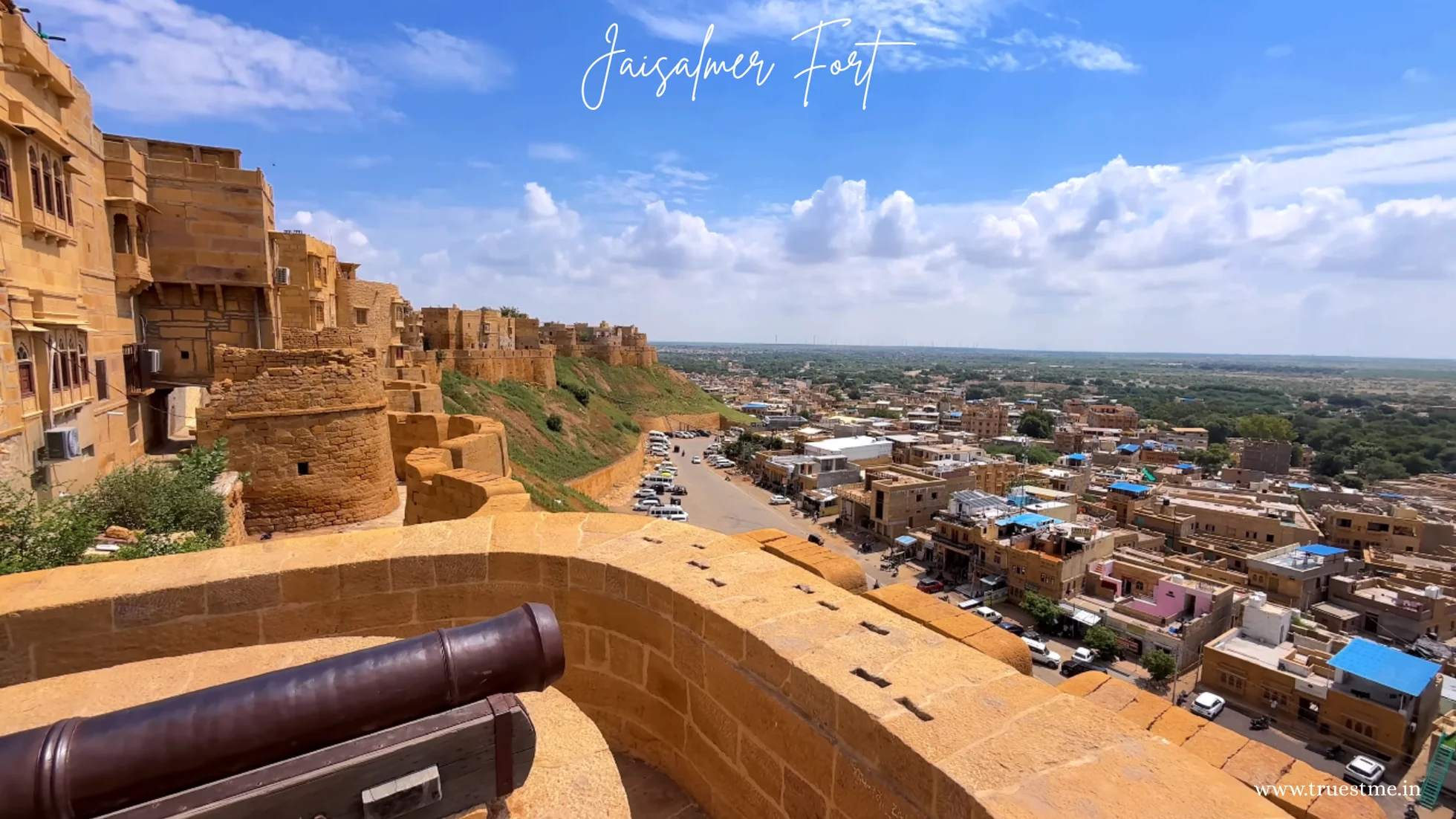
Rising dramatically from the golden sands of the Thar Desert, Jaisalmer Fort is not just a monument but a living symbol of Rajasthan’s royal legacy. Popularly known as Sonar Quila or the Golden Fort, this architectural marvel dominates the skyline of Jaisalmer with its glowing sandstone walls that appear to change color with the sun.
Unlike most historical forts that stand as silent ruins, Jaisalmer Fort is alive with homes, temples, shops, and centuries-old traditions still thriving within its fortified walls. Built over 800 years ago, the fort reflects a unique blend of Rajput valor, desert culture, and intricate craftsmanship, making it one of the most fascinating heritage sites in India.
Historical Background and Foundation
Jaisalmer Fort was founded in 1156 AD by the Bhati Rajput ruler Rawal Jaisal, who shifted his capital from Lodurva to the more secure Trikuta Hill. The location was strategically chosen due to its elevated position and proximity to ancient trade routes connecting India with Persia, Arabia, and Central Asia.
During medieval times, Jaisalmer became a prosperous trading center where merchants traded silk, spices, and precious goods. This economic prosperity helped in the construction of magnificent palaces, temples, and havelis inside the fort.
Over the centuries, the fort witnessed several invasions and political struggles, especially during the Delhi Sultanate and Mughal periods. However, the rulers of Jaisalmer maintained their semi-autonomous status by forming diplomatic alliances, which helped preserve the fort’s cultural and architectural identity.
Strategic Location and the Concept of a “Living Fort”
One of the most unique aspects of Jaisalmer Fort is that it is among the very few “living forts” in the world. Nearly one-fourth of the city’s population still resides within its walls, maintaining a continuous tradition of habitation for centuries.
Perched atop Trikuta Hill at an elevation of about 250 feet, the fort provided natural defense against invasions and harsh desert conditions. The fort’s strategic placement allowed rulers to monitor trade caravans and protect their kingdom efficiently.
Architectural Brilliance and Engineering
Jaisalmer Fort is an outstanding example of Rajput military architecture combined with aesthetic excellence. Built primarily using yellow sandstone, the fort glows like gold under sunlight, giving it the name “Sonar Quila.”
Key Architectural Features
- 99 massive bastions constructed for defense
- Double-layered fortification walls
- Intricately carved balconies (jharokhas)
- Narrow winding streets designed for strategic movement
- Four grand gateways: Akhai Pol, Suraj Pol, Ganesh Pol, and Hawa Pol
The architecture is adapted to desert conditions, with closely built houses and narrow lanes that reduce heat and provide natural cooling. The fort’s drainage and water conservation systems were also advanced for their time, showcasing remarkable engineering intelligence.
Major Attractions Inside Jaisalmer Fort
Raj Mahal (Royal Palace)
The Raj Mahal, also known as the Royal Palace, is a stunning seven-story structure that once served as the residence of the royal family. Today, it functions as a museum displaying royal artifacts, manuscripts, weapons, and traditional costumes, offering deep insight into the royal lifestyle of Jaisalmer’s rulers.
Jain Temples Complex
The Jain temples inside the fort date back to the 12th–15th centuries and are dedicated to various Jain Tirthankaras. Built in Dilwara-style architecture, these temples feature:
- Intricate marble and sandstone carvings
- Detailed sculptures of deities
- Mythological motifs and inscriptions
They are considered among the finest examples of Jain temple architecture in Rajasthan.
Laxminath Temple
Dedicated to Lord Vishnu and Goddess Lakshmi, the Laxminath Temple is one of the oldest religious sites inside the fort. It continues to be an important spiritual center for locals and pilgrims visiting Jaisalmer.
Fort Markets and Residential Areas
The narrow lanes of the fort are filled with vibrant local markets offering handicrafts, embroidered textiles, mirror work items, leather goods, and traditional jewelry. These markets reflect the rich craftsmanship and artistic heritage of Rajasthan.
The residential houses inside the fort are built in traditional Rajput style, with carved facades and inner courtyards designed to suit the desert climate.
Cultural and Heritage Significance
Jaisalmer Fort is not only a historical monument but also a living cultural ecosystem. It represents centuries of Rajput traditions, desert lifestyle, and religious harmony. Festivals, folk music, and traditional rituals are still celebrated within the fort premises, preserving the region’s cultural identity.
The fort is also recognized as part of the Hill Forts of Rajasthan, a UNESCO World Heritage Site that highlights the architectural and historical significance of Rajput forts across the state.
Defensive Structure and Military Importance
The fort’s defensive design reflects the military intelligence of Rajput rulers. The triple-ringed walls, watchtowers, and elevated bastions provided strong protection against enemy attacks. The curved pathways and multiple gates were strategically designed to slow down invading forces.
Due to its desert location and fortified structure, the fort remained unconquered for long periods and served as a stronghold for the Bhati Rajputs.
Best Time to Visit Jaisalmer Fort
The ideal time to visit Jaisalmer Fort is between October and March, when the weather remains pleasant and suitable for sightseeing. During winter, the temperature is comfortable, making it easier to explore the fort and nearby desert attractions.
Visitors can also experience the famous Desert Festival held annually in Jaisalmer, showcasing camel races, folk dances, and cultural performances.
Entry Fees, Timings, and Visitor Information
Timings
- Open daily from morning to evening
- Palace and museum sections have separate timings
Entry Fees
- Entry to the fort is free
- Additional charges apply for museum and palace visits
- Camera and guide fees may be applicable
Important Travel Tips
- Visit during sunrise or sunset for the best golden views
- Hire a certified guide for historical insights
- Avoid peak afternoon hours in summer
- Support local artisans by purchasing authentic handicrafts
How to Reach Jaisalmer Fort
By Air
The nearest operational airport is in Jaisalmer, while better connectivity is available via Jodhpur Airport.
By Train
Jaisalmer Railway Station connects the city to major Indian cities like Delhi, Jaipur, and Jodhpur.
By Road
Jaisalmer is well connected by highways, and travelers can easily reach by road from major cities such as Jodhpur and Jaipur through buses, taxis, or private vehicles.
Nearby Tourist Attractions Around the Fort
Visitors exploring Jaisalmer Fort can also visit nearby heritage sites and natural attractions:
- Patwon Ki Haveli – Famous for its intricate architecture and merchant history
- Gadisar Lake – A scenic historic water reservoir
- Sam Sand Dunes – Ideal for desert safari and cultural evenings
- Bada Bagh – A royal cenotaph garden reflecting Rajput history
Interesting Facts About Sonar Quila
It is one of the largest fully preserved fortified cities in the world.
The fort changes its color from golden yellow to honey gold depending on sunlight intensity.
Unlike most forts, it contains hotels, houses, temples, and shops within its walls.
The fort was featured in the famous film “Sonar Kella” by Satyajit Ray, increasing its global recognition.
The fort’s architecture is eco-adaptive, designed to withstand extreme desert temperatures.
Conclusion
Jaisalmer Fort, or Sonar Quila, is more than just a historical structure—it is a living heritage site that beautifully blends history, architecture, culture, and daily life within its ancient walls. Its golden sandstone grandeur, strategic design, and vibrant cultural atmosphere make it one of the most unique forts not only in Rajasthan but in the entire world.