Jagannath Rath Yatra 2026 – The World's Most Famous Chariot Festival
Every year, millions of devotees and travelers from across India and around the world gather in Puri, Odisha, to witness the spectacular Jagannath Rath Yatra—one of the oldest, largest, and most revered Hindu festivals. Famous for its gigantic handcrafted wooden chariots and centuries-old traditions, this annual festival is a remarkable blend of faith, devotion, culture, and heritage.
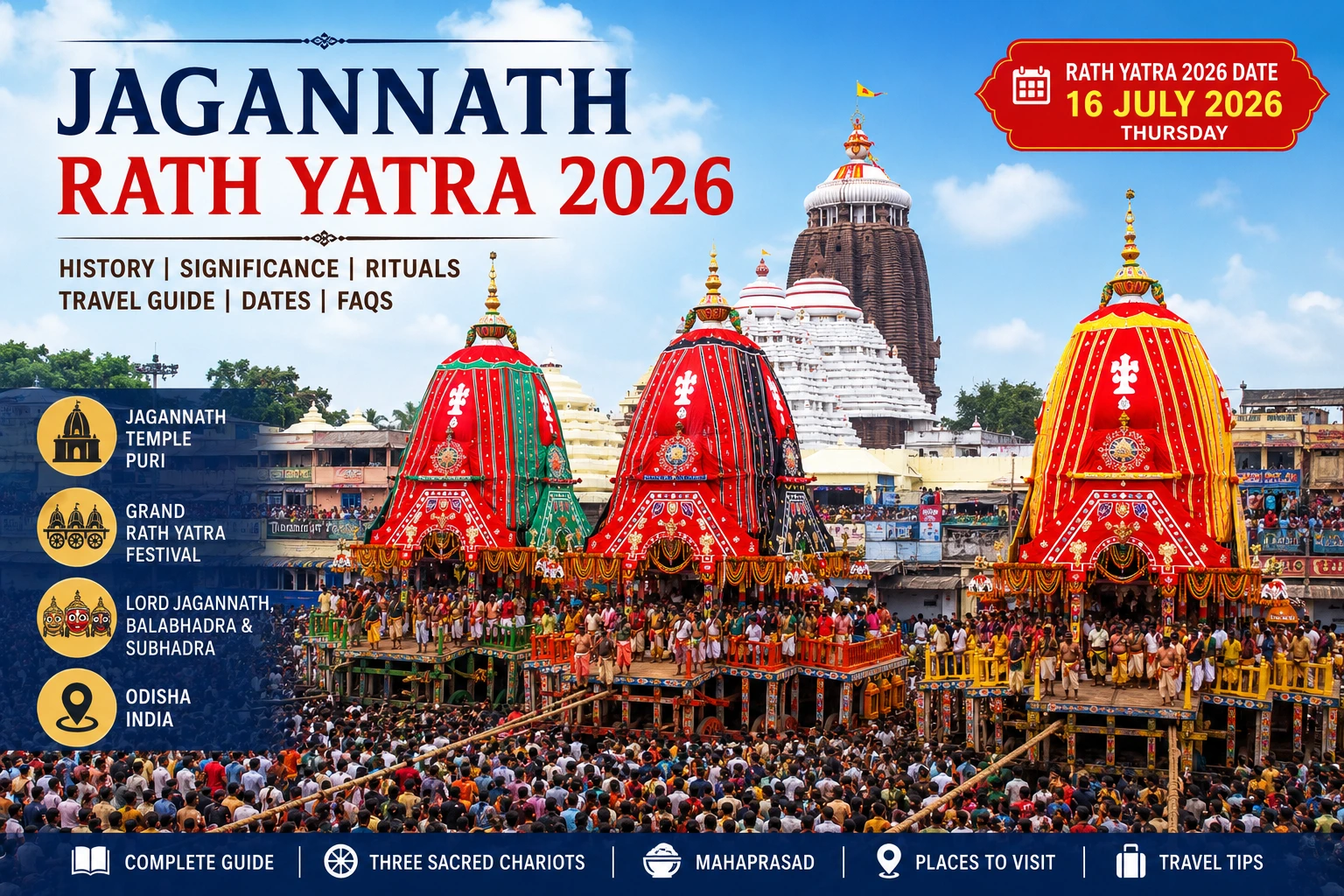
The Jagannath Rath Yatra celebrates the ceremonial journey of Lord Jagannath, Lord Balabhadra, and Goddess Subhadra from the sacred Jagannath Temple Puri to the Gundicha Temple, located about 3 kilometers away. Thousands of devotees pull the massive chariots with thick ropes, considering it a sacred act of devotion and service.
Unlike regular temple worship, where devotees visit the deity, Rath Yatra is unique because the deities come out of the temple to bless everyone. This tradition symbolizes compassion, inclusivity, and the belief that divine grace is available to all, regardless of caste, community, or social status.
Recognized as one of India's most iconic religious festivals, the Puri Rath Yatra attracts millions of pilgrims, photographers, researchers, and international tourists every year. The festival is also closely associated with the spiritual heritage of Odisha and plays a significant role in preserving India's ancient temple traditions.
In this comprehensive guide, you'll learn everything about the Jagannath Rath Yatra, including its history, spiritual significance, important rituals, 2026 festival dates, travel tips, nearby attractions, and frequently asked questions.
What is Jagannath Rath Yatra?
The Jagannath Rath Yatra is an annual Hindu chariot festival celebrated in Puri, Odisha, during the Hindu month of Ashadha (June–July). It is dedicated to Lord Jagannath—a revered form of Lord Krishna—along with His elder brother Lord Balabhadra and sister Goddess Subhadra.
The word "Rath" means chariot, while "Yatra" means journey or procession. During the festival, the three deities are ceremonially taken from the Jagannath Temple to the Gundicha Temple in three massive wooden chariots built anew every year using traditional methods and specific types of sacred wood.
The journey from the main temple to the Gundicha Temple is known as the Rath Yatra, while the return journey after several days is called the Bahuda Yatra.
The festival is one of the most important events in the Vaishnava tradition and is attended by millions of devotees from India and abroad. It is also one of the few occasions when people who cannot enter the Jagannath Temple can have darshan of the deities during the public procession.
History of Jagannath Rath Yatra
The history of the Jagannath Rath Yatra is a combination of historical records, temple traditions, and references found in ancient Hindu scriptures.
The present-day Jagannath Temple in Puri was built during the 12th century CE by King Anantavarman Chodaganga Deva of the Eastern Ganga dynasty. Later rulers expanded and completed the temple complex, making it one of the most significant pilgrimage sites in Hinduism.
Historical evidence suggests that the Rath Yatra has been celebrated in Puri for many centuries. References to Lord Jagannath and the chariot festival are found in texts such as the Skanda Purana, Brahma Purana, and Padma Purana, although different traditions describe the festival in different ways.
According to Hindu tradition, the annual procession commemorates Lord Jagannath's visit to the Gundicha Temple, which is revered as the garden palace associated with Queen Gundicha, the wife of King Indradyumna. King Indradyumna is traditionally credited with establishing the worship of Lord Jagannath in Puri, although these accounts belong to religious tradition rather than documented history.
Over the centuries, the Rath Yatra grew from a regional temple festival into one of the world's largest annual religious gatherings. Today, millions of pilgrims participate in the procession, making it a globally recognized symbol of Odisha's spiritual and cultural heritage.
Why is Jagannath Rath Yatra Celebrated?
The Jagannath Rath Yatra commemorates the annual ceremonial journey of Lord Jagannath, Lord Balabhadra, and Goddess Subhadra from the Jagannath Temple to the Gundicha Temple.
According to temple tradition, the deities visit the Gundicha Temple for a few days before returning to their main temple in the Bahuda Yatra. This annual journey is celebrated with devotion, music, traditional rituals, and community participation.
Spiritually, the festival represents the Lord's willingness to leave the sanctum of the temple and bless all devotees directly. Unlike regular temple rituals, Rath Yatra allows everyone—including those who may not enter the temple—to have darshan of the deities.
The festival also emphasizes the values of equality, humility, compassion, and devotion. The act of pulling the sacred chariots is considered an expression of selfless service (seva) and surrender to the divine.
Spiritual Significance of Jagannath Rath Yatra
The Jagannath Rath Yatra is more than a religious procession—it is a powerful symbol of devotion and the universal accessibility of the divine.
1. The Lord Comes to His Devotees
One of the unique aspects of the festival is that the deities leave the temple and travel through the streets of Puri. This symbolizes that divine blessings are available to everyone, regardless of social or economic background.
2. A Festival of Equality
The Rath Yatra is known for its message of inclusiveness. During the procession, people from different communities, regions, and even countries gather to participate. The ritual of pulling the chariots is open to all devotees, reflecting the principle that everyone is equal before God.
3. A Symbol of Devotion and Service
Thousands of devotees pull the ropes attached to the chariots, considering it an act of devotion rather than merely a ritual. According to Hindu belief, participating in this sacred service brings spiritual merit and strengthens one's connection with the divine.
4. The Journey of Life
Many spiritual teachers interpret the Rath Yatra as a reminder that life itself is a journey toward righteousness, self-realization, and devotion. Just as the Lord travels among His devotees, individuals are encouraged to move closer to truth, compassion, and spiritual wisdom.
Jagannath Temple and Its Connection with the Char Dham
The Jagannath Temple Puri is one of the Char Dham pilgrimage sites established in Hindu tradition, alongside:
- Badrinath (Uttarakhand)
- Dwarka (Gujarat)
- Rameswaram (Tamil Nadu)
- Puri (Odisha)
For millions of Hindus, completing the Char Dham pilgrimage is considered a deeply sacred spiritual journey.
The Jagannath Temple is dedicated to Lord Jagannath, Lord Balabhadra, and Goddess Subhadra. Its towering spire, unique Kalinga-style architecture, and centuries-old rituals make it one of the most important temples in India.
The annual Jagannath Rath Yatra is the temple's most significant festival and attracts millions of devotees, making Puri one of the busiest pilgrimage destinations in the country during the Ashadha month.
Quick Facts About Jagannath Rath Yatra
| Feature | Details |
|---|---|
| Festival Name | Jagannath Rath Yatra |
| Location | Puri, Odisha, India |
| Main Deities | Lord Jagannath, Lord Balabhadra, Goddess Subhadra |
| Festival Month | Ashadha (June–July) |
| Main Route | Jagannath Temple to Gundicha Temple |
| Return Journey | Bahuda Yatra |
| Temple Importance | One of the Char Dham pilgrimage sites |
| Famous For | World's largest annual chariot festival |
Jagannath Rath Yatra 2026 Date
The Jagannath Rath Yatra 2026 will be celebrated on Thursday, 16 July 2026, corresponding to Ashadha Shukla Dwitiya in the Hindu calendar.
Every year, the festival begins after a series of important temple rituals that prepare the deities for their annual journey from the Jagannath Temple to the Gundicha Temple. The celebrations continue for several days and conclude with the return journey known as Bahuda Yatra.
Because the festival attracts millions of pilgrims and tourists from India and abroad, it is advisable to plan your trip well in advance by booking accommodation and transportation early.
Complete Festival Timeline of Jagannath Rath Yatra 2026
The Rath Yatra is not a one-day event but a sequence of sacred rituals observed over several weeks.
| Festival | Significance |
|---|---|
| Akshaya Tritiya | Construction of the three wooden chariots begins. |
| Snana Purnima | The deities are ceremonially bathed with 108 pots of sacred water. |
| Anasara | The deities remain away from public darshan for about 15 days. |
| Netrotsava (Nava Jaubana Darshan) | The deities reappear before devotees after the Anasara period. |
| Jagannath Rath Yatra | The deities travel from Jagannath Temple to Gundicha Temple. |
| Hera Panchami | Goddess Lakshmi symbolically visits Gundicha Temple. |
| Bahuda Yatra | The deities return to Jagannath Temple. |
| Suna Besha | Lord Jagannath, Balabhadra, and Subhadra are adorned with magnificent gold ornaments. |
| Adhara Pana | A sacred drink is offered to the deities and attendant divine beings. |
| Niladri Bije | The deities re-enter the Jagannath Temple, marking the conclusion of the festival. |
Major Rituals of Jagannath Rath Yatra
The spiritual beauty of the Jagannath Rath Yatra lies in its centuries-old rituals, many of which have been followed continuously for generations.
1. Akshaya Tritiya – Beginning of Chariot Construction
The preparations for the Rath Yatra begin on Akshaya Tritiya, an auspicious day in the Hindu calendar.
On this day, temple artisans start constructing the three giant wooden chariots using specially selected timber. According to temple tradition, new chariots are built every year, following strict religious guidelines and traditional measurements.
This annual reconstruction symbolizes renewal, devotion, and the timeless continuity of the festival.
2. Snana Purnima – The Grand Bathing Ceremony
Approximately two weeks before the Rath Yatra, the deities are brought to the Snana Mandap, where they are ceremonially bathed with 108 pots of sanctified water.
This ritual is known as Snana Purnima and is one of the few occasions when devotees can have a close public view of the deities before the Rath Yatra.
According to temple tradition, after the ceremonial bath the deities become unwell and withdraw from public view.
3. Anasara – The Period of Seclusion
Following Snana Purnima, the deities remain in seclusion for about 15 days, a period known as Anasara.
During this time:
- Public darshan remains unavailable.
- Temple servitors perform special rituals.
- The wooden idols are traditionally repainted and restored.
Devotees eagerly await the Lord's reappearance before the Rath Yatra.
4. Netrotsava (Nava Jaubana Darshan)
At the end of the Anasara period, the deities reappear before devotees in a ceremony called Netrotsava or Nava Jaubana Darshan.
The ritual symbolizes the renewal of the divine appearance before the annual chariot procession.
For many devotees, this darshan is as significant as the Rath Yatra itself.
5. Pahandi Bije – The Royal Procession
One of the most spectacular moments of the festival is Pahandi Bije.
Temple servitors carry Lord Jagannath, Lord Balabhadra, and Goddess Subhadra from the sanctum of the temple to their respective chariots in a rhythmic, swaying procession accompanied by:
- Traditional Odia music
- Cymbals
- Conch shells
- Vedic chants
- Devotional singing
This ritual fills the Grand Road (Bada Danda) of Puri with an atmosphere of immense joy and devotion.
6. Chhera Pahanra – The Ceremony of Humility
Before the chariots begin their journey, the Gajapati Maharaja of Puri performs the famous Chhera Pahanra ritual.
The King ceremonially sweeps each chariot with a golden broom while sprinkling sandalwood water and fragrant flowers.
This ritual symbolizes an important spiritual message:
Before Lord Jagannath, everyone is equal, regardless of rank or social status.
It is regarded as one of the most iconic moments of the festival.
7. Pulling the Sacred Chariots
After the rituals are completed, thousands of devotees pull the massive wooden chariots using thick ropes.
Many devotees believe that participating in this sacred act brings divine blessings and spiritual merit.
The procession moves along the Bada Danda (Grand Road) from the Jagannath Temple to the Gundicha Temple.
The Three Sacred Chariots of Jagannath Rath Yatra
One of the most distinctive features of the Jagannath Rath Yatra is the construction of three enormous wooden chariots, each built annually according to traditional temple specifications.
1. Nandighosha – Chariot of Lord Jagannath
| Feature | Details |
|---|---|
| Presiding Deity | Lord Jagannath |
| Height | Approximately 45 feet (13.7 m) |
| Wheels | 16 |
| Dominant Colours | Yellow and Red |
| Charioteer | Daruka |
| Horses | Four White Horses |
Nandighosha is the largest of the three chariots and serves as the divine vehicle of Lord Jagannath.
2. Taladhwaja – Chariot of Lord Balabhadra
| Feature | Details |
|---|---|
| Presiding Deity | Lord Balabhadra |
| Height | Approximately 44 feet (13.4 m) |
| Wheels | 14 |
| Dominant Colours | Green and Red |
| Charioteer | Matali |
| Horses | Four Black Horses |
Taladhwaja represents strength, protection, and righteousness.
3. Darpadalana (Devadalana) – Chariot of Goddess Subhadra
| Feature | Details |
|---|---|
| Presiding Deity | Goddess Subhadra |
| Height | Approximately 43 feet (13.1 m) |
| Wheels | 12 |
| Dominant Colours | Black and Red |
| Charioteer | Arjuna |
| Horses | Four Red Horses |
Darpadalana symbolizes compassion, harmony, and divine grace.
Jagannath Temple Puri
The Jagannath Temple, located in Puri, Odisha, is one of the most sacred temples in India and an important destination in the Char Dham pilgrimage.
Constructed during the 12th century CE under the patronage of King Anantavarman Chodaganga Deva, the temple is a masterpiece of Kalinga architecture and a major center of Vaishnavism.
The temple is dedicated to:
- Lord Jagannath
- Lord Balabhadra
- Goddess Subhadra
Apart from the Rath Yatra, the temple is known for its daily rituals, traditional temple kitchen (Rosaghara), and the sacred Mahaprasad, which is shared among devotees.
How to Reach Puri
By Air
The nearest airport is Biju Patnaik International Airport (Bhubaneswar), located about 60 km from Puri.
From the airport, travelers can reach Puri by taxi, app-based cab, or bus in approximately 1.5 to 2 hours, depending on traffic.
By Train
Puri Railway Station is well connected with major Indian cities, including:
- Delhi
- Mumbai
- Kolkata
- Chennai
- Ahmedabad
- Hyderabad
- Bengaluru
Regular express and superfast trains operate throughout the year.
By Road
Puri has excellent road connectivity through National Highway 316.
Frequent government and private buses, taxis, and self-drive vehicles are available from:
- Bhubaneswar (about 60 km)
- Konark (about 35 km)
- Cuttack (about 85 km)
Best Time to Visit Jagannath Temple
Your travel experience depends on the season and purpose of your visit.
For Rath Yatra Experience
Visit during July 2026 to witness the grand Jagannath Rath Yatra.
Expect:
- Huge crowds
- Festive atmosphere
- Tight security
- Advance hotel bookings required
For Peaceful Darshan & Sightseeing
The ideal months are:
- October
- November
- December
- January
- February
The weather is pleasant, making temple visits and sightseeing more comfortable.
Essential Travel Tips for Rath Yatra
To make your pilgrimage safe and comfortable:
- ✔️ Book hotels 3–6 months in advance.
- ✔️ Reach Puri at least one day before the Rath Yatra.
- ✔️ Wear light cotton clothing suitable for humid weather.
- ✔️ Carry drinking water, sunscreen, and essential medicines.
- ✔️ Follow crowd-control instructions issued by local authorities.
- ✔️ Keep valuables to a minimum.
- ✔️ Stay aware of your surroundings, especially during peak crowd movement.
- ✔️ Respect temple customs and local traditions.
Why You Should Experience Jagannath Rath Yatra
The Jagannath Rath Yatra is more than a religious event—it is a celebration of faith, unity, service, and cultural heritage.
Watching the giant wooden chariots roll through the streets of Puri while thousands of devotees chant "Jai Jagannath" creates an unforgettable spiritual atmosphere. Whether you visit as a pilgrim, a traveler, or someone interested in India's living traditions, the festival offers a unique glimpse into centuries of devotion and community participation.
Top Places to Visit Near Jagannath Temple Puri
A visit to Jagannath Temple Puri can easily be combined with several nearby attractions that showcase Odisha's rich cultural, spiritual, and natural heritage.
1. Gundicha Temple
Located about 3 km from the Jagannath Temple, the Gundicha Temple is the destination of the Rath Yatra. During the festival, Lord Jagannath, Lord Balabhadra, and Goddess Subhadra stay here for several days before returning to the main temple during the Bahuda Yatra.
Highlights
- Destination of the Rath Yatra
- Peaceful temple surroundings
- Important part of Jagannath traditions
2. Puri Beach
One of the most popular beaches on India's eastern coast, Puri Beach is known for its sunrise views, golden sand, and lively atmosphere.
Visitors can enjoy:
- Sunrise photography
- Camel and horse rides
- Local seafood (outside temple traditions)
- Sand art by local artists
- Evening walks along the shore
3. Narendra Tank (Narendra Pokhari)
This large sacred water tank is associated with the annual Chandan Yatra festival and remains an important religious site in Puri.
4. Lokanath Temple
Dedicated to Lord Shiva, the Lokanath Temple is one of the most respected Shiva temples in Odisha and is especially popular during Mahashivaratri.
5. Konark Sun Temple
Located about 35 km from Puri, the Konark Sun Temple is a UNESCO World Heritage Site and one of India's finest examples of Kalinga architecture.
It is famous for:
- Stone chariot-shaped architecture
- Intricate carvings
- Historical significance
- Konark Dance Festival
6. Chilika Lake (Satapada)
Around 50 km from Puri, Satapada on Chilika Lake is famous for boating and the chance to spot the Irrawaddy dolphin.
Popular activities include:
- Boat rides
- Dolphin watching
- Birdwatching (seasonal)
- Scenic landscapes
Essential Travel Tips
To make your visit smooth and enjoyable:
- Visit early in the morning for a more comfortable experience.
- Book hotels and transport well in advance during festival season.
- Wear modest, comfortable clothing suitable for a religious site.
- Carry a reusable water bottle and stay hydrated.
- Respect temple rules and local customs.
- Use government-authorized parking and transport services where available.
- Keep some cash for small purchases, although digital payments are widely accepted in many places.
- During the Rath Yatra, follow instructions from police and volunteers for crowd safety.
Interesting Facts About Jagannath Rath Yatra
- The three wooden chariots are constructed anew every year using traditional methods and specified types of wood.
- The Jagannath Temple is one of the four sacred Char Dham pilgrimage destinations in Hindu tradition.
- During the Rath Yatra, the deities travel from the Jagannath Temple to the Gundicha Temple and later return during the Bahuda Yatra.
- The ritual Chhera Pahanra, in which the Gajapati Maharaja ceremonially sweeps the chariots with a golden broom, symbolizes humility and equality.
- Millions of devotees and visitors from around the world attend the festival every year, making it one of the largest religious gatherings in India.
Frequently Asked Questions (FAQs)
1. What is Jagannath Rath Yatra?
Jagannath Rath Yatra is an annual Hindu chariot festival held in Puri, Odisha, during which Lord Jagannath, Lord Balabhadra, and Goddess Subhadra are taken in grand wooden chariots from the Jagannath Temple to the Gundicha Temple.
2. When is Jagannath Rath Yatra 2026?
The Jagannath Rath Yatra 2026 will be celebrated on Thursday, 16 July 2026.
3. Why is Rath Yatra celebrated?
According to temple tradition, the festival commemorates the annual visit of Lord Jagannath, Lord Balabhadra, and Goddess Subhadra to the Gundicha Temple. It also symbolizes the Lord's blessings reaching all devotees.
4. How many chariots are used during Rath Yatra?
Three chariots are used:
- Nandighosha – Lord Jagannath
- Taladhwaja – Lord Balabhadra
- Darpadalana (Devadalana) – Goddess Subhadra
5. Can non-Hindus enter the Jagannath Temple?
The Jagannath Temple follows long-standing entry traditions under which only Hindus are permitted inside the main temple. However, people of all backgrounds can watch the Rath Yatra procession from the Grand Road (Bada Danda).
6. How long does the Rath Yatra festival last?
The complete festival spans several important rituals over approximately nine days, from the outward journey (Rath Yatra) to the return journey (Bahuda Yatra) and concluding ceremonies such as Suna Besha and Niladri Bije.
7. What is the significance of pulling the chariot?
Many devotees believe that pulling the chariot is an act of seva (selfless service) and devotion. It is regarded as a spiritually meaningful way to participate in the festival.
8. Which is the nearest airport to Puri?
The nearest airport is Biju Patnaik International Airport in Bhubaneswar, approximately 60 km from Puri.
Conclusion
The Jagannath Rath Yatra is much more than a religious procession—it is a living tradition that reflects centuries of faith, community participation, and cultural heritage. Every year, the streets of Puri come alive as Lord Jagannath, Lord Balabhadra, and Goddess Subhadra embark on their sacred journey to the Gundicha Temple, drawing millions of devotees and visitors from around the world.
Whether you are visiting for spiritual reasons, cultural exploration, or to witness one of India's most iconic festivals, the Rath Yatra offers an unforgettable experience. From the awe-inspiring chariots and timeless rituals to the vibrant atmosphere of Puri and its nearby attractions, every aspect of the festival leaves a lasting impression.
If you are planning your trip for Jagannath Rath Yatra 2026, prepare early, respect local customs, and immerse yourself in one of India's greatest spiritual celebrations.