Makar Sankranti is one of the rare Indian festivals that beautifully integrates astronomy, spirituality, agriculture, seasonal science, social responsibility, and philosophical symbolism. Celebrated annually on 14th or 15th January, it marks the Sun’s transition into the zodiac sign Capricorn (Makar Rashi). Unlike most Hindu festivals based on the lunar calendar, Makar Sankranti follows the solar calendar, which makes it astronomically precise and seasonally significant.
But beyond dates and rituals, this festival represents a profound cosmic shift — a movement from darkness toward light, from inertia toward action, and from spiritual stagnation toward growth.
To understand Makar Sankranti deeply, we must explore it through four dimensions:
Astronomical
Scriptural
Agricultural
Philosophical
1. Astronomical and Vedic Cosmology Perspective
The Solar Transition
Makar Sankranti marks the Sun’s entry into Capricorn in the sidereal zodiac system used in Vedic astrology. This movement initiates Uttarayan — the northward journey of the Sun.
In astronomical terms:
- The Earth’s tilt causes seasonal changes.
- Around mid-January, the Sun appears to move northward relative to the equator.
- Daylight gradually increases in the Northern Hemisphere.
Ancient Indian astronomers, without modern instruments, tracked celestial movements with astonishing accuracy. Texts like the Surya Siddhanta demonstrate advanced understanding of planetary motion thousands of years ago.
Why Uttarayan Is Auspicious
In Vedic thought, Uttarayan represents:
- Expansion of solar energy
- Increase in life force (Prana)
- A spiritually elevated period
It is believed that during Uttarayan, cosmic energies are more conducive to spiritual practices, meditation, and higher consciousness.
2. Scriptural and Mythological Foundations
Worship of Surya – The Source of Consciousness
In Hindu philosophy, the Sun is not merely a star — it symbolizes:
- Consciousness (Chaitanya)
- Knowledge (Jnana)
- Vital energy (Prana)
The Gayatri Mantra, one of the most sacred Vedic hymns, is dedicated to Savitur (the Sun).
On Makar Sankranti:
- Devotees offer Arghya (water offering) to the Sun.
- Surya Namaskar is performed.
- Mantras invoking health and clarity are chanted.
The Sun represents the removal of inner darkness — ignorance and ego.
Bhishma and the Philosophy of Death
In the Mahabharata, Bhishma Pitamah waited for Uttarayan before giving up his life. According to scripture:
Those who depart during Uttarayan attain higher spiritual realms.
This reflects a deeper idea:
The alignment of cosmic timing with spiritual liberation.
Ganga and the Sacred Bath
It is believed that on this day, Goddess Ganga descended to Earth following King Bhagiratha’s penance. Taking a holy dip in rivers like Ganga, Yamuna, or Godavari symbolizes:
- Purification of sins
- Spiritual cleansing
- Renewal of life
Water, Sun, and Earth come together symbolically in this ritual.
3. Agricultural and Ecological Significance
India has historically been an agrarian civilization. Makar Sankranti aligns with the harvest cycle of winter crops.
It marks:
- Harvest of sugarcane
- Harvest of sesame
- Harvest of rice and wheat
This is why it is celebrated as:
- Pongal in Tamil Nadu
- Lohri in Punjab
- Magh Bihu in Assam
- Uttarayan in Gujarat
Gratitude Toward Nature
Unlike purely religious festivals, Makar Sankranti expresses gratitude toward:
- The Sun for energy
- The Earth for fertility
- Cattle for labor
- Farmers for cultivation
It reinforces ecological awareness and sustainable living.
4. Ayurvedic and Seasonal Health Science
The festival is deeply aligned with Ayurvedic principles.
Winter and Kapha Dosha
In Ayurveda, winter increases Kapha (cold and heavy qualities). To balance this:
- Warm foods are recommended.
- Oily and nutrient-dense foods are beneficial.
This explains the traditional foods:
Sesame (Til)
- Generates internal warmth
- Rich in calcium and iron
- Strengthens bones and immunity
Jaggery (Gur)
- Improves digestion
- Cleanses respiratory system
- Provides natural energy
Khichdi and Pongal
- Easy to digest
- Nourishing and balanced
Thus, the food traditions are scientifically aligned with seasonal needs.
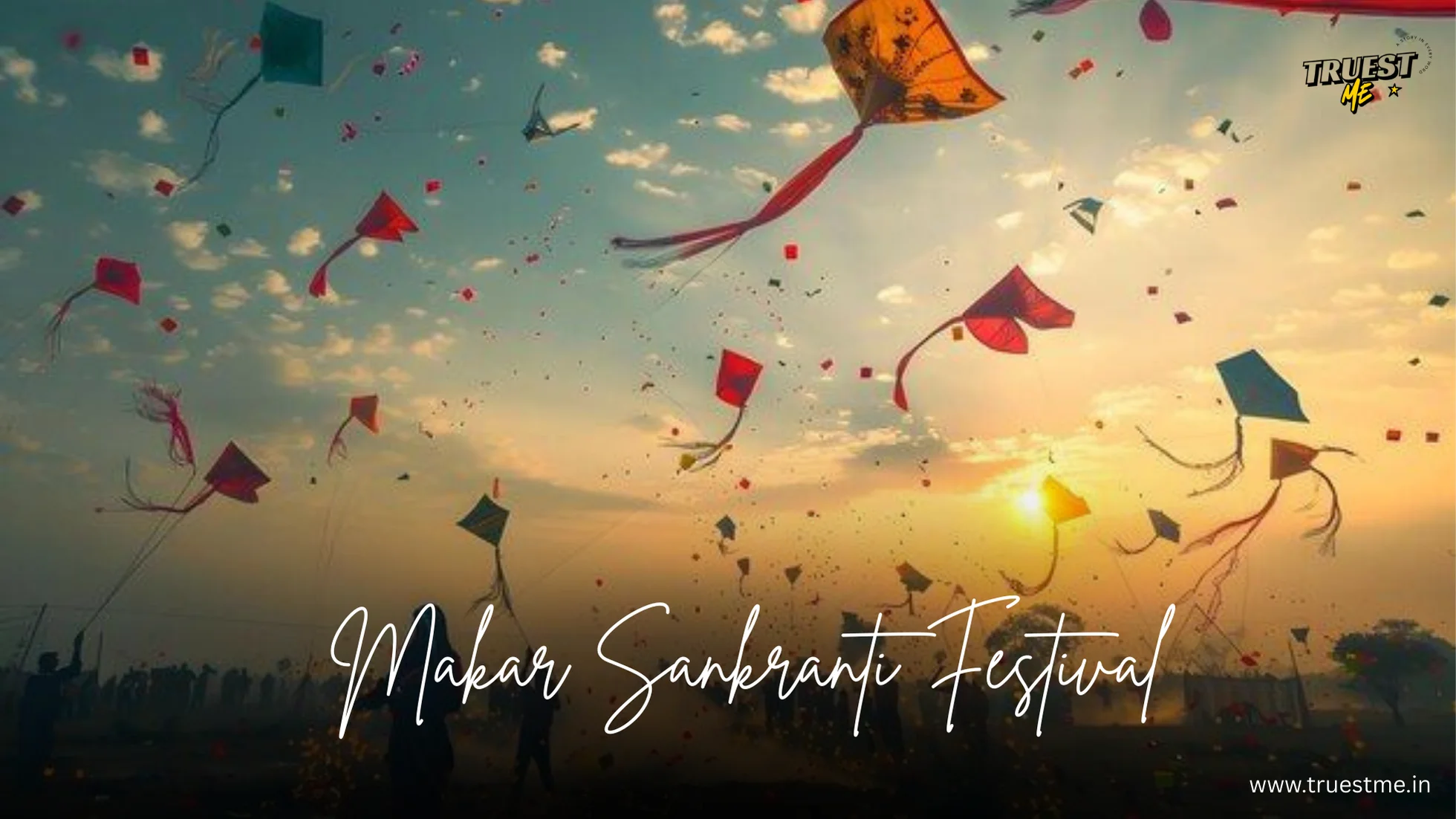
5. Symbolism of Kite Flying
Kite flying is not merely entertainment.
It symbolizes:
- Aspiration toward higher goals
- Freedom from limitations
- Connection between Earth and Sky
Standing on rooftops under sunlight also ensures Vitamin D exposure during peak winter — another hidden scientific wisdom.
6. The Philosophy of Daan (Charity)
Charity is central to Makar Sankranti.
Common donations include:
- Blankets
- Sesame seeds
- Food grains
- Clothes
- Money
In Hindu dharma, Daan during Uttarayan multiplies punya (positive karma).
But beyond religious belief, it reflects:
- Compassion
- Social equality
- Shared warmth in winter
It reminds society to uplift the less fortunate.
7. Psychological and Social Importance
Festivals like Makar Sankranti:
- Strengthen community bonds
- Reduce isolation
- Encourage outdoor activity
- Create collective joy
In today’s digital age, such festivals restore human connection.
8. Philosophical Interpretation – Inner Sankranti
The word “Sankranti” means transition.
Spiritually, it suggests:
- Transition from ignorance to wisdom
- Transition from ego to humility
- Transition from negativity to positivity
Just as the Sun changes direction, humans are encouraged to redirect their inner energy toward growth and enlightenment.
9. Modern Relevance in 2026 and Beyond
Even in a technologically advanced era, Makar Sankranti remains deeply relevant:
- It connects humanity with cosmic cycles.
- It promotes seasonal eating.
- It encourages charity and unity.
- It reminds us of environmental gratitude.
In a world facing climate change and mental stress, festivals rooted in nature offer sustainable wisdom.
Conclusion
Makar Sankranti is far more than a harvest festival or a day of kite flying. It is a multidimensional celebration of:
- Cosmic alignment
- Solar energy
- Agricultural gratitude
- Spiritual elevation
- Social harmony
- Seasonal health
It teaches that life moves in cycles — darkness gives way to light, cold gives way to warmth, and stagnation gives way to progress.
As the Sun begins its northward journey, we too are invited to rise higher — in consciousness, compassion, and clarity.
Makar Sankranti ultimately celebrates not just the movement of the Sun, but the awakening of the human spirit.