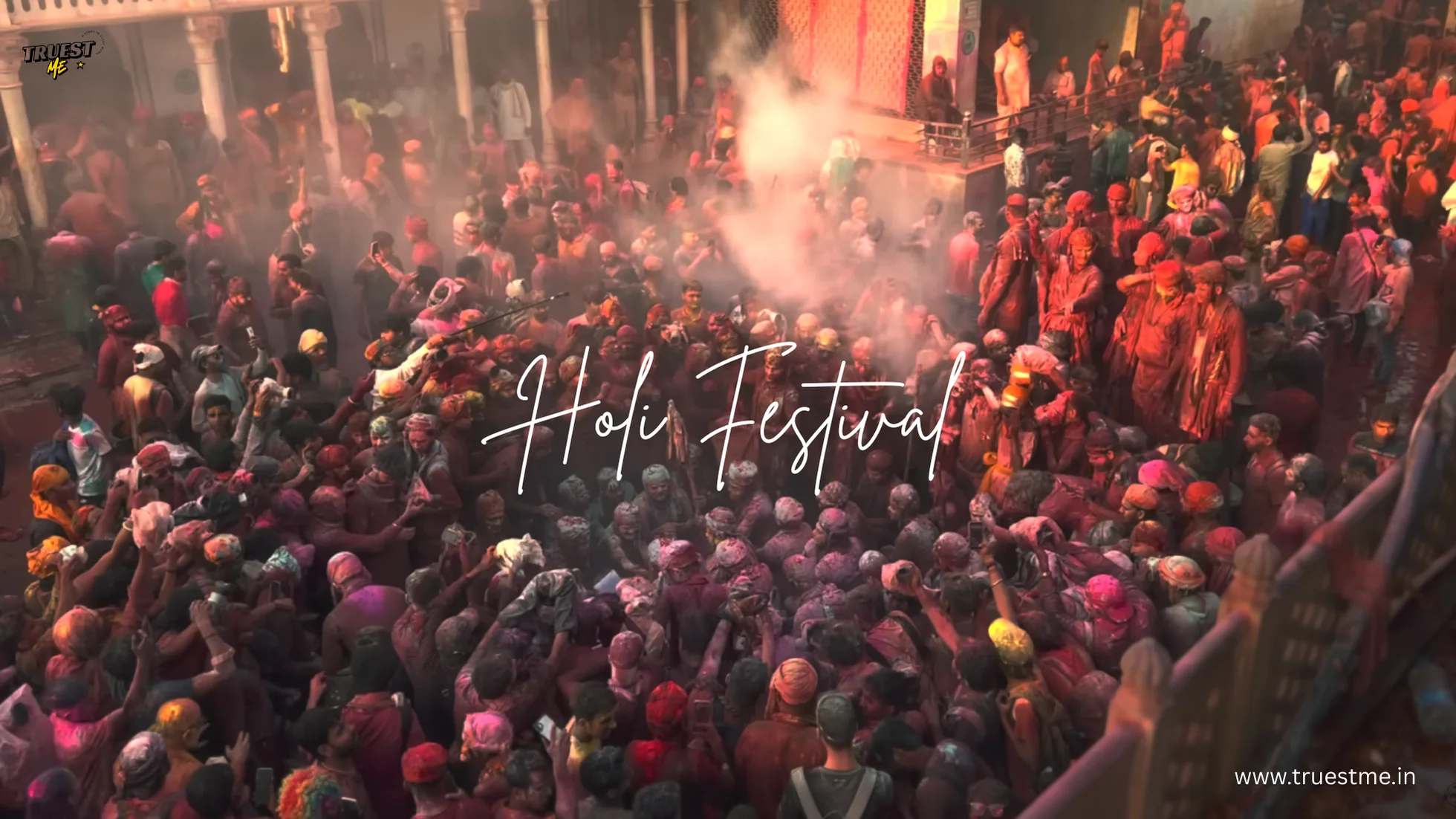
Holi, popularly known as the “Festival of Colors,” is one of the most vibrant and widely celebrated festivals in India. Marking the arrival of spring and the end of winter, Holi is a celebration of renewal, harmony, and the triumph of good over evil. Observed on the full moon day (Purnima) of the Hindu month of Phalguna (usually in March), the festival carries deep mythological, cultural, agricultural, and social significance.
Beyond the playful exchange of colors, Holi represents spiritual cleansing, emotional healing, and social unity — values that continue to make it relevant even in modern times.
Historical and Mythological Significance
The origins of Holi can be traced back to ancient Hindu scriptures and Puranic stories.
The Legend of Prahlada and Holika
One of the most important legends associated with Holi is the story of Prahlada, a devoted follower of Lord Vishnu. His father, Hiranyakashipu, was a powerful demon king who demanded to be worshipped as a god. When Prahlada refused, he was subjected to several punishments.
In a final attempt to kill him, Hiranyakashipu sought help from his sister Holika, who had a boon that made her immune to fire. She sat in a blazing fire with Prahlada on her lap, intending to burn him. However, due to divine intervention, Prahlada survived while Holika perished.
This event symbolizes the destruction of evil and protection of righteousness — commemorated through the ritual of Holika Dahan.
The Divine Play of Krishna and Radha
Another beloved tradition is linked to Krishna and Radha. According to legend, Krishna, who had a dark complexion, worried whether Radha would accept him. His mother suggested that he playfully apply color on Radha’s face. This act evolved into the joyful tradition of applying colors during Holi.
This story reflects themes of love, equality, and playful affection — values deeply embedded in Holi celebrations.
Religious and Spiritual Meaning
Holi carries spiritual symbolism beyond mythology:
- Victory of Good over Evil – Represented by Holika Dahan.
- Spiritual Renewal – The burning of negativity, ego, and past grievances.
- Devotion and Faith – Inspired by Prahlada’s unwavering belief.
- Divine Love – Symbolized by Krishna and Radha.
For many devotees, Holi is also a time of prayer, fasting, charity, and visiting temples.
Holi as a Seasonal and Agricultural Festival
Holi also marks the arrival of spring (Vasant Ritu) and the beginning of a new agricultural cycle. In rural India, the festival is closely connected to harvest celebrations.
Farmers celebrate the ripening of crops such as wheat and barley. The festival expresses gratitude for a good harvest and hope for prosperity in the coming season.
Thus, Holi is not only religious but also seasonal and agrarian in nature.
How Holi is Celebrated
Holi celebrations typically span two main days.
Holika Dahan (Chhoti Holi)
On the eve of Holi, communities gather around a large bonfire. Rituals include:
- Offering grains, coconuts, and prayers
- Singing devotional songs
- Circling the fire (Parikrama)
The fire symbolizes the destruction of evil and purification of the soul.
Rangwali Holi (Dhulandi)
The next day is dedicated to playing with colors.
- Dry colors (gulal) and colored water are used
- Friends and strangers alike greet each other
- Traditional songs and dances fill the streets
- Communities share sweets and festive drinks
In many places, drums (dhol) and folk music create a vibrant and energetic atmosphere.
Regional Variations of Holi in India
India’s cultural diversity makes Holi celebrations unique in every region.
- Barsana – Famous for Lathmar Holi, where women symbolically hit men with sticks as part of a playful ritual.
- Mathura and Vrindavan – Celebrated with grand temple festivities linked to Lord Krishna.
- West Bengal – Known as Dol Jatra or Basanta Utsav, featuring cultural performances and devotional songs.
- Punjab – Celebrates Hola Mohalla, which showcases martial arts and bravery.
These variations show how Holi adapts to regional culture while preserving its core spirit.
Traditional Foods and Festive Delicacies
Holi is incomplete without festive cuisine.
- Gujiya – A deep-fried pastry filled with sweet khoya and dry fruits
- Thandai – A chilled milk drink flavored with almonds, saffron, and spices
- Dahi Bhalla – Lentil dumplings served with yogurt and chutneys
- Malpua – Sweet pancakes soaked in sugar syrup
Food during Holi represents hospitality, generosity, and joy.
Social and Cultural Importance in Modern Society
In contemporary times, Holi plays a vital social role:
- It strengthens friendships and family bonds
- Encourages forgiveness and reconciliation
- Breaks social barriers of caste, class, and status
- Promotes unity in diversity
Holi is also celebrated globally in countries like the United States, Nepal, Mauritius, and the United Kingdom, reflecting the cultural spread of Indian traditions.
Environmental and Safety Awareness
Modern celebrations are increasingly focusing on eco-friendly practices:
- Use of natural, herbal colors
- Avoiding plastic water balloons
- Conserving water
- Respecting personal boundaries
Celebrating responsibly ensures that the festival remains joyful and inclusive for everyone.
Conclusion
Holi is far more than a colorful festival — it is a powerful expression of faith, love, renewal, and social harmony. Rooted in ancient mythology and enriched by regional traditions, Holi continues to evolve while preserving its timeless message.
As flames of Holika Dahan rise and colors fill the air the next morning, Holi reminds us that darkness always gives way to light, and differences can dissolve in celebration.
It is a festival where spirituality meets joy, tradition meets togetherness, and color becomes a symbol of unity.